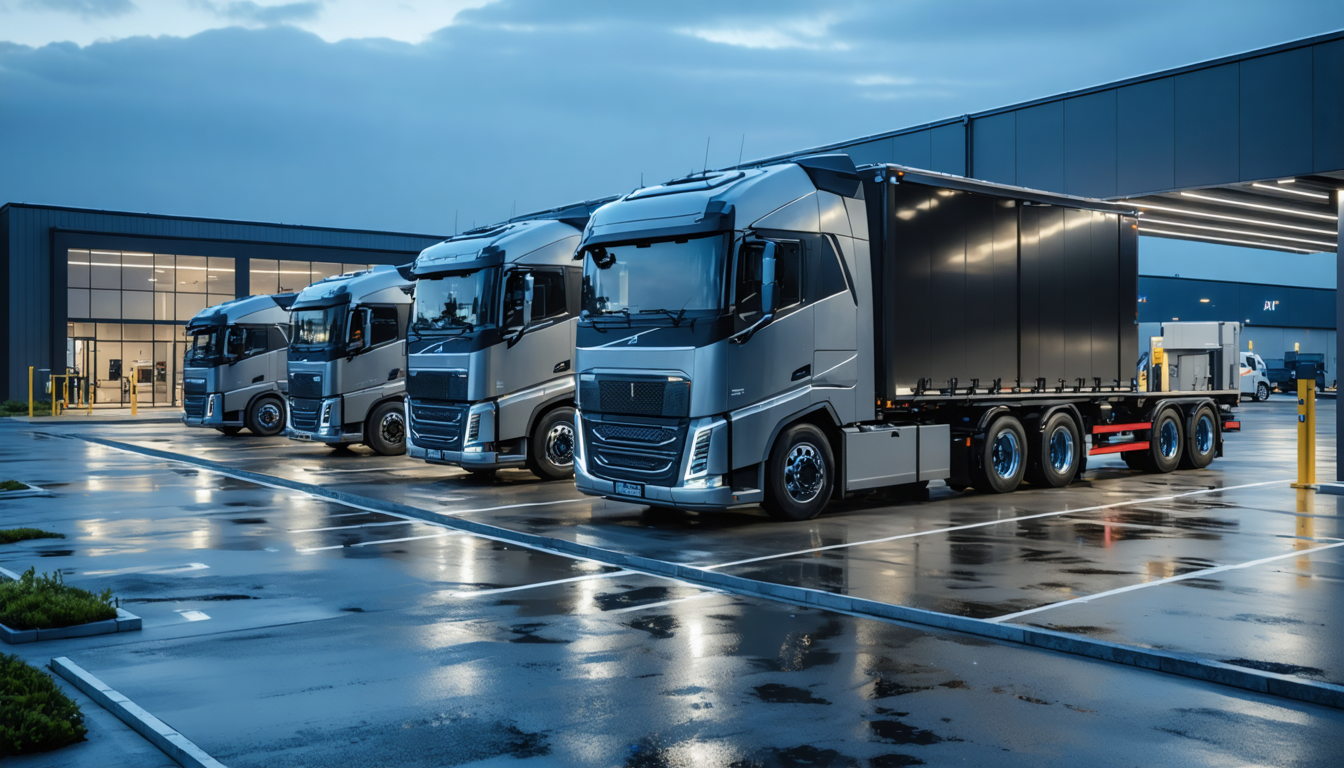
Megawatt Power surge is reshaping the future of truck charging across Europe, with Aral Pulse stepping up to electrify heavy-duty transport networks.
Electric trucking demands rapid, high-capacity charging solutions to keep fleets moving. Aral Pulse, the BP subsidiary, is pioneering this transition in Germany and beyond by deploying cutting-edge MCS chargers delivering up to 1,000 kW. This surge in charging power is more than an infrastructure upgrade—it’s a game changer for sustainable commercial transport.
The Expanding Role of Aral Pulse in High Power Charging Ecosystems
Aral Pulse currently commands a strong position in Germany’s EV infrastructure market, operating over 3,600 charging points at more than 500 sites, making it one of the country’s largest players in rapid charging for passenger vehicles. However, the company’s boldest moves are underway in the truck charging domain, where demand for faster, more reliable charging is skyrocketing.
Starting with 28 strategically located sites that serve electric trucks using 300 kW CCS chargers—including the pioneering 600+ kilometer E-truck corridor along the Rhine-Alps connection—Aral Pulse is now pivoting toward the deployment of next-generation Megawatt Charging System (MCS) technologies. These upcoming stations are designed to handle charging loads up to 1,000 kW, an order of magnitude higher than common fast chargers for trucks today.
The planned MCS stations will be situated at critical logistics hubs and highway intersections including Königs Wusterhausen near the A10/A13 interchange in Brandenburg, Buchholz along the A7 in Lower Saxony, Schnaittach on the A9 near Nuremberg, Rastow at the A24/A14 junction near Schwerin, and Hannover’s industrial zone close to the A2/B6 crossing. Each of these locations will feature multiple charging bays with specifically designed spaces to accommodate large trucks.
Aral Pulse’s nationwide blueprint reflects a keen understanding of the electric commercial vehicle market’s needs. The company ensures continuous 24/7 operation at these locations, equipped with a full complement of amenities such as restrooms, showers, driver lounges, and retail outlets. This level of service is crucial for truck drivers who face long hours on the road and require efficient breaks complemented by swift recharging.
Moreover, each charging bay integrates dual-connector technology, featuring both MCS and CCS plugs on separate devices. This dual compatibility ensures flexibility for currently available EV truck models, while setting the stage for full MCS standard adoption that separates passenger vehicle chargers from heavy-duty vehicle connectors. The move to segregate truck chargers from passenger EV stations in software and app interfaces also highlights Aral Pulse’s commitment to operational efficiency.
How Aral Pulse Balances Capacity and Accessibility in a Growing Network
The evolution of Aral Pulse’s network showcases a highly refined strategy balancing ultra-fast charging capacity with accessibility. The company’s investment leverages European Union funding from the Alternative Fuels Infrastructure Facility (AFIF), totaling millions to expedite the rollout of over 218 new 1 MW charging points across Germany and neighboring countries. Plans also include a future expansion under AFIF 2, potentially adding another 60 MCS charging plugs within ten new stations.
This aggressive scaling is a clear signal that widespread adoption of electric trucks depends not just on vehicle availability, but on the deployment of a robust and reliable charging backhaul. Aral Pulse’s strategy fosters a holistic approach that enables truck fleets to maintain high utilization rates by minimizing downtime at charging stops. It’s a meticulous blend of infrastructure rollout supported by powerful public-private partnerships and government incentives.
Breaking Down the Technical Leap of MCS Chargers in Commercial Trucking
The Megawatt Charging System represents a seismic shift in EV infrastructure technology. Traditional Combined Charging System (CCS) chargers typically provide up to 350 kW for passenger vehicles and 300 kW for trucks, which falls short for the roof-level demands of high-capacity haul trucks. In contrast, MCS chargers can unleash charging power ranging from 1,000 kW (1 MW) up to 3.75 MW, drastically cutting charging times for electric trucks with massive batteries.
The implications of this technical leap are profound for long-haul freight operations. For example, where a 300 kW charger might require over an hour to sufficiently recharge a heavy-duty electric truck, an MCS charger delivering 1 MW can accomplish the task in roughly 20 minutes or less, depending on battery capacity and state of charge.
Aral Pulse’s deployment of Alpitronic HYC1000 chargers, endorsed for their combined MCS and CCS technology, illustrates the merging of legacy compatibility with future-proof architecture. These chargers are designed with rugged usage in mind, suitable for 24/7 operation in challenging logistics environments.
Beyond pure power output, MCS chargers reduce the risk of bottlenecks by enabling simultaneous charging of multiple vehicles through load sharing on dual plugs. This setup allows truck stops to optimize energy distribution dynamically, making each site a true hub for high-throughput truck charging.
Meeting the Charging Speed Demands of Heavy Electric Vehicles
The arrival of MCS technology addresses a core barrier to electrifying the commercial transportation sector: the charging time. As fleets shift, operators face pressures to keep vehicles on the road at maximum efficiency. Quick turnaround on charging means lower operational costs and improved scheduling adherence, all critical for freight companies competing in a tight-margin industry.
Implementations like Aral Pulse’s reinforce the viability of electric trucks on major European corridors, mitigated by highly accessible, powerful chargers engineered for commercial scale.
Strategic Deployment: Location & Power Distribution at Aral Pulse’s Charging Hubs
Understanding where to place these powerful charging stations is as vital as the technology itself. Aral Pulse’s selection of sites underscores a deliberate focus on logistics hubs adjacent to major autobahn interchanges ensuring the widest reach for commercial fleet users.
Each station’s layout emphasizes both throughput and driver convenience, typically offering four to six pull-through charging bays. The layout favors large trucks by allowing them to remain coupled while charging, a crucial factor that saves time and operational hassle. Accessibility remains 24/7, minimizing time lost during off-hours or busy periods.
The following table highlights key characteristics of Aral Pulse’s first five MCS charging locations:
| Location | Power per Charger (kW) | Number of Charging Bays | Highway Access Points | Amenities |
|---|---|---|---|---|
| Königs Wusterhausen | 1000 | 6 | A10/A13 | Restrooms, Showers, Shops |
| Buchholz (Aller) | 1000 | 6 | A7 | Restrooms, Driver Lounges |
| Schnaittach | 1000 | 6 | A9 | Showers, Food Services |
| Rastow | 1000 | 4 | A24/A14 | Driver Lounge, Shops |
| Hannover Industrial Area | 1000 | 4 | A2/B6 | Restrooms, Showers |
How Strategic Infrastructure Boosts Commercial EV Viability
Such prime positioning is crucial not only for convenience but to foster confidence among fleet managers considering electrification alternatives. Fast, reliable stops embedded in well-planned locations mitigate the risk of range anxiety for electric trucks, encouraging greater adoption.
Logistics hubs that link seamlessly to major freight routes significantly reduce detours and downtime, ensuring drivers can plan trips with charging on schedule rather than as an afterthought.
Partnerships and Collaborations Shaping Future EV Infrastructure
Aral Pulse’s electrification campaign is far from isolated. It fits within a larger European-zero emissions transport movement supported by multi-national corporations and governments through platforms like the Alternative Fuels Infrastructure Facility.
BP’s investments through Aral Pulse reflect complementary partnerships—such as collaborations with Iberdrola in Spain and polled expertise from specialists like Poland’s Ekoenergetyka. In the UK, BP’s alliance with Moto aims at weaving a network featuring 300 MCS charging points at 23 locations by 2030. This transnational web of innovation exemplifies the drive toward a pan-European sustainable logistics landscape.
On the competitive front, co-founded ventures such as Milence, backed by giants like Daimler Truck and Volvo Group, push the envelope by targeting thousands of truck chargers, many supported by the same EU funding programs. This intensifies the commercial trucking sector’s electrification race.
The Power of Collaboration in Scaling Sustainable Truck Charging
Synergies emerging from these collaborations allow rapid deployment, technical standardization, and cost efficiency by sharing best practices and coordinating infrastructure developments across borders. The result is a powerful momentum that reshapes the commercial EV charging network’s geography and scale.
Future-Proofing Truck Charging: What Lies Ahead for High Power Charging
Looking ahead, the surging momentum in high power charging infrastructure signals a sea change for sustainable transportation. Industry players like Aral Pulse understand that facilitating commercial EV adoption entails not just technology—but comprehensive service ecosystems prioritizing user experience.
Even as Megawatt Power chargers become mainstream, issues such as grid capacity, energy management, and interoperability will require constant innovation. Smart grid integration, vehicle-to-grid technologies, and dynamic load balancing are expected to evolve alongside charger rollouts, enhancing both cost-effectiveness and reliability.
Electric trucks will increasingly benefit from real-time data analytics to optimize charging patterns and operational economics, reducing carbon footprints while meeting the logistics sector’s relentless timetables.
- Accelerated charging times revolutionizing fleet operations
- Strategic siting alleviating range anxiety for EV trucks
- Multi-partner alliances enabling rapid infrastructure scaling
- Enhanced amenities improving trucker welfare on the road
- Regulatory and funding support unlocking new investments
Crafting a Sustainable Mobility Ecosystem around Megawatt Power
Ultimately, heavy vehicle electrification hinges on reliable, high power charging, supportive policies, and industry collaboration. Aral Pulse’s ventures into MCS technology illustrate a concerted effort to bridge the gap between today’s EV limitations and tomorrow’s clean transport paradigm.

My Name Is Said I am a dedicated blogger sharing the latest trending blogs from the USA, covering news, updates, and informative stories. My focus is on delivering accurate, engaging, and timely content for readers worldwide.