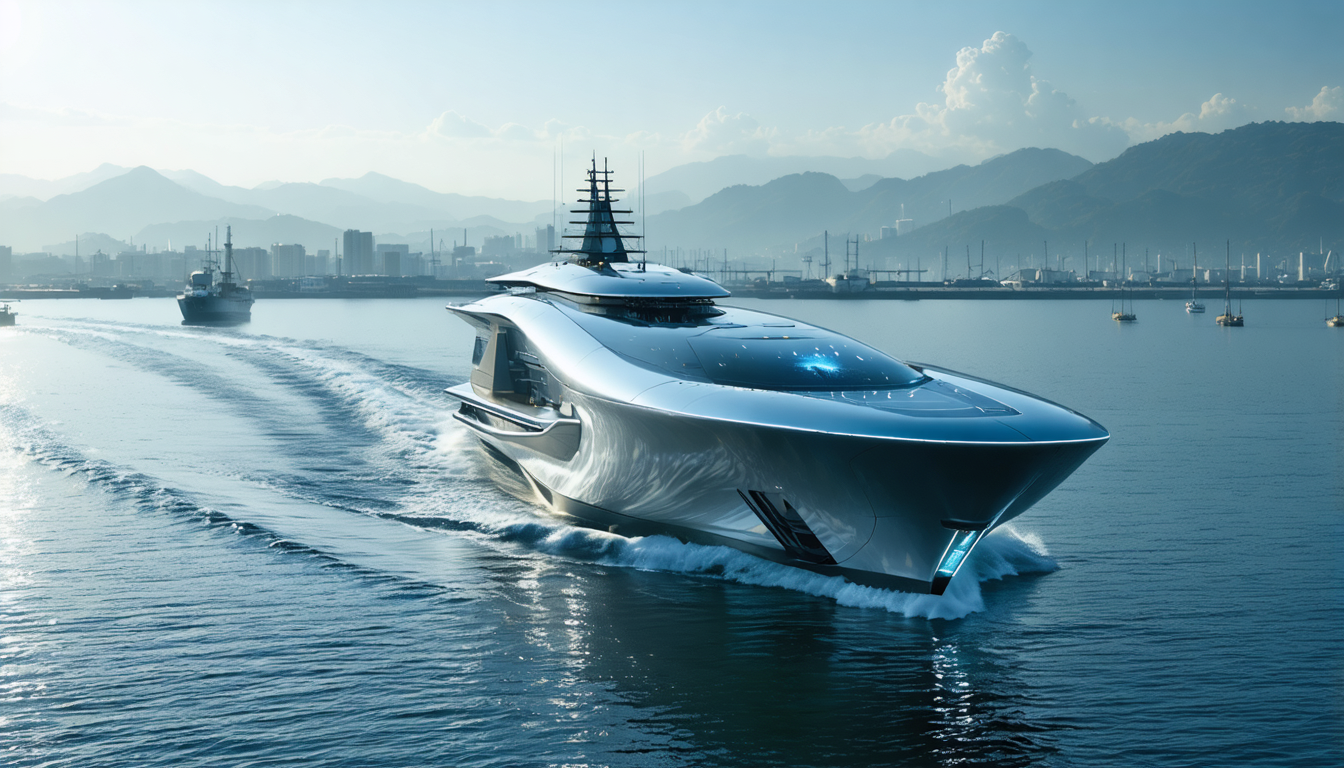
CATL’s game-changing initiative in maritime electrification breaks conventional maritime transport barriers.
Chinese battery titan CATL introduces an all-encompassing electric ship system designed to power the shipping industry into a new era of zero-emissions transport, promising ocean-crossing electric vessels within three years.
CATL’s Ship-Shore-Cloud: Pioneering Seamless Maritime Electrification
CATL, dominant global leader in battery technology, brings to market a comprehensive solution that marries the ship’s onboard energy systems with shore-based infrastructure and smart cloud management tools. This innovation addresses the maritime sector’s long-standing fragmentation, where propulsion, power supply, and maintenance responsibilities are scattered across various vendors, often creating systemic inefficiencies and coordination breakdowns.
By integrating energy storage, electric propulsion, and navigation intelligence directly on vessels with shore-side battery exchanges and cloud-based operation oversight, CATL’s “Ship-Shore-Cloud” creates a streamlined ecosystem. It fosters a synergy that minimizes costs, simplifies maintenance, and enhances operational reliability even in demanding maritime conditions such as high humidity and corrosive salt spray.
What sets CATL apart is not only the technical depth but also the tailored nature of their system—recognizing that maritime battery needs vastly differ from land vehicles due to unique performance demands and environmental challenges. This bespoke approach is vital for sustainable, eco-friendly transport solutions to gain meaningful traction in the global shipping arena, from river cruisers to deep-sea freight carriers.
How Integrated Systems Overcame Maritime Fragmentation Challenges
CATL’s ability to unify disparate shipboard and shore systems into a cohesive whole marks a paradigm shift, eradicating inefficiencies and paving the way for scalable electrification of the maritime sector.
From Rivers to Oceans: CATL’s Vision for Electric Ship Expansion
Since entering maritime electrification in 2017 and forming a dedicated division in 2022, CATL has supported nearly 900 fully electric vessels operating primarily in riverine, lake, and coastal environments. Now, the company projects a rapid leap to ocean-going electric ships capable of traversing vast distances on pure battery power within approximately three years.
This timeline hinges on overcoming technical barriers such as energy density, battery lifespan, and rigorous safety standards to meet the formidable demands of open-sea navigation. CATL’s pioneering marine batteries undergo testing tailored to sustain long hours at sea with severe environmental stresses.
Examples underlining CATL’s capability include the Yujian 77 excursion ship currently operating in Xiamen’s bay and the Changjiang Sanxia 1, the world’s largest pure electric passenger vessel navigating Chinese inland waterways. These deployments confirm the reliability and efficiency of marine battery tech in real-world applications, serving as blueprints for scaling up toward oceanic ventures.
Charting the Chartless Waters: Progress Toward Ocean-Scale Electric Vessels
CATL’s ambitious roadmap challenges traditional maritime paradigms and is poised to redefine oceanic freight and passenger transport by implementing scalable battery-electric propulsion systems.
Tackling Industry Stumbling Blocks with Smart, Modular Designs
The shipbuilding and maritime transport segments have traditionally been slow to adopt full electrification due to the industry’s complexity, high upfront costs, and lack of unified standards. CATL confronts these obstacles by designing modular, easily serviceable systems that facilitate battery swaps, thus reducing downtime and cost risks for ship operators. This “separate ship and battery” model enables faster turnaround times in ports and adaptability to different vessel sizes and functions.
Besides infrastructure considerations, CATL also invests in comprehensive safety and durability metrics, ensuring that batteries and associated systems withstand the harsh marine environment. Saline air, long operational periods, and power surges demand robust components distinct from automotive applications. These innovations help ease widespread deployment concerns, allowing maritime companies to adopt electric propulsion without fearing reliability losses.
Innovations Motivated by Real-World Maritime Barriers
This targeted approach squares practical challenges with technological breakthroughs, accelerating the industry’s shift to green maritime innovation that preserves operational efficiency while minimizing emissions.
Market Penetration and Global Impact: CATL’s Growing Footprint
CATL currently commands approximately 40% of the global marine battery market, an already impressive dominance buoyed by extensive deployments. Their electrification systems power a diverse array of vessels, including:
- The Qinggang Tug 1, China’s first hybrid tugboat combining battery and conventional power for improved fuel savings and emissions reduction.
- Jining 6006, a cargo ship showcasing the feasibility of at-sea battery swaps, accelerating charge cycles and extending operational ranges.
- Various coastal ferries and inland passenger ships enhancing passenger experience while slashing noise and exhaust pollutant footprints.
This spectrum of applications highlights the flexibility of CATL’s power solutions, adaptable across vessel types and mission profiles. As the company prepares to penetrate deep-sea markets, the ripple effect promises to transform maritime transport logistics, coastal economies, and the shipping industry’s carbon footprint.
Expanding Horizons Through Strategic Market Leadership
The extensive portfolio and proven dependability position the company at the forefront of the maritime electrification wave, poised for significant expansion and industry-wide transformation.
Timetable and Future Outlook: The Road to Zero-Emission Ocean Voyages
CATL’s forecast anticipates that battery-powered vessels performing transoceanic journeys will become operational within three years — an ambitious but increasingly tangible goal. Critical milestones include finalizing robust energy storage systems, scaling installation capabilities, and establishing global shore-side infrastructure.
Below is a timeline of projected developments illustrating key phases in CATL’s strategy:
| Phase | Timeframe | Key Objectives |
|---|---|---|
| Research & Development | 2023-2024 | Enhancing battery energy density and safety certifications |
| Pilot Deployments | 2024 Q3 – 2025 Q2 | Sea trials of oceanic electric vessels and validation of system integration |
| Infrastructure Rollout | 2025 | Building widescale charging and battery exchange ports worldwide |
| Commercial Launch | Late 2025 | Begin operation of first battery-electric ocean-going ships |
This roadmap underscores CATL’s methodical progress toward a zero-carbon maritime future, emphasizing collaboration across the shipping ecosystem.
Strategic Timeline Propelling Sustainable Sea Freight Forward
The precise scheduling reflects CATL’s commitment to realistic, scalable advancements that align technical feasibility with market readiness.
Key Enablers Driving the New Era of Electric Maritime Transport
Several interlocking factors contribute to the viability of CATL’s ship electrification vision:
- Technological innovation: Advanced marine battery chemistry and modular design boost energy density and safety.
- Regulatory shifts: Increasing global emissions regulations challenge traditional diesel fleets, incentivizing green transitions.
- Cost competitiveness: As battery prices decline and operating expenses drop, electric propulsion becomes financially viable.
- Environmental urgency: Heightened awareness of maritime pollution propels industry and government investment in sustainable alternatives.
- Infrastructure enhancement: Growing network of battery swap and charging stations ensures practical operational deployment.
Together, these drivers create a perfect storm accelerating the growth of electric shipping, promising a cleaner, quieter, and greener maritime future that harmonizes logistical efficiency with environmental stewardship.
Main Catalysts Transforming Global Maritime Transport
The convergence of these forces underpins the accelerating momentum behind CATL’s bold ventures and industry-wide maritime decarbonization.
- CATL leads a revolution in marine battery innovation that melds technical sophistication with practical deployment.
- Electric ship options are no longer limited to short-range or inland waters, but are scaling rapidly toward oceanic routes.
- Comprehensive solutions integrating ship, shore, and cloud systems solve historic fragmentation issues in maritime transport.
- Sustainable shipping pioneers like CATL set industry benchmarks for low emissions and operational efficiency.
- Marine battery technology is evolving fast to meet stringent safety, performance, and longevity demands crucial for open-sea missions.

My Name Is Said I am a dedicated blogger sharing the latest trending blogs from the USA, covering news, updates, and informative stories. My focus is on delivering accurate, engaging, and timely content for readers worldwide.