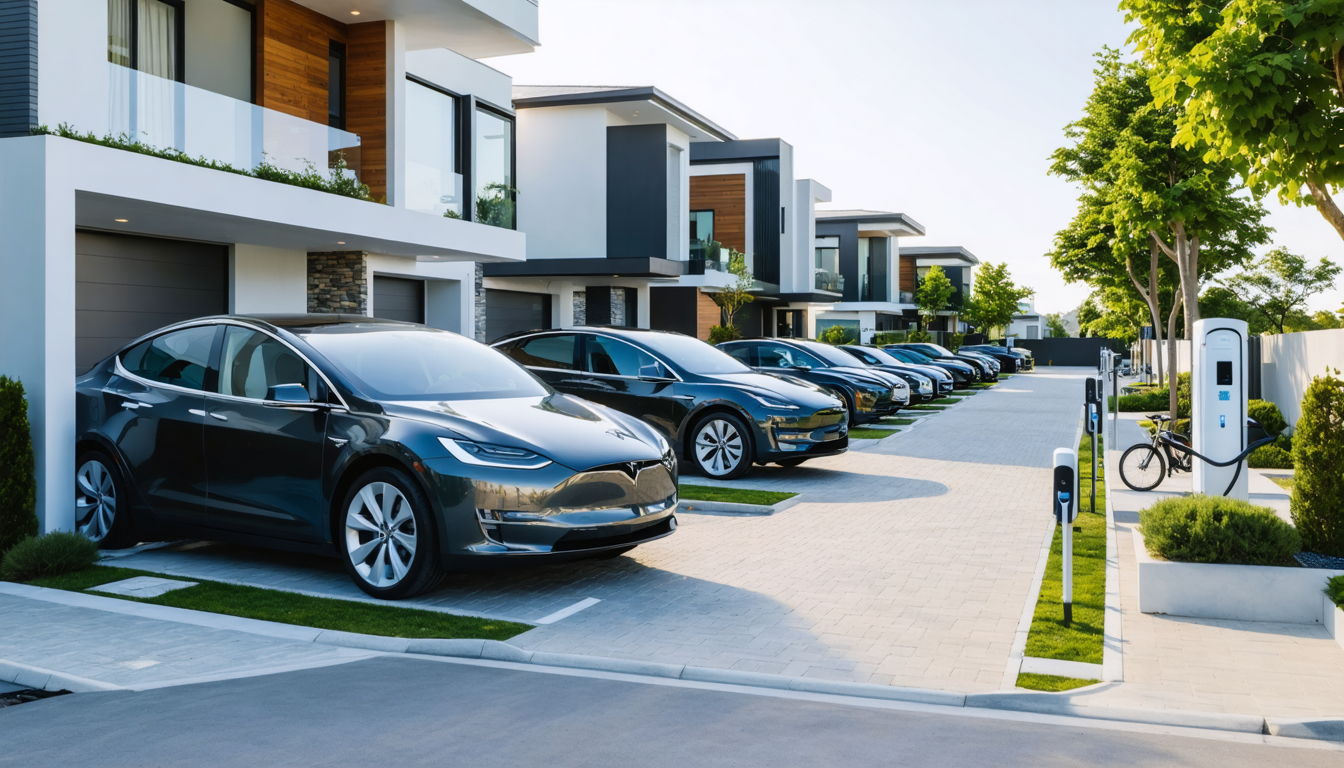
ICCT Monitor Reports: Wealthier Households Drive Electric Vehicle Growth With Unequal Access to Benefits
The trend of electric vehicle (EV) adoption reveals a clear pattern: affluent households dominate purchases, despite falling costs and expanding charging networks. This disparity underscores challenges in equitable access to green transportation. As prices for electric cars drop and charging infrastructure expands, wealthier consumers remain the primary market movers. Cost savings are real, yet upfront expenses and tariff complexities still pose hurdles. Understanding the ICCT Monitor findings sheds light on the evolving EV landscape and obstacles to broader participation.
Decoding The Economic Dynamics Behind Electric Vehicle Adoption Trends
The latest data from the ICCT Monitor unambiguously show that electric vehicles are becoming increasingly appealing economically. The cost of ownership — especially operating expenses — is a key driver here. Compared to gasoline cars, EVs offer notably lower fuel costs since charging is generally cheaper than filling a tank with fuel.
This advantage grows the more an EV is driven. For example, those with private charging setups at home or work — a convenience more common in wealthier demographics — can save up to €2,000 annually if driving about 45,000 kilometers. This significant relief on running costs makes EVs a practical and sustainable alternative in the long run.
However, the picture grows complex when relying solely on public charging points. Although prices remain lower on average than gasoline, charge tariffs vary widely and suffer from opacity. Ambiguous pricing models and roaming fees can erode the cost benefits, particularly for those without access to cheaper charging options.
The ICCT underscores the urgent need for transparent and fair pricing structures to prevent “cost traps” and make EV advantages more universally accessible. Without this, the operating cost side of the equation continues to favor households with easier access to private or low-cost charging.
The Monitor also highlights that despite these growing economic incentives, the initial purchase price of EVs remains a glaring barrier. In 2024, new electric cars averaged €45,900, with used models around €34,800 — still substantial sums for many families. While electric vehicles are now more affordable than plug-in hybrids and sometimes diesel cars, they haven’t yet reached the price levels of many gasoline vehicles, especially in the used car market where cheaper models are scarce.
The financial hurdle is often the decisive factor keeping EVs out of reach for lower-income households, leaving wealthier groups to spearhead adoption. The stark reality: new electric car buyers earned, on average, a net household income of €4,300 monthly in 2024, compared to much lower figures for gasoline (€3,200) and diesel (€3,600) car owners.
However, there’s a hopeful sign as smaller, more affordable electric models are gaining traction, suggesting that the EV market may diversify in future years to include broader income groups. Still, the initial cost remains the biggest gatekeeper, setting the stage for wider disparities if policies and market changes do not specifically support lower-income buyers.
A Deep Dive Into EV Operational Savings and Residential Charging Benefits
A core part of why wealthy households benefit disproportionately stems from their enhanced access to residential and workplace charging. Owning or leasing property with dedicated electrical capacity allows these consumers to charge cheaply and conveniently — advantages not easily replicated for renters or apartment dwellers.
Besides the lower cost of electricity per mile, private charging also provides predictability in expenses and convenience in routines, helping to solidify EVs as financially wiser choices for those who can access such setups. The ICCT’s analysis makes it clear: this infrastructure access strongly correlates with income.
In contrast, urban residents in multi-family units or rural areas facing limited public charging infrastructure often struggle to gain the same cost benefits, even if they operate EVs. Complex tariff schemes, roaming fees, and time-based rates blend into a confusing landscape that discourages many potential users.
Emerging technological solutions like smart charging and subscription-based models aim to simplify this complexity. Still, the most immediate need lies in regulatory efforts to standardize and clarify pricing nationwide.
Charging Infrastructure: A Critical Factor Yet A Barrier For Many Potential EV Owners
The expansion of charging points has accelerated across major U.S. metropolitan areas and other global markets. Yet, despite quantitative growth, qualitative issues remain. The disparities in accessibility between urban and rural areas, as well as socio-economic divides, hamper uniform EV adoption.
Low-income and minority households often reside in areas with fewer public chargers or less reliable infrastructure, making daily EV use impractical. For these communities, the charging gap is more than logistical; it is an access issue that intersects with equity and fair participation in clean energy transitions.
The ICCT’s research on charging infrastructure stresses the need to prioritize equitable distribution of charging stations to ensure green mobility does not become a privilege reserved for wealthier districts. In addition to physical infrastructure, targeted policies to subsidize charging costs for less affluent users would enhance accessibility.
- Priority investment in multi-family residential charging facilities
- Expansion of affordable public charging in underserved neighborhoods
- Clear pricing transparency to avoid cost confusion and financial deterrents
- Integration of renewable energy to amplify environmental benefits
Government Incentives and Policy Needs To Bridge Gaps In EV Adoption
Public policies play a pivotal role in encouraging sustainable transportation and emission reduction but must be thoughtfully tailored. Germany’s recent EV purchase subsidies exemplify this concept, but experts like Sandra Wappelhorst of the ICCT point out that these measures, while helpful, lack precision in targeting lower-income buyers and affordable vehicles.
Tailored financial supports such as low-interest loans, buy-down programs for cheaper models, and incentives keyed specifically to income levels would enhance equity in EV adoption. Seamless integration of such schemes into local markets can significantly alleviate the upfront cost barrier.
Furthermore, standardizing tariff regulations for public charging and increasing transparency would positively impact usage patterns, especially for those dependent on public infrastructure. Collectively, such policy efforts can accelerate the transition toward clean energy while democratizing the benefits of green mobility.
| Incentive Program | Target Group | Support Type | Impact Timeline |
|---|---|---|---|
| Federal EV Purchase Subsidy | Low-to-middle income households | Cash rebate | 2023-2027 |
| Zero-Interest Loan Programs | General public | Finance assistance | Ongoing |
| Public Charging Expansion Grants | Municipalities & underserved areas | Infrastructure funding | 2024-2026 |
| Tariff Transparency Regulation | Public & private charging operators | Regulatory mandates | 2025 |
Emerging Market Shifts: The Growing Role of Smaller Electric Vehicles
Large, luxury electric cars dominate the early adoption wave, mostly purchased by wealthier consumers with perks like company cars or higher incomes. However, there is a notable trend toward smaller, more affordable electric vehicles that are increasingly capturing market share.
This shift could stimulate a broader consumer base as compact EV models lower the entry price. Models designed for urban commuting or shared mobility services provide cost-effective paths for average households to transition to electric driving.
Companies targeting these market segments focus on creating efficient, budget-conscious EVs that maintain driving range and performance, while trimming price tags. This evolution promises to soften the link between EV adoption and income, fostering more inclusive participation.
Social Equity Challenges And The Road Ahead For EV Adoption
The clearest narrative from the ICCT Monitor highlights a major social equity challenge within the transition to electric mobility. When cleaner transport is dominated by wealthier households, it risks widening existing socioeconomic divides in access to clean energy benefits.
This issue goes beyond vehicle purchase prices. It encompasses charging access, operating cost savings, and the ability to navigate a still-maturing market of tariffs and service providers. For EV adoption to contribute meaningfully to emission reduction and sustainable transportation, these disparities must be addressed.
To shape a future of green mobility that is genuinely inclusive, coordinated action among governments, industry players, and civil society is essential. Building charging infrastructure equitably, designing affordable vehicles, and implementing transparent pricing models collectively form the backbone of this mission.

My Name Is Said I am a dedicated blogger sharing the latest trending blogs from the USA, covering news, updates, and informative stories. My focus is on delivering accurate, engaging, and timely content for readers worldwide.