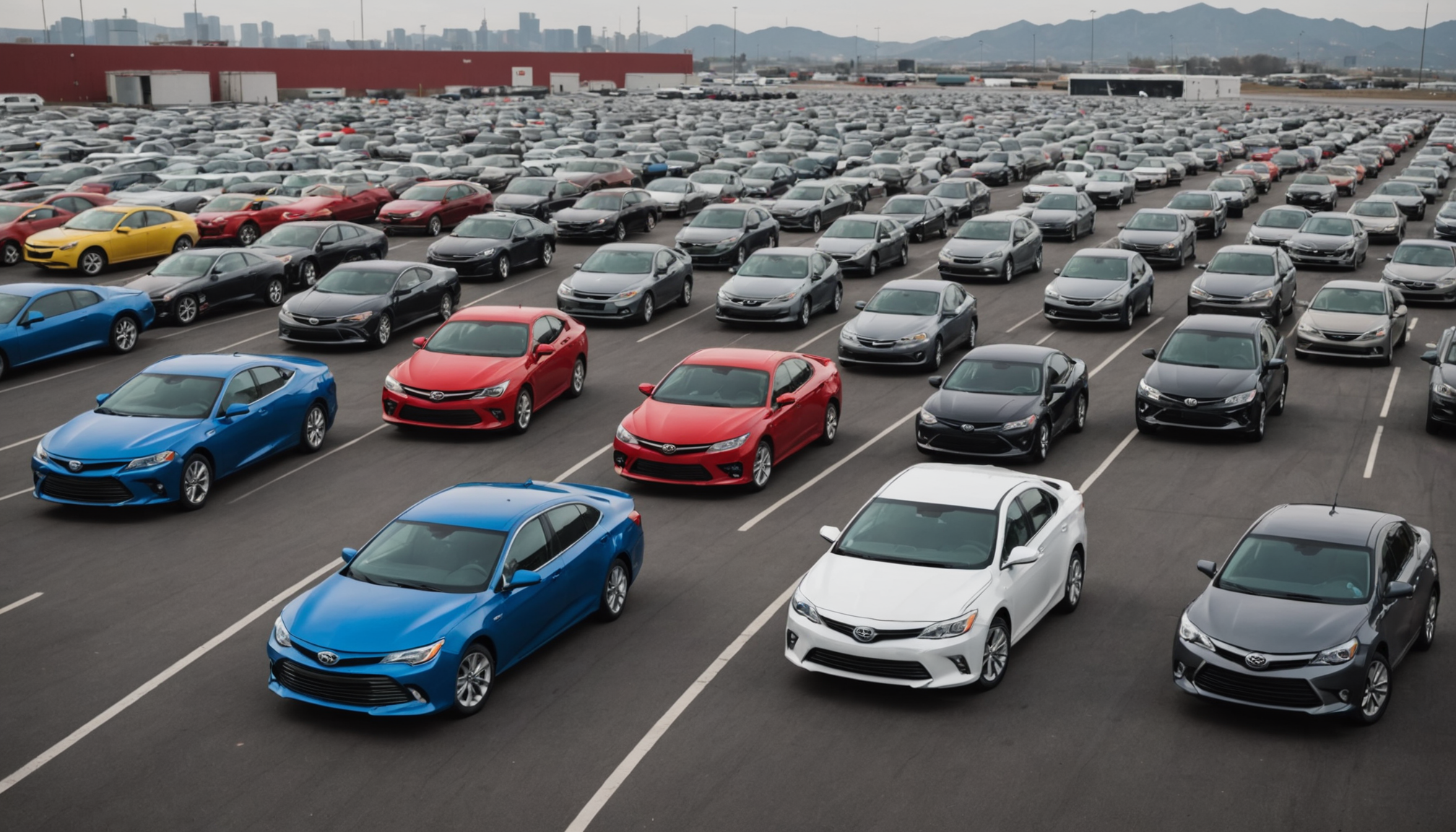
GM, Toyota, Ford, and others are raising serious concerns as China transforms into a significant threat to the U.S. automotive landscape. The warming of tensions adds new challenges to manufacturing, technology transfer, and global market competition.
In 2025, the U.S. auto industry faces mounting pressure from China’s rapid advancements and strategic moves. Major players like GM, Toyota, and Ford are navigating a complex web of supply chain risks, trade disputes, and innovation races. Understanding the multifaceted challenges is crucial for stakeholders striving to maintain America’s edge in the global automotive market.
How China’s Rise Reshapes the Global Auto Industry Landscape
China’s transformation from an emerging market to a dominant automaking powerhouse has shifted the global industry tectonically. U.S. giants such as GM, Ford, and Toyota find themselves confronting a multifaceted threat in 2025, with China aggressively investing in manufacturing infrastructure, technology development, and market expansion.
One of the most striking changes is China’s vast, vertically integrated supply chain. Unlike earlier years when China functioned mainly as a low-cost assembly hub, it now commands advanced manufacturing capabilities in electric vehicles (EVs), batteries, and semiconductor technologies. For example, Chinese firms lead battery production — the heart of EV technology — where firms like CATL outpace global competitors in volume and cost efficiency.
The implications for U.S. automakers are profound. GM and Ford have had to respond by reshoring some manufacturing, while Toyota diversifies supply sources to reduce dependence on Chinese-made components. Supply chain vulnerabilities have been highlighted repeatedly, underscoring how a single disruption in China could ripple disastrously through the global auto sector.
Furthermore, China’s government-backed industrial policies not only fuel rapid domestic innovation but also extend influence abroad. The “Made in China 2025” strategy outlines a roadmap to leapfrog into cutting-edge automotive tech, including autonomous driving and next-generation EVs. This plan places pressure on U.S. firms who must now accelerate R&D investments to keep pace.
China’s deep state involvement often blurs lines between commercial competition and national strategic objectives, complicating fair-market competition. Many U.S. executives express alarm over opaque government subsidies, intellectual property challenges, and forced joint ventures driving technology transfer.
In short, China’s rise has evolved from a tactical competitor to a strategic adversary. Sustaining U.S. industry leadership requires novel approaches to supply chain resilience, innovation prioritization, and geopolitical navigation — a delicate balancing act for the sector’s future.
The Supply Chain Web Under Siege
Global manufacturing today hinges on finely tuned, interdependent supply chains. For U.S. automakers, China is both a supplier and a competitor.
The auto supply chain’s complexity is staggering. Thousands of parts worldwide flow into vehicle assembly lines daily. Disruptions in China’s factories, ports, or regulations can halt lines in Detroit just as quickly as in Shanghai. GM’s recent inventory troubles and Ford’s cautious sourcing strategies highlight this fragility.
China’s control over key materials — especially rare earth elements critical for magnets, batteries, and electronics — poses a strategic risk. This dominance translates into leverage over global pricing and availability.
How are U.S. companies tackling these threats? Many have diversified sourcing strategies, investing in regional suppliers across North America, Europe, and Southeast Asia to reduce overreliance on China. They are also exploring alternatives in materials science, aiming to cut dependency on rare earths. Toyota, for example, is pushing innovation in battery chemistries less reliant on scarce elements.
| ⏰ Date | 🚢 Supply Chain Event | 📉 Impact | 🔧 Company Response |
|---|---|---|---|
| Jan 2025 | Port shutdown in Shanghai | Delayed parts shipment for GM and Ford | Expedited air freight, diversified ports |
| March 2025 | Rare earth export restrictions | Price spikes in battery materials | Increased research in alternative materials |
| July 2025 | New Chinese manufacturing regulations | Certification delays | Investment in regional assembly plants |
U.S. policy also aims to recalibrate supply chains. Incentives for domestic production seek to bolster local resilience against foreign disruption, but this process is far from seamless and raises the cost for automakers — a cost often shifted to consumers.
The Trade War’s Lingering Shadow on Auto Manufacturing
Despite a semblance of détente on some fronts, the trade war between the U.S. and China continues to cast a long shadow over autos. Tariffs and retaliatory measures remain a significant drag on automotive trade flows.
Ford, GM, and Toyota have repeatedly voiced concern. Their investment plans are weighed down by unpredictable tariffs on steel, aluminum, and electronic components. Volatility discourages long-term capital commitments and slows innovation cycles.
China’s countermeasures in intellectual property enforcement and technology transfer demands add layers of complexity. The automotive sector, increasingly dependent on cutting-edge software and battery tech, is vulnerable to these dynamics.
While negotiations have produced sporadic tariff relief, uncertainty looms large—impacting everything from supply chain logistics to consumer prices. For instance, a temporary tariff reduction in mid-2024 sparked a short-lived surge in imports, only for tensions to flare once more.
To offset risks, U.S. manufacturers are recalibrating their international footprint. Ford and GM are ramping production in emerging Southeast Asian markets, where tariffs are lower, and labor costs remain competitive. Toyota, meanwhile, benefits from longstanding regional networks that provide some buffer.
As tariff battles persist, automakers increasingly lobby for political clarity to avoid a rollercoaster effect undermining sector stability.
Remodeling Manufacturing to Stay Ahead
Automotive production is under transformation, driven by technology demands and geopolitical shifts.
Advanced manufacturing technologies such as robotics, AI, and additive manufacturing are redefining assembly lines. U.S. automakers are investing heavily to modernize plants to compete against China’s rising capabilities. For instance, GM’s factory overhaul includes AI-powered quality inspections that increase efficiency while lowering costs.
However, the pace of Chinese upgrades is relentless. China’s commitment to automated, high-speed production lines is not merely catching up—it’s sometimes surpassing American efforts. This intensifies competition on costs and innovation velocity.
There’s also mounting pressure to localize production for strategic and customer preference reasons. The growing EV market demands nimbleness in supply and manufacturing to align with rapid technological change.
Examples like Ford’s new EV battery plant in Tennessee showcase efforts to blend innovation with domestic job creation. Toyota is exploring “smart factories” that limit waste and boost flexibility.
Manufacturing excellence becomes a critical battleground. Future auto leaders will balance execution speed, quality, and adaptability while mitigating geopolitical risks embedded in today’s supply chains.
Technology Transfer: The Double-Edged Sword of Global Expansion
The auto industry’s global footprint isn’t without peril. One of the most contentious issues is technology transfer, where access to foreign markets comes at a steep intellectual price.
China’s mandated joint venture policies have historically compelled companies like GM and Toyota to share sensitive technology in exchange for market access. This practice facilitated China’s rapid learning curve but granted competitors access to trade secrets, a major concern for U.S. firms.
As technologies converge around batteries, autonomous systems, and connected vehicles, the stakes grow ever higher. Transfer not only risks bleeding edge innovations but also erodes competitive advantages cultivated domestically over decades.
Many automakers have responded with hybrid strategies: maintaining strict controls on crucial technology parts while expanding collaboration in less-sensitive areas. Negotiations with Chinese regulators are ongoing and complex.
Meanwhile, China’s own technological leaps mitigate some of these risks by fostering indigenous R&D capabilities. This makes forced transfer less relevant over time but adds urgency to U.S. firms’ innovation cycles.
Protecting intellectual property becomes paramount. Firms implement enhanced cybersecurity, contractual safeguards, and leverage diplomatic channels to guard their advancements. Failure to do so risks allowing competitors to rush ahead using pilfered or shared knowledge.
Market Competition: The New Battleground
The fight for market dominance is more intense than ever.
China is no longer just a manufacturing base—it is a massive consumer market where local brands surge. Domestic companies like NIO, BYD, and XPeng aggressively innovate, diluting the share of foreign automakers.
For GM, Toyota, and Ford, this means not only competing globally but defending position within China’s borders. Brand loyalty and local preferences sway sales, pushing foreign firms to adapt products more closely to Chinese tastes.
Meanwhile, the rise of EVs and smart cars reshuffles market dynamics. Chinese firms set trends in affordability and functionality that shape global consumer expectations. These shifts force U.S. firms into faster innovation cycles and pricing pressures.
This marketplace tension extends to policy influence and standards setting. The ability to shape regulations for autonomous vehicles, charging infrastructure, and software security becomes a power play with enormous economic implications.
U.S. automakers must continually calibrate strategy to remain relevant — a mix of technological agility, localized marketing, and political navigation.
As the market battleground intensifies, the stakes are high — domination or decline hangs in the balance.
Key Dates and Strategic Moves: A 2025 Overview
| 📅 Date | 🏭 Strategic Event | 📌 Company(s) Involved | 🔍 Significance |
|---|---|---|---|
| February 2025 | Launch of GM new EV platform | GM | Attempt to regain tech leadership globally |
| May 2025 | Toyota expands Southeast Asia factories | Toyota | Supply chain diversification & risk mitigation |
| August 2025 | Ford opens battery manufacturing plant in U.S. | Ford | Boosts domestic EV production capabilities |
| November 2025 | China imposes new export regulations | All U.S. automakers | Heightened supply chain challenges |

My Name Is Said I am a dedicated blogger sharing the latest trending blogs from the USA, covering news, updates, and informative stories. My focus is on delivering accurate, engaging, and timely content for readers worldwide.