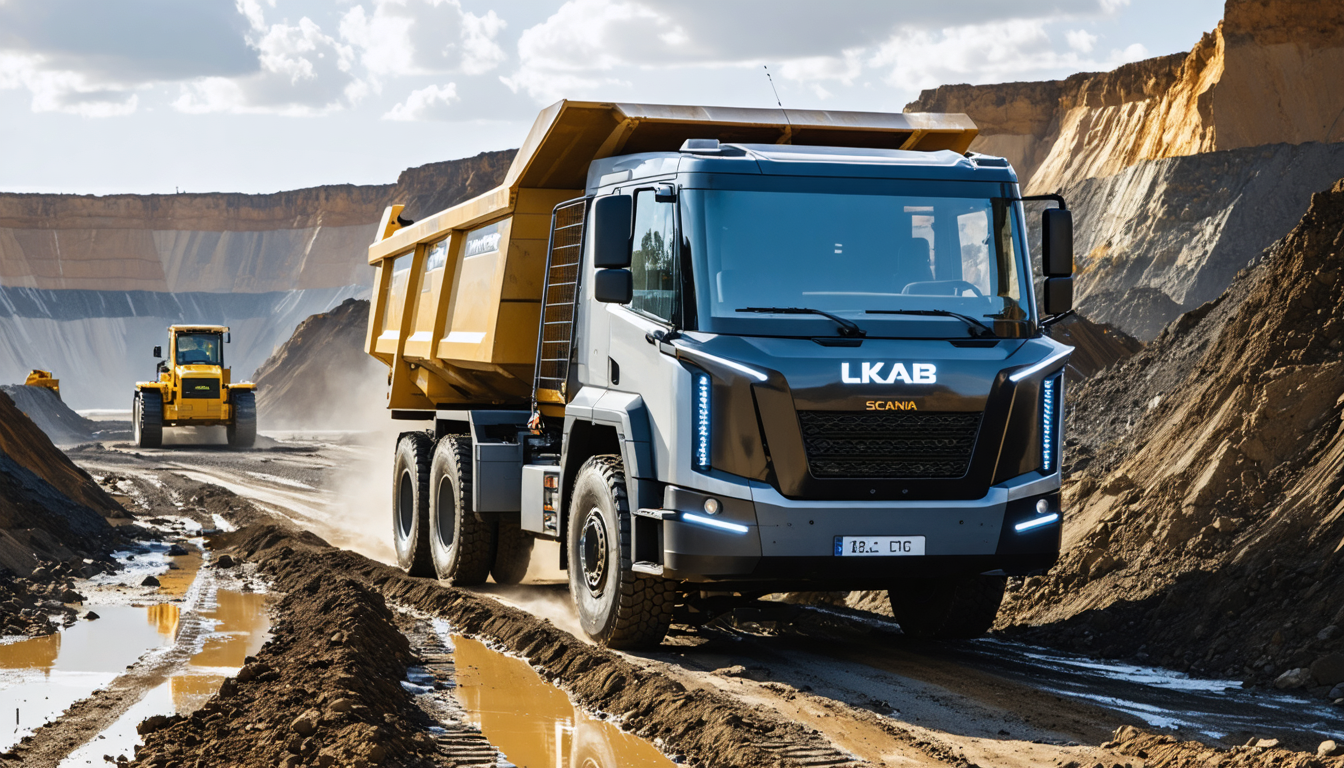
Scania’s game-changing electric 60-ton truck is shaking up mining operations alongside LKAB, signaling a new era of clean energy transportation in heavy industry.
In a bold leap toward sustainable mining, Scania has deployed an electric 8×4 tipper truck weighing 60 tons at LKAB’s Malmberget mine. This pioneering vehicle combines power and innovation, marking a critical step in electrifying mining logistics. The partnership aims to slash carbon emissions and redefine heavy-duty transport efficiency underground.
Revolutionizing Mining Logistics with Scania’s Electric Heavy-Duty Truck
Mining operations have long depended on massive, fuel-guzzling trucks to haul raw materials. The partnership between Scania and mining heavyweight LKAB is rewriting this narrative by testing a fully electric 8×4 heavy tipper truck specially crafted for demanding mining environments. The vehicle, dubbed “Sleipner” after the mythical eight-legged horse, is a four-axle giant carrying a 38-ton payload with a total weight of 60 tons when fully loaded.
Sleipner breaks new ground with its dual steerable front axles, a feature never before integrated in a Scania electric truck. Designed on Scania’s modular electro platform, the truck offers exceptional stability and hauling capacity suitable for rugged mining roads. This innovation goes beyond reducing emissions; it improves handling and efficiency in harsh underground corridors.
The electric platform includes two large battery packs with a combined 416 kWh capacity, paired with a 400-kW electric motor engineered to deliver sustained power under heavy load. This system not only supports energy-intensive transportation but also cuts mining’s carbon footprint drastically.
By deploying this truck in the Malmberget iron ore mine in northern Sweden, where LKAB annually moves over five million tons of waste rock, the companies target a monumental reduction in fossil fuel use within heavy mining logistics. The field trial serves as a practical, high-stakes experiment to validate the truck’s performance over difficult terrain and steep elevation changes.
Innovations Behind the Mining Operation Transformation
The integration of two steerable front axles in a heavy-duty electric truck revolutionizes maneuverability in tight, rugged mining zones. Traditional heavy vehicles struggle with sharp turns on confined mining routes, but Sleipner’s design enables precision movement, minimizing road wear and boosting safety. This is a key advancement when navigating steep inclines and elevational differences like the 250-meter climb on the truck’s current 5-kilometer haul route from sliding loading stations to dump sites.
With a payload of 38 tons and a fully loaded weight of 60 tons, the Sleipner manages substantial hauling volumes without sacrificing agility. The partnership demonstrates that electric heavy vehicles can sustain demanding mining schedules without compromising critical operational requirements.
Scania’s electric platform was built modularly, allowing quick adaptations to different payload requirements and industries. This approach means that innovations honed in mining logistics can soon be adapted beyond, potentially revolutionizing other industrial sectors reliant on heavy transport.
As LKAB’s project lead Peter Gustavsson emphasized, if this truck meets operational expectations, scalable fossil-free solutions could become standard in even the harshest mining environments. This would represent a seismic shift in the way mining companies handle waste rock haulage, driving cleaner, more efficient workflows globally.
Environmental Stakes and Carbon Savings from Electrifying Mining Freight
Mining is one of the most carbon-intensive industries due to its reliance on diesel-powered heavy machinery. Electrifying transport trucks like Sleipner directly attacks a significant source of greenhouse gases. Since LKAB moves millions of tons of waste rock yearly, replacing diesel trucks with electric alternatives could slice emissions considerably.
Although exact numbers for carbon savings vary by mining site specifics, estimates from the LKAB-Scania collaboration project indicate potential reductions in CO2 emissions by tens of thousands of tons annually. This shift accords with global climate goals pushing for decarbonization of industry and mining in particular.
The move to electric trucks also compounds benefits by reducing noise pollution and improving onsite working conditions. Miners face less exhaust emissions and quieter machinery, enhancing both environmental and occupational health standards. This makes the electric truck not just a greener choice but a human-centric innovation.
On the macro level, widespread adoption of electric vehicles in mining transport could drive economies of scale, forcing battery advancements and charging infrastructure improvements. The outcomes promise cascading environmental benefits across the supply chain, stimulating a green industrial revolution.
Accelerating the Mining Industry’s Transition to Clean Energy Trucking
Hybrid and electric drive systems in mining trucks are gaining traction worldwide, supporting a global trend toward sustainability. Scania and LKAB operate at the forefront, catalyzing real-world adoption of electric transport in industrial contexts. This partnership serves as a benchmark for other mining operators evaluating how to integrate clean energy solutions effectively.
Their efforts go beyond deploying a single truck; the program involves rigorous testing, data collection, and continuous improvement. This enables refinement of battery management, vehicle dynamics, and charging methods tailored to mining’s grueling schedules.
Collaborations like this provide a blueprint for industry-wide best practices. As more mining firms partner with manufacturers to test similar vehicles, the learning curve shortens, costs decline, and scalability improves. Moreover, these projects highlight the crucial role of tailored engineering solutions that address the unique challenges of heavy-duty mining transport.
Ultimately, the adoption of fully electric heavy-duty vehicles signals an irreversible move toward sustainable mining operations—a vital step as governments and investors demand measurable climate action from resource extraction sectors.
Operational Challenges and Practical Insights from Real-World Testing
Deploying an electric 60-ton truck in an active mine entails more than just swapping diesel for batteries. Harsh environmental conditions, constant heavy loading, and intricate maneuvering require robust engineering and operational planning. The Malmberget trial offers invaluable insights into how electric trucks perform under real operational constraints.
One of the key operational challenges tackled is battery life management over long, strenuous shifts. Scania’s dual-battery design features a 416 kWh capacity, allowing sufficient range and power for typical mining hauls while balancing charging downtime. This system facilitates efficient scheduling of charging cycles to avoid operational bottlenecks.
The truck’s modular platform means that maintenance processes can be streamlined. Components built with standardization in mind make replacements and diagnostics straightforward even in remote mining areas, reducing downtime and increasing overall fleet availability.
Lining up the vehicle’s performance data with LKAB’s transportation needs has honed operational parameters like weight distribution, braking systems, and energy regeneration techniques optimized for mining roads’ steep gradients.
This real-world validation is crucial for convincing other mining operators of electric vehicle viability. By transparently sharing performance metrics and operational experiences, Scania and LKAB pave the way for faster electrification adoption across the global mining ecosystem.
Strategies Streamlining Heavy Electric Truck Integration
- Deployment of dual steerable front axles to enhance maneuverability on narrow mining routes
- Modular battery systems ensuring sustained operational range and easier maintenance
- Energy recovery systems adapted for the stop-and-go nature of mining haulage
- Collaborative trials with mining operators to tailor vehicles to site-specific challenges
- Integration with existing mine infrastructure for charging and logistics scheduling
Future Horizons: Scaling Electric Truck Applications Beyond Mining
The success of Scania and LKAB’s electric 60-ton truck trial serves as a springboard for broader industrial electrification efforts. The modular nature of the electric platform allows adaptation to other sectors that demand heavy-duty transportation, including construction, forestry, and waste management.
As battery technologies advance and costs come down over the next few years, the economic rationale for switching to electric heavy vehicles grows stronger. Early adopters like LKAB and Scania not only benefit environmentally but set themselves apart competitively in an evolving marketplace that favors sustainability.
Industries facing tough operational environments can learn from the mining trials, leveraging documented insights into vehicle durability, energy management, and workflow integration. The ripple effect promises to drive a global transition toward fossil-free transport solutions for heavy machinery.
Moreover, the environmental impact of replacing large diesel vehicles with electric trucks could be transformative at a global scale, significantly trimming industrial emissions and pushing industries closer to climate targets.
Synergies Between Mining Innovation and Broader Industrial Electrification
Mining sector advancements often act as test beds for innovations that later permeate other industries. The knowledge gained from electric heavy tipper trucks operating under extreme conditions accelerates improvements in battery longevity, powertrain efficiency, and vehicle safety. These gains have direct applications in commercial trucking, construction haulage, and urban waste transport.
Ultimately, the collaboration between technology leaders and industry operators like LKAB serves as a model highlighting how ambitious innovation paired with real-world trials can accelerate transitions to clean energy while maintaining operational excellence.
| Key Deployment Details | Specification |
|---|---|
| Truck Type | Electric 8×4 Heavy-Duty Tipper |
| Operational Location | Malmberget Mine, Northern Sweden |
| Payload Capacity | 38 Tons |
| Total Weight (loaded) | 60 Tons |
| Battery Capacity | 416 kWh (Dual Packs) |
| Electric Motor Power | 400 kW |
| Steerable Axles | Two Front Axles (First in Scania’s line) |
| Typical Haul Route Length | 5 Kilometers with 250-meter Elevation |

My Name Is Said I am a dedicated blogger sharing the latest trending blogs from the USA, covering news, updates, and informative stories. My focus is on delivering accurate, engaging, and timely content for readers worldwide.