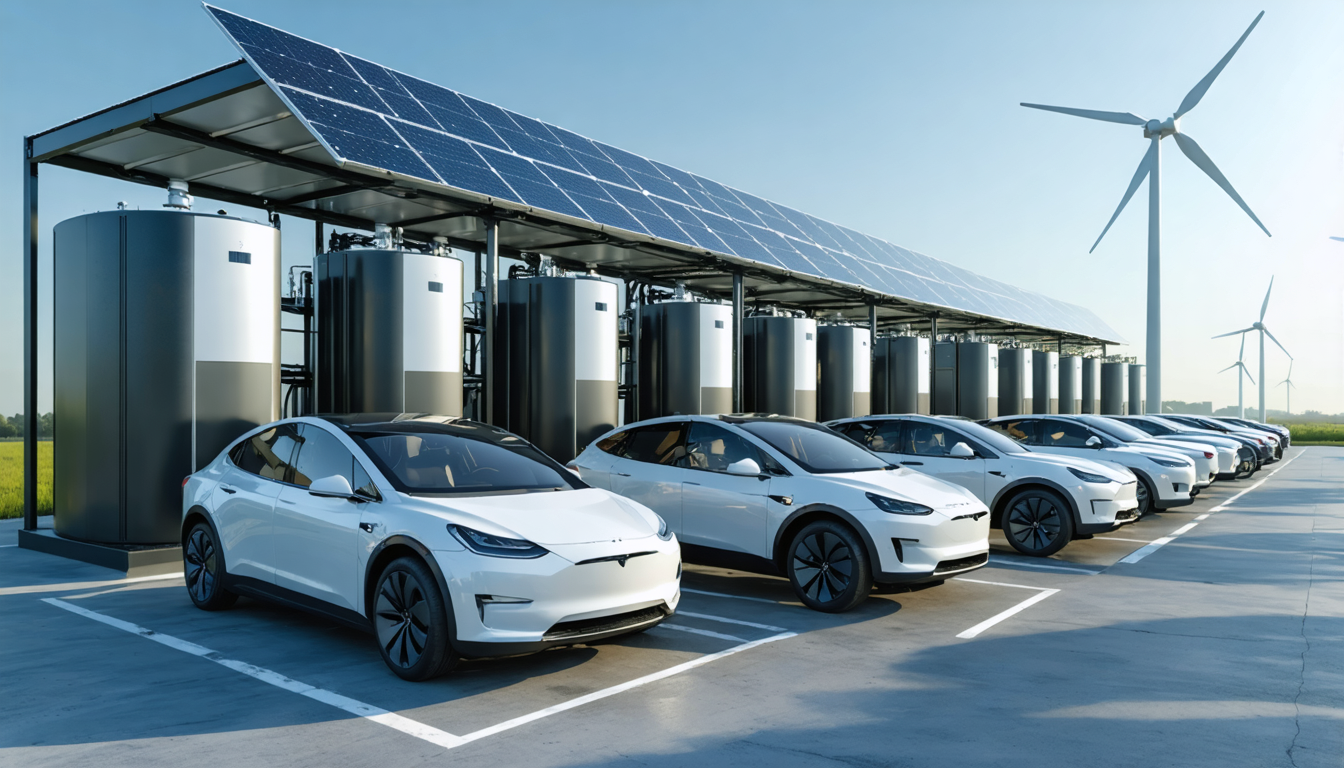
Unlocking Fleet Potential: How Battery Storage Revolutionizes Electric Mobility
Discover why integrating advanced battery storage systems is the game changer pushing fleet electrification into a new era of efficiency, cost savings, and operational flexibility. Electric fleets are no longer a futuristic ideal; they are the backbone of modern sustainable transportation. Behind this shift lies a critical technology—battery storage—that directly shapes energy management, charging speed, and overall vehicle performance. Sascha Alexander König from ADS-TEC offers exclusive insights into overcoming infrastructure limits and harnessing renewable energy for fleet success.
Revolutionizing Fleet Charging Through Strategic Battery Storage Solutions
Flipping the switch to electric vehicles (EVs) in fleet operations involves more than just adopting new vehicles. It demands an overhaul of energy management, particularly in the realm of battery storage. Sascha Alexander König, Director of Product Marketing Charging at ADS-TEC, underscores the urgency to rethink traditional charging models. By decoupling the energy draw from the grid and actual vehicle charging through battery buffers, fleets can sidestep expensive infrastructure hurdles.
Many fleet depots struggle with low power grid connections—often capped at 80 or 100 kW—which limits the addition of fast chargers. Conventional rapid chargers require costly network upgrades, with expenses sometimes exceeding $200,000 and long approval delays. ADS-TEC’s solution involves integrating battery storage within charging stations, branded as ChargePost and ChargeBox. These systems accumulate energy from the grid slowly, then release it rapidly to vehicles, mimicking the efficiency of a “flush toilet,” a vivid analogy coined by König. This temporal separation ensures that fleets can offer high-speed charging without overstressing local grid infrastructure.
Consider a management fleet where vehicle visits to the depot occur sporadically and unpredictably. Battery storage can deliver up to 500 kWh daily, supporting approximately 15 fast charges even with minimal grid power. This flexibility enables effective fleet electrification without waiting for grid enhancements, making impactful gains for fleet operators looking to maintain uptime.
Redefining Charging Infrastructure to Bypass High Grid Costs
Cost-Effective Energy Management: Utilizing Solar and Business Electricity Contracts
Lowering energy costs sits at the heart of sustainable fleet electrification. As König points out, low operational costs alone aren’t valuable if electricity prices are prohibitively high. The strategic approach combines onsite renewable energy, particularly solar PV, with smart battery storage. This tactic enables fleets to maximize self-consumption of clean energy, dramatically reducing reliance on expensive public charging or volatile grid tariffs.
High-volume commercial electricity contracts often come with preferential rates, but they still require managing peak demand charges. Battery storage plays a pivotal role here by aggregating renewable power production and buffering demand spikes. For instance, a fleet operator can store excess daytime PV energy during low-tariff hours then dispense it during peak evening charging demands, flattening the demand curve and slashing costs.
Public charging points may appear convenient but tend to be less flexible and more costly long-term. Maintenance, location constraints, and the risk of unattended assets create hidden expenses. Battery-enabled private charging stations, even those shackled to humble 32-A sockets, provide an agile and scalable charging solution that can migrate as fleets expand or relocate—particularly crucial for leased depot facilities.
Deploying Smart Energy Contracts for Maximum Fleet Profitability
Emergency Services and High-Availability Fleets Counting on Battery Storage
For critical services—police, fire departments, and emergency medical providers—reliable access to fully charged vehicles is non-negotiable. Yet these organizations often operate out of aging structures where electrical infrastructure wasn’t designed for substantial, simultaneous charging loads. König describes how integrating battery storage systems revolutionizes these setups by enabling ultra-fast DC charging (250–320 kW) from modest grid connections (40–50 kW).
This makes it feasible to charge multiple high-priority emergency vehicles rapidly while respecting strict local power limits. The battery storage not only smooths peak power delivery but also ensures vehicles are always ready for a fast response. This transformative model enhances readiness and operational efficiency while avoiding expensive and time-consuming building power upgrades.
Government fleets also benefit from the flexibility of storage-backed charging in scenarios with irregular vehicle return patterns, such as those experienced by car rental companies at airports or train stations. Faster, battery-supported charging accelerates vehicle turnover, cuts personnel costs related to manual shuttle operations, and aligns power consumption with site constraints.
How Battery Storage Secures Fleet Readiness and Response
Batteries as Multi-Functional Assets: Peak Shaving and Demand Response
Battery storage’s impact extends beyond fleet vehicle charging. König discusses fleets that leverage these systems for dual purposes: reducing building peak loads and providing fast charging. When stored energy feeds the building at times of peak demand, it mitigates costly spikes in electricity bills. Simultaneously, it powers rapid EV charging without requiring peak power from the grid.
This concept unlocks three major financial benefits:
- Peak Demand Reduction: Cutting off extreme spikes lowers demand charges from the utility.
- Fast Charging Capability: Batteries discharge quickly to enable high-rate EV charging even with limited grid access.
- Dynamic Tariff Optimization: Energy is purchased and stored during low-cost periods and used when prices surge.
One industrial client shared by König highlights this synergy, achieving more cost control and efficiency with their battery system than through any single energy management technique. This triple win empowers fleet operators to sustain aggressive electrification targets while navigating real-world infrastructure limitations.
Battery Storage as an Economic Catalyst Beyond EVs
Projecting the Future: Why Battery Storage and Fleet Electrification are Inseparable Allies
The final take from Sascha Alexander König perfectly captures the future trajectory of fleet electrification: battery storage and fleet advancement are no longer separate endeavors but entwined necessities. Cars do not dictate the future of mobility as much as the infrastructure surrounding them, notably the intelligent energy storage systems.
As rapid charging demands grow and renewable energy integration deepens, battery technology’s role expands from a mere component to a strategic partner in fleet operation. With over 2,500 battery-based fast charging points deployed worldwide, ADS-TEC charts the path forward, enabling fleets to electrify efficiently, sustainably, and affordably.
For fleet managers, embracing battery storage means unlocking transformative flexibility. The ability to manage energy intelligently translates into greater uptime, better cost control, and accelerated contributions to sustainability goals—a win-win for companies and the planet alike.
Why Forward-Thinking Fleets Must Invest in Integrated Battery Systems
| Fleet Type | Grid Connection Limit | Charging Power Delivered | Battery Storage Benefit | Use Case Example |
|---|---|---|---|---|
| Management Vehicles | 80-100 kW | Up to 500 kWh/day (fast charge) | Temporal decoupling of charging and grid load | Office depots with sporadic vehicle visits |
| Rental Cars (High Volatility) | 32-A Socket | Flexible charging as needed | Mobile, low-investment charging option | Leased urban garages |
| Emergency Services | 40-50 kW | 250-320 kW DC fast charging | Reliable full charge for rapid deployment | Police, Fire, Ambulance fleets |
| Industrial Fleets | Varies, peak shaving | Fast charging + power supply to building | Energy cost reduction and load management | Factories with dynamic tariffs |

My Name Is Said I am a dedicated blogger sharing the latest trending blogs from the USA, covering news, updates, and informative stories. My focus is on delivering accurate, engaging, and timely content for readers worldwide.