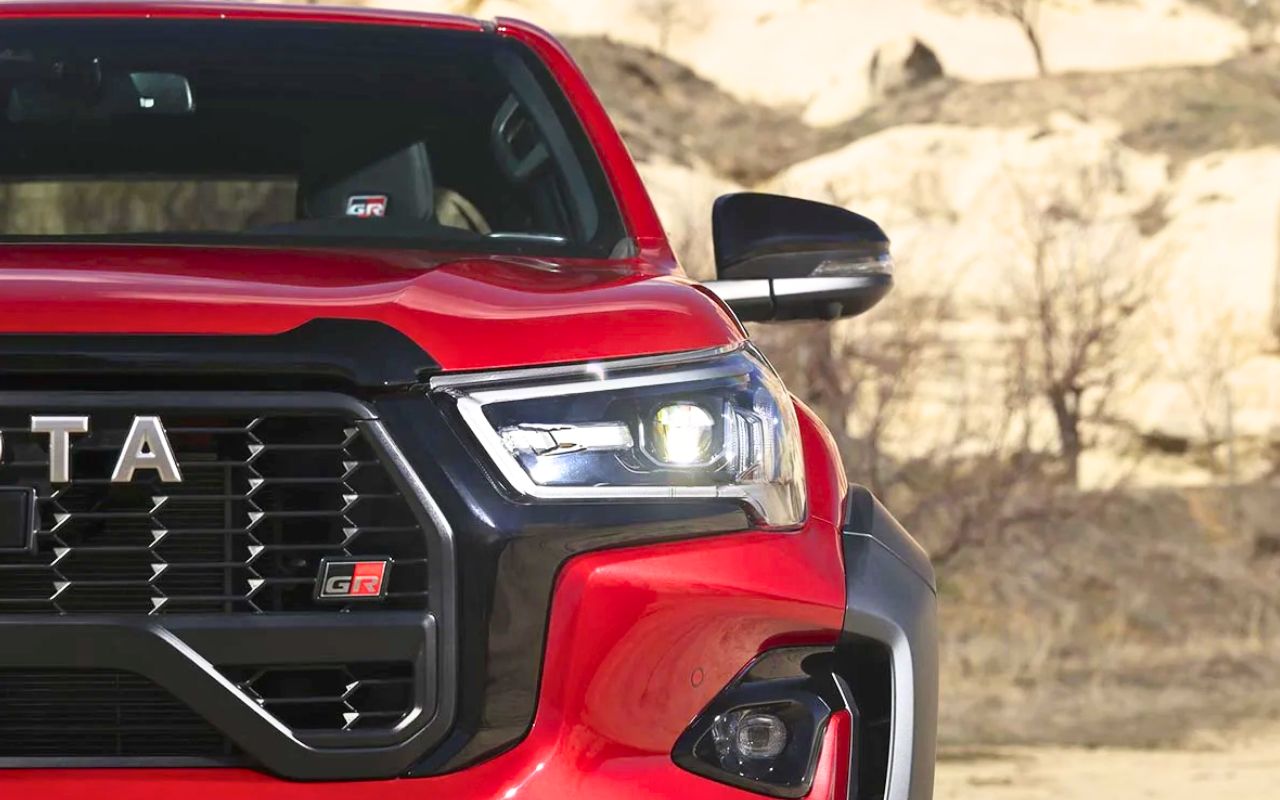
Toyota quietly reshaped its most famous pickup into a serious off-road challenger, using proven Land Cruiser engineering to confront Ford’s Raptor head-on.
For years, the Hilux symbolized indestructibility more than excitement. That balance shifted when Toyota pushed its GR Sport badge far beyond cosmetics. The result was a wider, tougher, more focused pickup designed to dominate broken terrain without sacrificing reliability. Rather than chasing brute horsepower alone, Toyota doubled down on suspension, chassis control, and off-road confidence. This was not a show truck. It was a calculated response to a market that had changed.
A market shift Toyota could no longer ignore
For decades, pickup trucks lived two separate lives. They were either work tools or oversized lifestyle statements. That line blurred when Ford launched the Ranger Raptor, proving buyers wanted off-road credibility without giving up daily usability. Toyota saw the shift early, but it took time to respond with substance rather than style. The Hilux already carried a legendary reputation built in deserts, mines, and war zones. What it lacked was emotional pull. The GR Sport project emerged as Toyota’s answer to that gap. Engineers were tasked with transforming toughness into driver engagement, not by rewriting the rulebook, but by refining what already worked. This strategic move was less about chasing trends and more about defending territory. Toyota understood that the pickup segment had become emotional, aspirational, and fiercely competitive. The Hilux GR Sport was shaped to reclaim relevance where image and capability now mattered equally.
Why the GR Sport badge finally meant something
Earlier GR Sport versions leaned heavily on visual cues. Wider wheels, red stitching, darker trim. They looked the part but stopped short of mechanical transformation. That changed with the latest Hilux GR Sport program, which was developed as a chassis-first upgrade rather than a marketing exercise. Toyota’s Gazoo Racing influence became tangible. The pickup gained wider tracks, revised suspension geometry, and reinforced components derived from endurance racing logic. The goal was control at speed over rough ground, not just durability at low crawl speeds. By repositioning GR Sport as a functional label, Toyota sent a clear message. This Hilux was no longer about badges. It was about engineering intent, tested under conditions that mirrored rally raids rather than showroom lighting.
A wider, meaner silhouette built for abuse
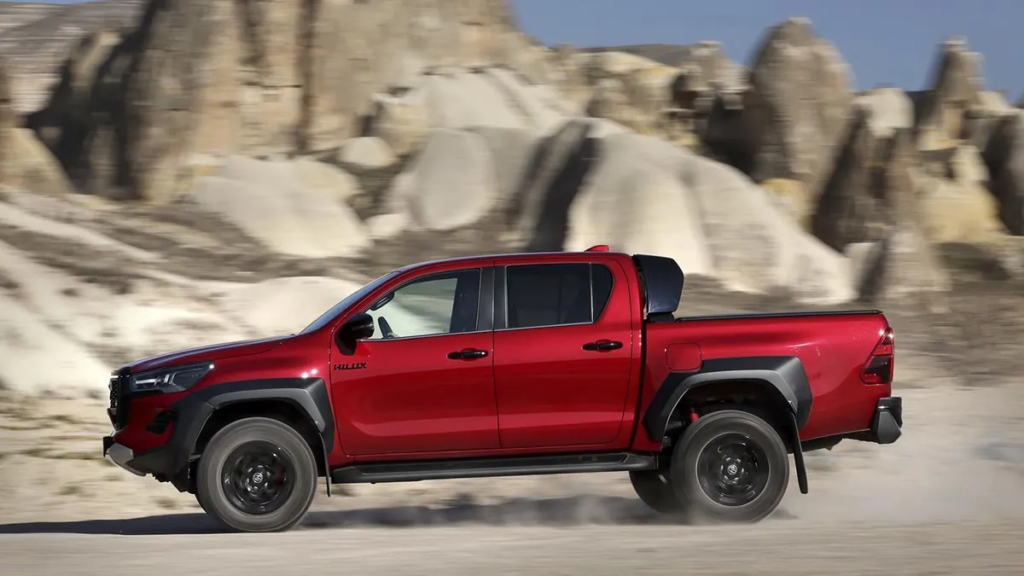
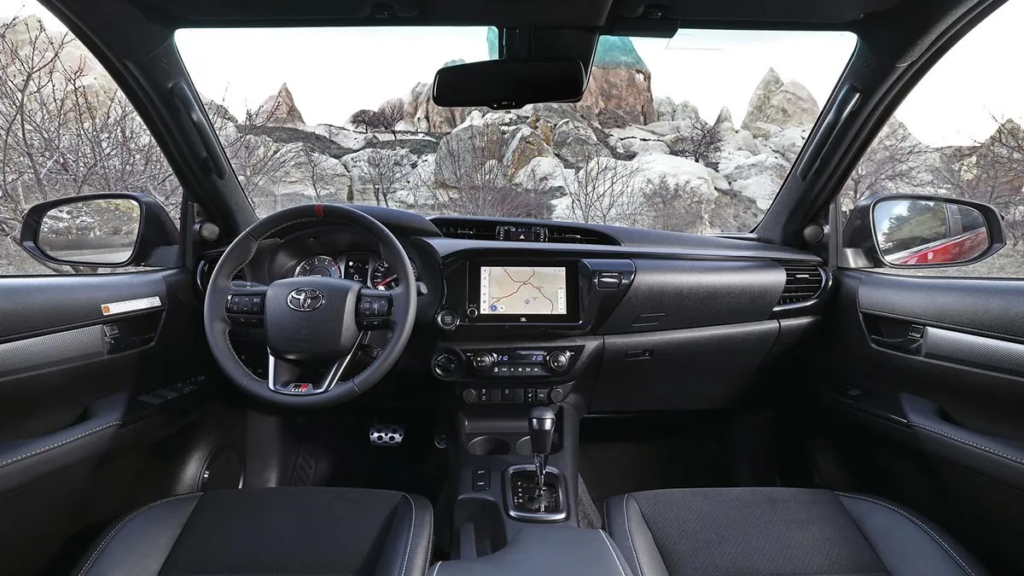
Visually, the transformation was immediate. The Hilux GR Sport adopted a broader stance, flared fenders, and increased ride height, making it instantly distinguishable from standard versions. These changes were not aesthetic indulgences. They served mechanical purposes tied directly to stability and suspension travel. Approach and departure angles improved, allowing the truck to attack obstacles without hesitation. Reinforced skid plates protected vital components, while all-terrain tires optimized grip across sand, gravel, and mud. Everything about the design communicated intentional aggression rather than excess. Inside, Toyota balanced ruggedness with restraint. GR-branded seats, reinforced bolsters, and red accents added personality without undermining practicality. This was a cabin designed for long-distance punishment, not weekend posing.
Power was not the headline, control was
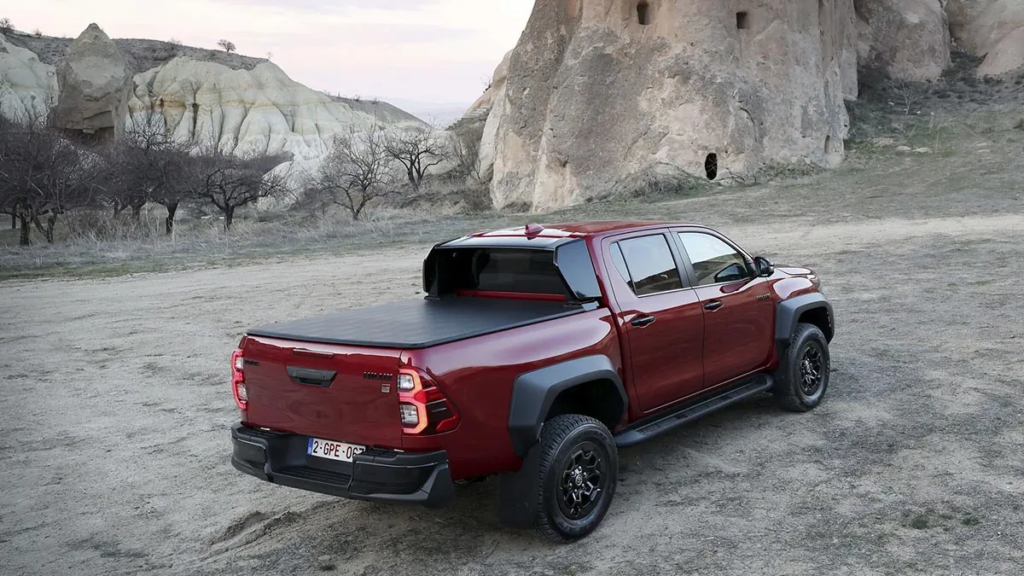
Unlike Ford’s decision to unleash a high-output gasoline engine, Toyota took a more conservative path. The Hilux GR Sport relied on the familiar 2.8-liter turbodiesel, producing around 204 hp and roughly 369 lb-ft of torque. On paper, it looked modest. In practice, it made sense. Torque delivery favored low-end response, crucial for climbing and towing. Paired with a six-speed automatic and permanent four-wheel drive, the system emphasized predictability rather than drama. This approach reflected Toyota’s understanding of how these trucks were actually used. The real upgrade lived beneath the body. New monotube dampers, revised springs, and reinforced control arms allowed higher speeds over uneven terrain without sacrificing stability. Where competitors chased raw output, Toyota focused on mechanical confidence.
Suspension became the real weapon
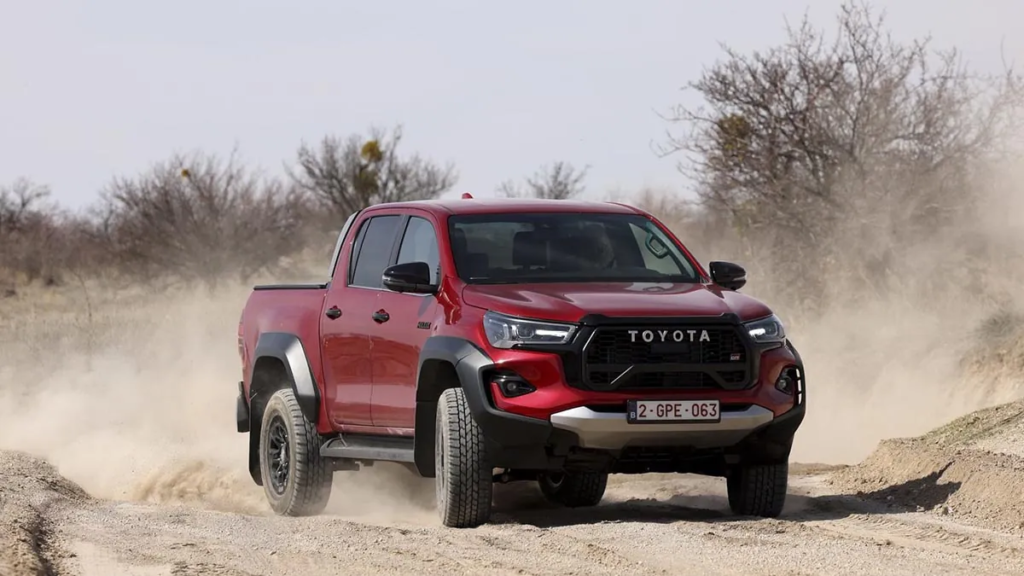
Suspension defined the Hilux GR Sport’s character. Toyota engineers reworked damping curves to handle sustained punishment, not short bursts. The pickup maintained composure over corrugations, ruts, and broken trails that would unsettle conventional setups. This was where Land Cruiser DNA quietly surfaced. The philosophy favored durability under load, predictable rebound, and long-term resilience. Electronic traction systems complemented mechanical grip, stepping in subtly rather than dominating the experience. The result was a truck that encouraged speed where others demanded caution. It did not feel fragile or overworked when pushed. Instead, it rewarded confidence, proving Toyota’s belief that suspension mattered more than spectacle.
A direct answer to the ranger raptor
Comparison with the Ford Ranger Raptor was inevitable. The Raptor leaned into performance theater, offering more horsepower and aggressive styling. Toyota countered with balance, reliability, and lower long-term complexity. Pricing reflected that philosophy. While the Ranger Raptor climbed toward €67,500, the Hilux GR Sport was expected to stay below €60,000, positioning it as a value-driven alternative rather than a premium indulgence. Buyers were offered capability without excess. This was not about winning spec-sheet battles. It was about trust. Toyota knew its audience valued vehicles that survived abuse over decades, not seasons. In that context, the GR Sport stood as a credible, calculated rival rather than an imitation.
The Hilux reclaimed its identity
The Hilux GR Sport did more than add excitement to a familiar nameplate. It reaffirmed what made the Hilux relevant in the first place. By blending Land Cruiser toughness with modern suspension engineering, Toyota avoided gimmicks and focused on fundamentals. This evolution reflected a broader realization inside Toyota. Electrification and technology mattered, but so did authenticity. The GR Sport program showed that progress did not always mean reinvention. Sometimes, it meant sharpening what already worked. For Toyota, this pickup was not revenge in the loud sense. It was vindication. Proof that restraint, engineering discipline, and experience could still compete in a segment increasingly driven by noise.

My Name Is Said I am a dedicated blogger sharing the latest trending blogs from the USA, covering news, updates, and informative stories. My focus is on delivering accurate, engaging, and timely content for readers worldwide.