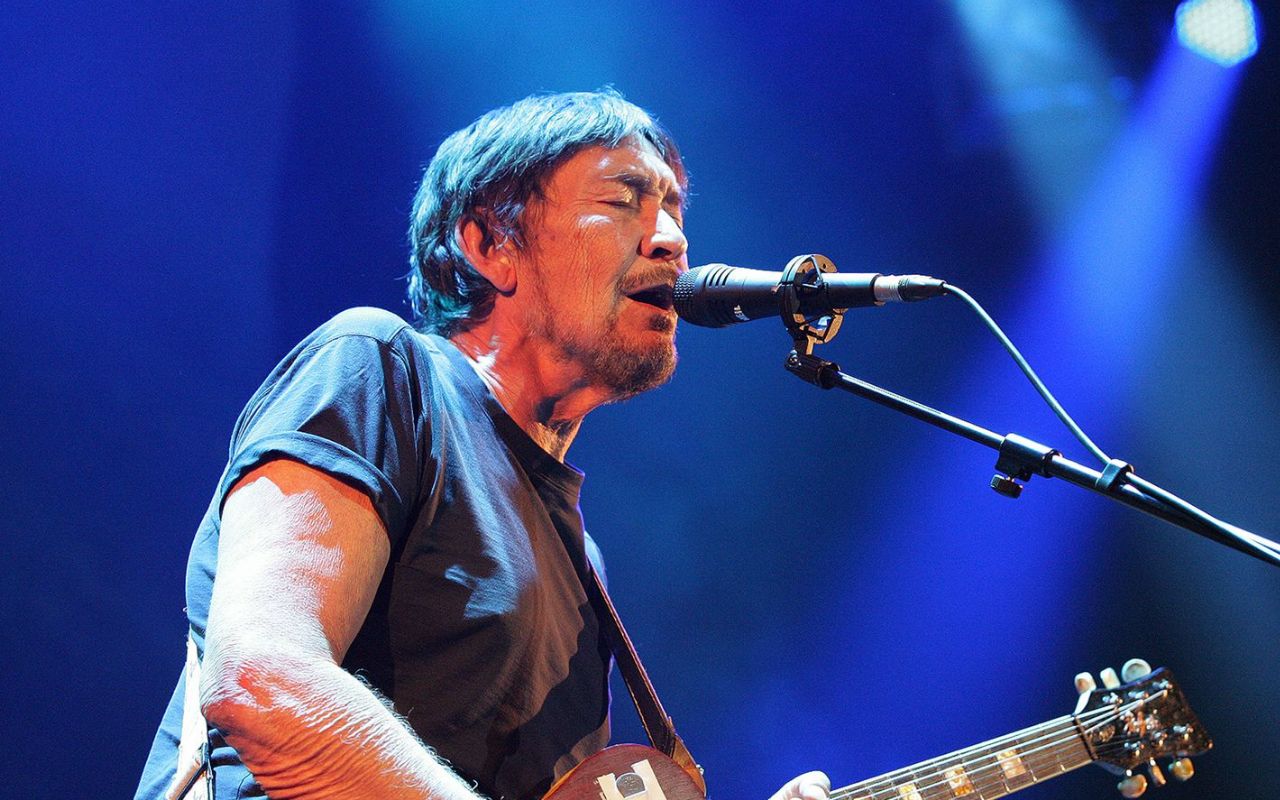
He never chased trends, never played the celebrity game, and rarely raised his voice. Yet for five decades, Chris Rea’s songs followed millions of listeners through long drives, winter nights, and moments of quiet reflection.
His death, announced by his family on December 22, 2025, marked the end of a career built on restraint, emotion, and an unmistakable slide-guitar sound. Rea did not redefine rock with shock or spectacle. He did it with patience, atmosphere, and stories that felt lived-in rather than performed. This was music for adults, written by someone who had learned the hard way how life actually unfolds.
A working-class voice shaped by northern England
Born in 1951 in Middlesbrough, in England’s industrial northeast, Chris Rea grew up far from the glamour traditionally associated with rock stardom. His father ran an ice cream business, and music arrived relatively late in his life. Rea did not grow up as a guitar prodigy or a teenage stage animal. Instead, he absorbed blues, soul, and American roots musicwith the curiosity of an outsider who knew this world was not built for him. That background mattered. Rea’s voice carried the grain of someone shaped by factory towns, rain-soaked streets, and modest expectations. It was rough, slightly weathered even in youth, and deeply human. This grounding became one of his defining strengths. While many of his contemporaries chased volume and spectacle, Rea leaned into restraint, melancholy, and storytelling, creating music that felt closer to lived experience than performance.
Early success that nearly broke him
Rea’s career began seriously in the mid-1970s, when his debut album Whatever Happened to Benny Santini? introduced him to both British and American audiences. The single Fool (If You Think It’s Over) earned him a Grammy nomination and unexpected attention across the Atlantic. On paper, success arrived quickly. In reality, it came with industry pressure, creative frustration, and a sense that his image was being shaped by others. The record business wanted polish and radio-friendly hooks. Rea wanted space, texture, and control. This tension nearly derailed his career before it truly began. He later spoke openly about feeling trapped, exhausted, and creatively stifled. Instead of burning out in public, he quietly recalibrated, stepping back to reclaim his sound. That decision delayed fame but preserved artistic integrity, something that would define the rest of his work.
On the Beach and the art of atmosphere
When On the Beach arrived in 1986, it marked a turning point. The album did not shout for attention. It drifted, lingered, and settled into the listener’s space. The title track became one of Rea’s most recognizable songs, built on understated rhythms, shimmering guitar lines, and lyrics that evoked escape without promising salvation. This was Rea at his most confident. He trusted mood over momentum, silence over excess. His music worked best not as background noise but as a companion to thought. Long before playlists and “chill” genres existed, Rea mastered the art of emotional pacing, allowing songs to breathe and unfold naturally. For many listeners, On the Beach became a lifelong reference point, proof that rock could mature without losing its soul.
The Road to Hell and unexpected mass appeal
Ironically, Rea’s most commercially successful album arrived when he was already established as a cult favorite. The Road to Hell (1989) resonated deeply in a Britain shaped by economic change and social tension. The title track captured a quiet anger, not explosive but resigned, observant, and deeply critical. The album reached number one in the UK and transformed Rea into a mainstream presence without forcing him to compromise his tone. His slide guitar became iconic, instantly recognizable yet never flashy. Unlike many chart-topping artists of the era, Rea did not chase stadium bombast. Even at his commercial peak, his music remained intimate, measured, and grounded in narrative rather than ego.
A Christmas song that refused to age
Few artists manage to write a Christmas song that escapes novelty. Driving Home for Christmas did exactly that. Released quietly and built around everyday imagery, the song avoided clichés and leaned into shared experience. Traffic jams, anticipation, fatigue, and warmth replaced sleigh bells and exaggerated cheer. Decades later, it became a seasonal staple across Europe and beyond. Its endurance revealed something essential about Rea’s writing: he understood how to make the ordinary feel meaningful. The song aged because it was never tied to fashion. It was tied to emotion, routine, and memory, elements that remain constant regardless of decade.
Health battles and stubborn resilience
Behind the scenes, Rea’s life was marked by serious health challenges. From the late 1990s onward, he underwent multiple surgeries related to pancreatic illness. These experiences reshaped his relationship with music. He became less interested in touring cycles and more focused on creative freedom, blues exploration, and long-form projects. Rather than retreating, Rea released ambitious albums, often double or triple records, driven by instinct rather than commercial logic. Critics sometimes struggled with the scale of these releases, but fans recognized the honesty behind them. This phase of his career reinforced his reputation as an artist who created because he had to, not because the market demanded it.
A legacy built on honesty, not spectacle
Chris Rea never fit neatly into rock mythology. He avoided scandal, celebrity drama, and reinvention gimmicks. His legacy rests instead on consistency, craft, and emotional credibility. Musicians admired his guitar tone. Listeners trusted his voice. Industry peers respected his refusal to chase trends. His death did not provoke shock headlines or viral moments. It prompted reflection. In an era increasingly driven by speed, algorithms, and constant reinvention, Rea’s career stands as a reminder that longevity can be built quietly, one honest record at a time.

My Name Is Said I am a dedicated blogger sharing the latest trending blogs from the USA, covering news, updates, and informative stories. My focus is on delivering accurate, engaging, and timely content for readers worldwide.