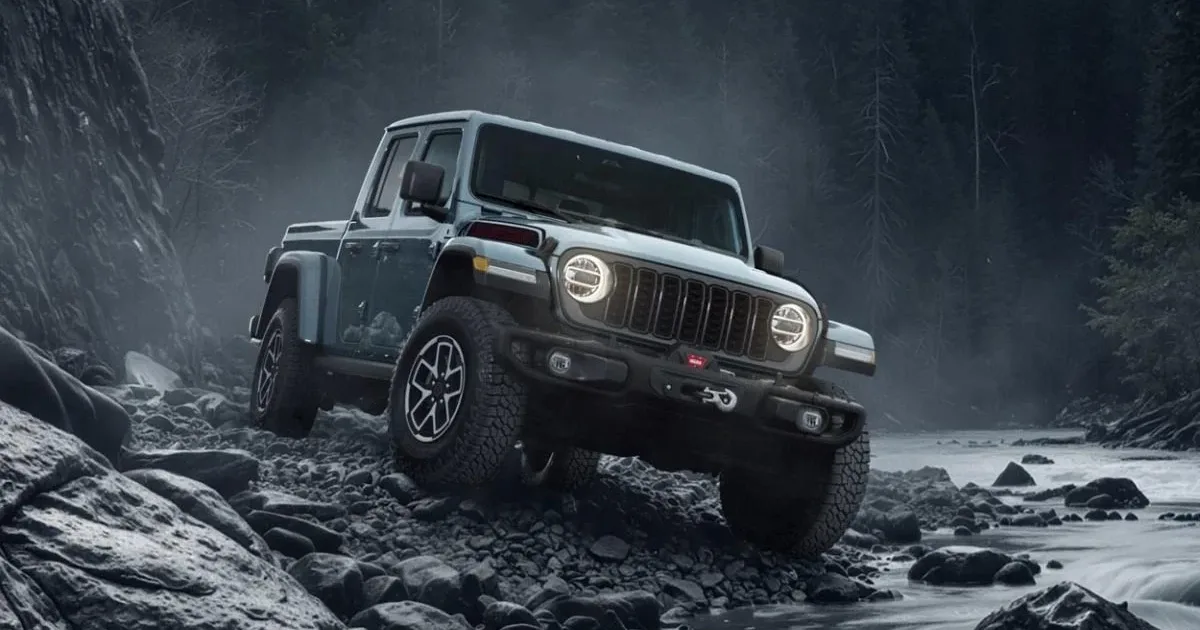
It was not a factory launch, nor a global reveal, yet this neo-retro Toyota Land Cruiser made seasoned off-road fans pause. By preserving the raw bones of a legendary 4×4 while injecting luxury and craftsmanship, it echoed the formula that had kept the Mercedes G-Class alive for decades.
Born far from Europe, the project surfaced at a moment when buyers were tired of uniform SUVs and quietly nostalgic for mechanical honesty. This Land Cruiser did not promise disruption through technology, but through identity.Its appeal rested on a simple question: what if Toyota had treated the Land Cruiser the way Mercedes treated the G? For a brief moment, the answer felt surprisingly convincing.
A Land Cruiser that embraced its past instead of hiding it
The idea emerged from PVS Automotive, an Australian specialist known for bespoke off-road builds. Instead of reinventing the Toyota Land Cruiser, PVS chose to preserve the original FJ70 silhouette, the same angular, upright design that once defined utility vehicles across continents. That decision mattered. At a time when most SUVs chased aerodynamics and digital minimalism, this Land Cruiser doubled down on boxy proportions, exposed hinges, and unapologetic ground clearance. The result felt authentic, not nostalgic cosplay. It looked like a tool, not a lifestyle prop. This approach mirrored what Mercedes G-Class had done for years: resist design dilution, refine details, and let history become a selling point. For enthusiasts disillusioned by crossover sameness, that visual honesty carried weight.
Off-road preparation built for reality, not brochures
Beyond aesthetics, the build delivered serious off-road hardware. The suspension was raised, reinforced all-terrain tires were fitted, and a snorkel was integrated for water crossings. Roof racks and a rear ladder turned the vehicle into a legitimate expedition platform rather than a weekend accessory. Inside the cargo area, modular storage drawers transformed the rear into a micro-camper setup, allowing cooking gear, recovery tools, or sleeping equipment to be deployed without structural modification. This was not a marketing exercise. It was engineered for remote terrain, long tracks, and mechanical self-reliance. Every addition respected the Land Cruiser’s reputation for durability and simplicity, avoiding unnecessary electronics or fragile gimmicks. That restraint resonated strongly with buyers who valued reliability over novelty.
An interior that rewrote expectations without betraying the spirit
Where the project truly surprised observers was inside. The original FJ70 cabin was famously austere, almost agricultural. PVS Automotive reimagined it completely, fitting hand-finished materials, Recaro seats, Alcantara trim, and custom stitching that would not look out of place in a high-end grand tourer. This contrast between rugged exterior and crafted interior echoed the philosophy that made the G-Class a luxury icon. It did not soften the vehicle’s purpose; it elevated the experience of living with it. Long journeys no longer meant sacrificing comfort for capability. Crucially, the interior avoided over-digitization. Physical controls remained, reinforcing a sense of control and mechanical connection that many modern SUVs had lost.
A proven diesel heart that favored endurance over fashion
Mechanically, the build retained the familiar 2.8-liter turbo-diesel engine, delivering roughly 204 horsepower and 369 lb-ft (500 Nm) of torque. By modern standards, those numbers were modest. By off-road standards, they were ideal. This engine had earned its reputation across harsh climates, valued for longevity rather than outright performance. Paired with low-range gearing and a robust drivetrain, it prioritized torque delivery, crawl control, and sustained load handling. At a time when electrification debates dominated headlines, this Land Cruiser quietly reminded buyers that mechanical reliability still mattered, especially far from charging infrastructure or dealer networks.
Pricing that challenged logic but clarified positioning
The cost was impossible to ignore. The build was priced around €124,000, roughly $134,000, placing it squarely in luxury off-road territory. On paper, that seemed excessive for a vehicle with unchanged mechanical fundamentals. Yet context mattered. A similarly equipped G-Class often exceeded that figure, while offering less customization and a more diluted sense of exclusivity. This Land Cruiser was not mass-produced; it was hand-built, a rolling statement rather than a volume product. For a niche audience, the price was not a deterrent. It was part of the appeal.
Why Europe briefly looked like fertile ground
Europe’s relationship with off-road vehicles had become complicated. Emissions regulations tightened, yet demand for authentic 4x4s never fully disappeared. Markets like Germany, Switzerland, and Scandinavia still valued rugged vehicles for real use, not image. This Land Cruiser concept arrived as buyers questioned whether electrification alone could replace mechanical resilience. Its neo-retro identity offered differentiation in a saturated SUV market, appealing to customers who wanted something timeless, not trend-driven. However, regulatory realities quickly resurfaced. Emissions compliance, homologation costs, and limited volumes made a European rollout unlikely. The idea was compelling, but the timing was unforgiving.
A missed opportunity that revealed a deeper truth
The project never became a European product, yet its impact lingered. It highlighted a latent demand for vehicles that combine heritage, capability, and comfort without surrendering identity. It also exposed a gap Toyota itself had never fully explored. While Mercedes successfully monetized nostalgia, Toyota remained conservative, focusing on reliability rather than emotional branding. This Land Cruiser showed what could happen if both philosophies met. For a brief moment, it felt like Europe might welcome such honesty again.
Retro Toyota Land Cruiser concept
Was this Land Cruiser an official Toyota model?
No. It was a bespoke build created by PVS Automotive, not a factory Toyota program.
Did it ever go on sale in Europe?
No. Emissions regulations and homologation barriers made European distribution impractical.
How did it compare to the Mercedes G-Class?
It offered similar heritage appeal and off-road credibility, with greater exclusivity but without factory backing.
Was the engine modernized or electrified?
No. It retained a proven diesel powertrain, favoring durability over innovation.
Why did enthusiasts react so positively?
Because it preserved authentic design, avoided SUV trends, and treated history as an asset.
Could Toyota replicate this idea officially?
Technically yes, but regulatory and strategic priorities made such a move unlikely at the time.
Was the price justified?
For mass buyers, no. For collectors seeking uniqueness and craftsmanship, it made sense.

My Name Is Said I am a dedicated blogger sharing the latest trending blogs from the USA, covering news, updates, and informative stories. My focus is on delivering accurate, engaging, and timely content for readers worldwide.