It was the best-selling hybrid compact in Europe, a benchmark for reliability and low fuel use. Yet when Toyota finally updated the Corolla, the upgrade quietly went somewhere else.
In China, the Corolla evolved with sharper styling and a more contemporary presence. In Europe, it stayed exactly the same. That decision mattered more than it looked. Because while the Corolla stood still, the competition moved fast.
A Hybrid Icon That Dominated Europe For Years
For more than a decade, the Toyota Corolla represented the safest bet in the European compact segment. It did not try to impress with bold design or digital gimmicks. Instead, it delivered proven hybrid efficiency, predictable ownership costs, and mechanical longevity that few rivals could match. Fleet buyers embraced it. Private owners trusted it. Taxi drivers swore by it. The Corolla Hybrid became a reference point for drivers who wanted to quit diesel without sacrificing range or peace of mind. But by the mid-2020s, that dominance began to look fragile. Design expectations shifted. Interiors became more digital. Hybrid systems from rivals closed the gap. And the Corolla, visually and technologically, started to show its age. That made Toyota’s next move all the more important.
The Facelift Europe Needed And China Got Instead
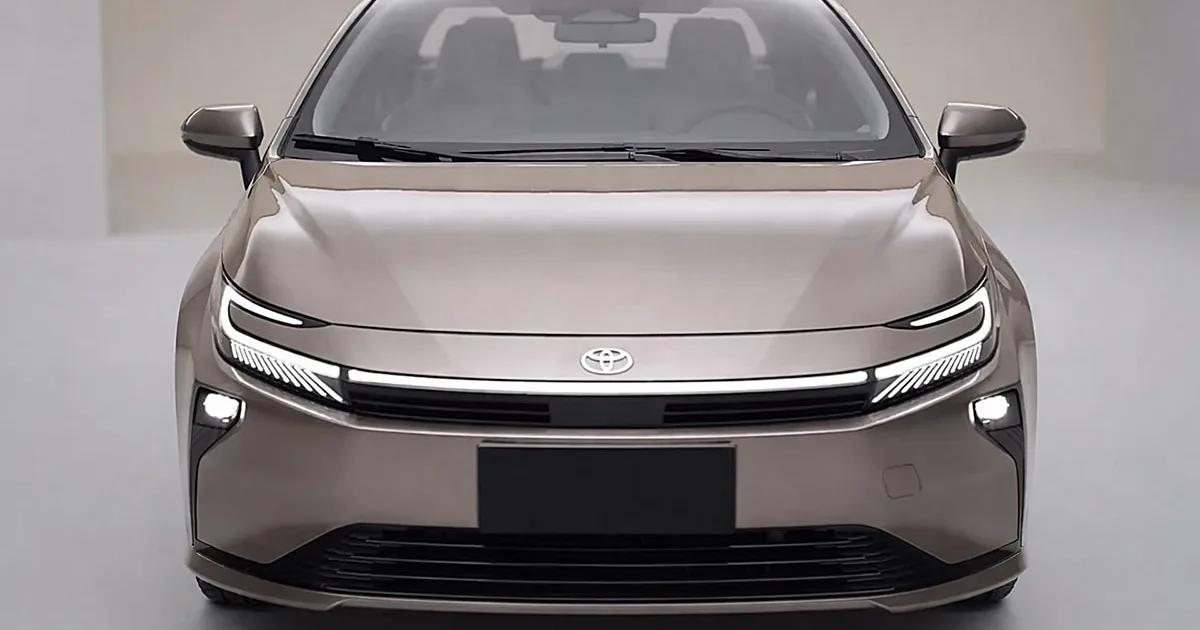
In 2026, Toyota revealed a refreshed Corolla sedan but only for the Chinese market. Built locally through the FAW-Toyota joint venture, this version introduced a cleaner front fascia, slimmer headlights, and styling cues clearly inspired by newer models like the C-HR and bZ4X. The update did not reinvent the car. It refined it. Sharper lines, a more assertive stance, and a silhouette that finally aligned the Corolla with Toyota’s modern design language. Yet this evolution stopped at China’s borders. European buyers continued to receive the unchanged Corolla hatchback and Touring Sports, despite those versions accounting for far higher sales volumes. The contrast was striking. The market that needed the refresh most did not get it.
Europe’s Compact Segment Did Not Wait
While Toyota paused, competitors accelerated. Between 2024 and 2026, nearly every major compact rival updated its lineup. Volkswagen Golf received a major refresh. Renault pushed its hybrid strategy further. Hyundai and Opel modernized both powertrains and interiors. These cars did not necessarily outperform the Corolla in real-world fuel economy, but they matched it closely while offering fresher cabins, larger screens, and more connected experiences. The Corolla’s interior, though solidly built, increasingly felt conservative. Buttons remained. Screens felt smaller. Software aged faster than Toyota expected. For buyers walking into showrooms in 2026, the Corolla no longer felt like the obvious choice it once was.
Toyota’s Hybrid Advantage Started To Shrink
Toyota invented mass-market hybridization. That advantage once felt untouchable. But by the time the Chinese Corolla facelift appeared, rivals had learned quickly. Renault’s E-Tech systems, Volkswagen’s mild hybrids, and Hyundai’s electrified drivetrains all delivered comparable efficiency under everyday conditions. Some even offered stronger acceleration or quieter highway behavior. The Corolla still consumed less fuel than many competitors often around 4.2 L/100 km, roughly 56 mpg US but the gap narrowed to the point where design and perceived modernity began to outweigh raw efficiency. Without a visible update, Toyota relied almost entirely on reputation. That worked until it didn’t.
Why Toyota Chose China First
From an industrial perspective, Toyota’s decision made sense. China’s compact sedan market remained highly competitive and design-driven. A visible refresh helped keep the Corolla relevant against aggressive local and international rivals. Europe, by contrast, leaned heavily on fleet contracts and long product cycles. Toyota likely calculated that brand trustwould compensate for delayed updates. There was also a timing factor. Insiders suggested Toyota preferred to save major European changes for the next-generation Corolla, expected closer to 2028. The facelift, in this view, acted as a bridge just not for Europe. It was a strategic delay, not an oversight. But delays have consequences.
What European Buyers Actually Missed
The Chinese Corolla facelift was not just cosmetic. The redesign subtly improved aerodynamics, visual balance, and perceived quality. It modernized the car without altering its proven hybrid core.
European buyers missed out on:
- A more contemporary front design
- Improved visual alignment with newer Toyota models
- A refreshed market image at a critical moment
None of this affected reliability. None of it changed fuel bills. But in a segment where emotional appeal increasingly influenced rational buyers, those details mattered.
And competitors capitalized on that gap.
A Short-Term Risk For A Long-Term Plan
Toyota did not lose control of the market overnight. The Corolla remained among Europe’s top hybrid sellers through 2026. But momentum slowed. Incentives grew. The conversation shifted. By withholding the facelift, Toyota protected its future product cadence but accepted a temporary erosion of leadership.
Key Data Snapshot (Europe, 2026)
| Specification | Toyota Corolla Hybrid |
| Combined output | ~138 hp |
| Average fuel use | ~56 mpg US |
| CO₂ emissions | ~96 g/km |
| Typical price range | ~$28,000–$33,000 |
| Drivetrain | Non-plug-in hybrid |
| Body styles | Hatchback, wagon |
Toyota Corolla Facelift
Did Europe ever receive the Chinese Corolla facelift?
No. The update remained exclusive to China.
Was the European Corolla mechanically outdated?
No. The hybrid system stayed efficient and reliable, but rivals closed the gap.
Why did Toyota prioritize China?
China’s market demanded faster visual updates and higher design turnover.
Did sales collapse in Europe?
No, but growth slowed as competitors refreshed their models.
When is the next Corolla generation expected?
Around 2027–2028, with deeper changes planned.
Was this a strategic mistake?
Short-term risk, long-term calculation. Toyota bet on loyalty — and partially paid the price.
Would a facelift have changed everything?
Not everything, but it would have bought Toyota valuable time in a rapidly evolving segment.

My Name Is Said I am a dedicated blogger sharing the latest trending blogs from the USA, covering news, updates, and informative stories. My focus is on delivering accurate, engaging, and timely content for readers worldwide.