By the time the 2026 model year planning cycle became public, the industry had already accepted that pure gas cars were becoming the exception, and the next wave of launches leaned hard into hybrids, EVs, and the last high output holdouts.
The shift had already happened, quietly, then all at once. The 2026 pipeline was stacked with electric nameplates, delayed but inevitable small EVs, and performance projects that refused to behave. Some brands chased affordability, some chased range, and some chased bragging rights that sounded absurd on purpose.
What mattered was not one car, but the pattern.
| Date | Local time | Item | What was known at the time |
| Dec 25, 2025 | 6:00 a.m. CET (12:00 a.m. ET) | 2026 model roundup circulated | The year ahead looked heavily electrified with a few loud exceptions |
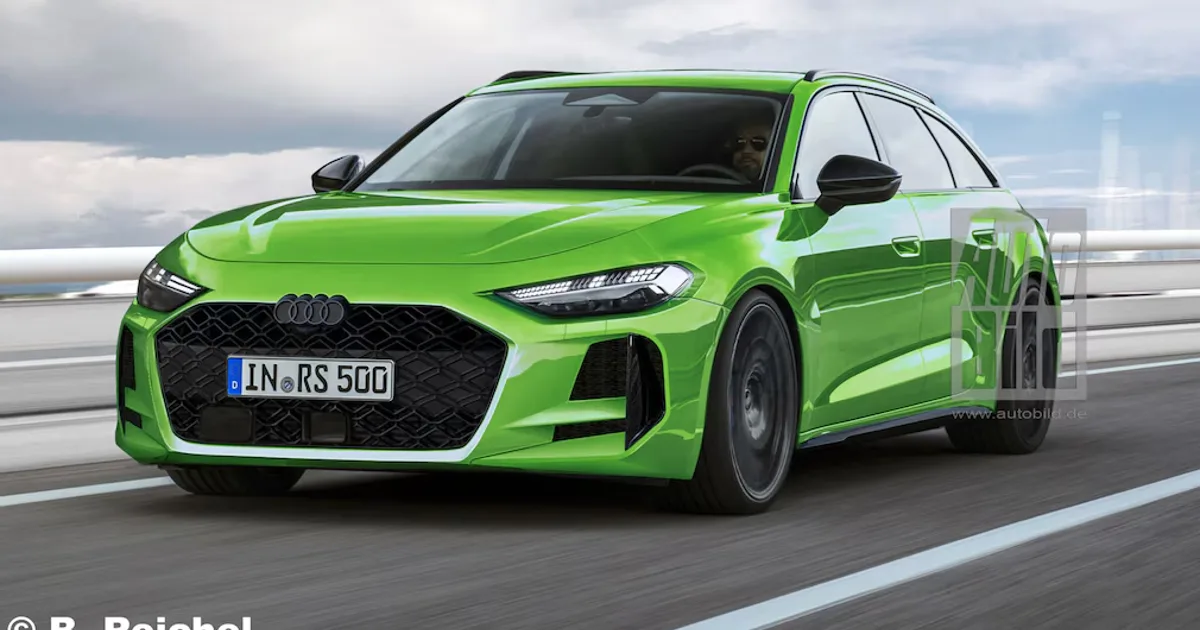
| 2026 | time not reported | Audi RS 5 (next) | Talk centered on up to 520 PS (about 513 hp) and a more serious tune |
| 2026 | time not reported | VW ID.Polo | Two batteries (37 and 52 kWh) and 116 to 226 PS (about 114 to 223 hp) were floated as the range baseline |
| 2026 | time not reported | Mercedes GLB (next) | A stronger push toward EVs on a new platform, with hybrid later, plus optional 7 seats for space utility |
| 2026 | time not reported | Skoda Epiq | A one year delay, a promised 425 km (264 miles) WLTP target, and a compact SUV slotting into the value battle |
| 2026 | time not reported | Porsche Cayenne electric | All wheel drive focus and talk of up to 1,156 PS (about 1,140 hp) as the headline flex |
| 2026 | time not reported | Ferrari Elettrica | A long anticipated first EV framed as a brand level moment shift |
Why 2026 felt like the year the timeline snapped
By the time 2026 product plans spilled into public view, the industry had already internalized a hard lesson from 2024 and 2025. If you wanted to sell new cars in many markets, you could not rely on old formulas. Pure internal combustion models, with no electrification at all, were becoming rare. The market was not just changing, it was narrowing around what regulators, fleet averages, and consumer expectations treated as normal. That set the tone for a calendar built around hybrids and EVs.
The punchline was that the shift showed up everywhere, not just in budget cars. Mainstream brands talked about modular platforms and battery sizes the way they used to talk about engine families. Premium brands leaned into software, torque, and charging curves. Even performance brands started treating electrification as an unavoidable tool, either to boost output or to keep the lights on. The 2026 lineup read like an industry betting its future on platforms and packs.
Gas only became the exception, not the rule
It was tempting to frame 2026 as the year gas engines died, but that was never how the transition worked. Gas power kept showing up, just rarely by itself. Mild hybrids, full hybrids, and plug in hybrids became the default compromise. The most common strategy was to keep familiar powertrains alive while adding enough electrification to satisfy emissions targets and customer expectations for smoother driving. It was less romance, more arithmetic, and the math favored electrification and compliance.
The result was a strange new normal. Buyers still saw familiar nameplates, but the engineering underneath got reorganized. A sedan could share batteries and motors with a crossover. A small hatch could become an EV without pretending to be futuristic. The old segmentation by engine size gave way to segmentation by battery capacity, charging speed, and packaging. In 2026, the real question was not “gas or electric,” it was “how much battery and how much hybrid.”
Volkswagen tried to make electric feel mainstream again
Volkswagen’s problem was not that it lacked EVs. It was that “affordable” kept turning into “over $30,000,” which translated to about $35,000 at the late 2025 exchange rate of roughly $1.18 per €1. That price point might be defensible, but it was not the mass market promise people expected from a brand that built its reputation on volume. So the plan for an ID.Polo sized EV mattered because it aimed straight at the gap between aspiration and reality. It was a play for priceand scale.
The technical story was as important as the badge. The ID.Polo was described as using a modified version of the MEB toolkit that moved to front wheel drive in electric form. Battery options of 37 kWh and 52 kWh were floated, with outputs between 116 and 226 PS, roughly 114 to 223 hp. That range implied a lineup spanning basic commuter duty to something quicker and more playful. It was not a miracle, it was a strategy: control cost, control weight, and control complexity through a shared architecture and a disciplined spec sheet.
There was also the quiet appeal of familiarity. The Polo name had a long legacy, with sales that had already climbed past 20 million units. Turning that into an EV was not just another model launch, it was a cultural shift for buyers who wanted something normal that happened to be electric. If the ID.Polo landed at the right price and felt easy to live with, it could have done more for adoption than a hundred concept cars. The target was simple: make EV ownership feel ordinary and repeatable.
Mercedes bet on space, then made the powertrain secondary
Mercedes approached the next GLB with a different logic. The brand already tested the “two versions” strategy, selling ICE and EV side by side. For the next generation, the messaging pointed to a platform that prioritized electric first, with a hybrid arriving later. That did not mean gas disappeared, it meant the order of importance flipped. Instead of building an EV variant of a gas car, the brand leaned toward building a vehicle where the electric version was the main event. The GLB became a statement about priority and direction.
The GLB’s edge was not speed, it was packaging. Keeping an optional seven seat layout, even with the same exterior length, made it the practical alternative inside the lineup. In a world where buyers used SUVs as family tools, the ability to carry more people mattered as much as performance. Mercedes treated that as a brand advantage: you could choose EV tech without sacrificing day to day utility. The pitch was “space without compromise,” built on room and flexibility.
That approach also revealed a broader industry truth. EVs made packaging both easier and harder. A flat battery helped interior space, but it also raised floors and pushed engineers into new solutions for seating, storage, and comfort. Brands that nailed packaging could win even if their power figures were not the loudest. In the 2026 cycle, Mercedes looked like it wanted to win by being the calm, usable choice that happened to be electric and smart.
Skoda’s delayed small SUV showed how hard the budget fight was
Skoda’s Epiq illustrated another side of the transition: timing slipped, then expectations rose anyway. The model was described as an electric SUV in the size class of a small crossover, initially expected earlier, then reportedly pushed back a year. In the old days, a one year delay might have been a footnote. In the EV era, it was a warning sign, because the market moved quickly and buyers compared new launches against fast improving rivals. Delay meant pressure, and pressure meant the Epiq needed strong numbers in the places that mattered: range, pricing, and usability. That was the delay tax.
The most concrete target discussed was WLTP range of up to 425 km, about 264 miles. That number mattered because it landed in the sweet spot for mainstream buyers who feared charging hassles. It did not promise cross country freedom, but it promised a weekly routine for many drivers. The rest of the spec was treated more cautiously, with hints that it could borrow ideas from Volkswagen group tech, perhaps with outputs up to around 211 PS, about 208 hp, and a top speed around 175 km/h, about 109 mph. Those figures were less about thrills and more about being “enough.” The Epiq’s mission was value and confidence.
Skoda’s challenge was that “budget EV” became an intensely competitive space. Once multiple brands targeted the same buyer, small differences in pricing, charging, and software could determine the winner. A car could not just be cheap, it had to feel finished. The Epiq was positioned as a practical choice, a kind of electric cousin to a small crossover, and that meant it had to win on function and trust.
Performance got louder, even as the industry went quieter
Electrification was supposed to make cars calm. Instant torque, fewer gears, less noise. But the 2026 lineup showed the opposite too: some brands used the transition as an excuse to get ridiculous. The headline example was the Porsche Cayenne electric narrative, which talked about all wheel drive and output that could reach 1,156 PS, around 1,140 hp. That number was so high it almost stopped being useful. It was not about daily driving, it was about signaling. It told the market that EV performance could embarrass supercars while wearing an SUV body. The currency here was power and shock.
At the other end of the spectrum sat the promise of an Audi RS 5 with up to 520 PS, about 513 hp. That figure sounded almost conservative next to four digit EV claims, but it mattered because it represented a different kind of performance. It was the familiar “fast wagon or fast coupe” idea, updated for an era where efficiency and electrification were expected. A 520 PS headline suggested Audi wanted to keep the RS identity intact while adapting to whatever regulatory and platform constraints came next. It was an attempt to protect a badge and a feel.
Then there was the looming symbolic weight of Ferrari’s first EV, often referred to as the Elettrica. The details were not the point. The point was that when a brand built on engines and noise committed to an EV, the argument shifted. Even skeptics had to admit that the market was not just experimenting, it was moving. In that context, 2026 performance was not only about acceleration, it was about legacy brands deciding what they were willing to become. That was heritageand strategy colliding.
How buyers could shop smarter in a crowded 2026 wave
For consumers, the trap in 2026 was treating every new model as a revolution. Most were not. Many were iterations, platform extensions, or delayed launches trying to catch the market. The smart move was to separate the headline from the lived experience. Battery size mattered, but so did charging speed and winter efficiency. Peak horsepower mattered, but so did software stability and dealer support. The boring checklist became the advantage, because it filtered hype into something you could live with. In 2026, the buyer who focused on charging and reliability often won.
A practical way to cut through the noise was to ask five questions before getting attached to a badge.
- What real world range did owners report in mixed driving.
- How fast did the car add miles at a typical DC fast charger.
- What warranty covered the battery and electronics.
- How frequently did software updates improve or break features.
- What total cost looked like after incentives, insurance, and maintenance.
Those questions mattered because 2026 cars were not only products, they were ecosystems. An EV could be brilliant and still frustrate you with charging apps and inconsistent updates. A hybrid could be efficient and still feel clunky if the powertrain calibration was off. The purchase decision became less about a single test drive and more about long term ownership. That was the era of systems and tradeoffs.
Q&A
Q: Did 2026 mark the end of pure gas cars?
Not exactly. Pure gas models still existed, but they became rare, because the mainstream shift leaned toward hybrid and electric setups.
Q: Why was the ID.Polo story important?
Because it aimed to make EVs feel normal and affordable, using smaller batteries like 37 and 52 kWh and outputs up to about 223 hp, which targeted cost and volume.
Q: What was the GLB’s main advantage in this wave?
Space. Keeping an optional seven seat configuration while moving the product plan toward an EV first platform made it a utility play built on room and family use.
Q: Was the Skoda Epiq range claim meaningful?
Yes. A WLTP target of 425 km, about 264 miles, sat in a practical zone for many drivers, and it framed the model as a range value option.
Q: Why did brands talk about four digit horsepower numbers?
Because EV performance became a marketing weapon. Numbers like 1,156 PS, around 1,140 hp, signaled capability and dominance, even if most owners never needed it. It was signal and status.
Q: How should buyers compare hybrids and EVs in 2026?
Focus on the routine. If charging access was easy, EVs made sense. If long road trips and limited charging were common, hybrids offered flexibility. The right choice depended on habits and infrastructure.

My Name Is Said I am a dedicated blogger sharing the latest trending blogs from the USA, covering news, updates, and informative stories. My focus is on delivering accurate, engaging, and timely content for readers worldwide.