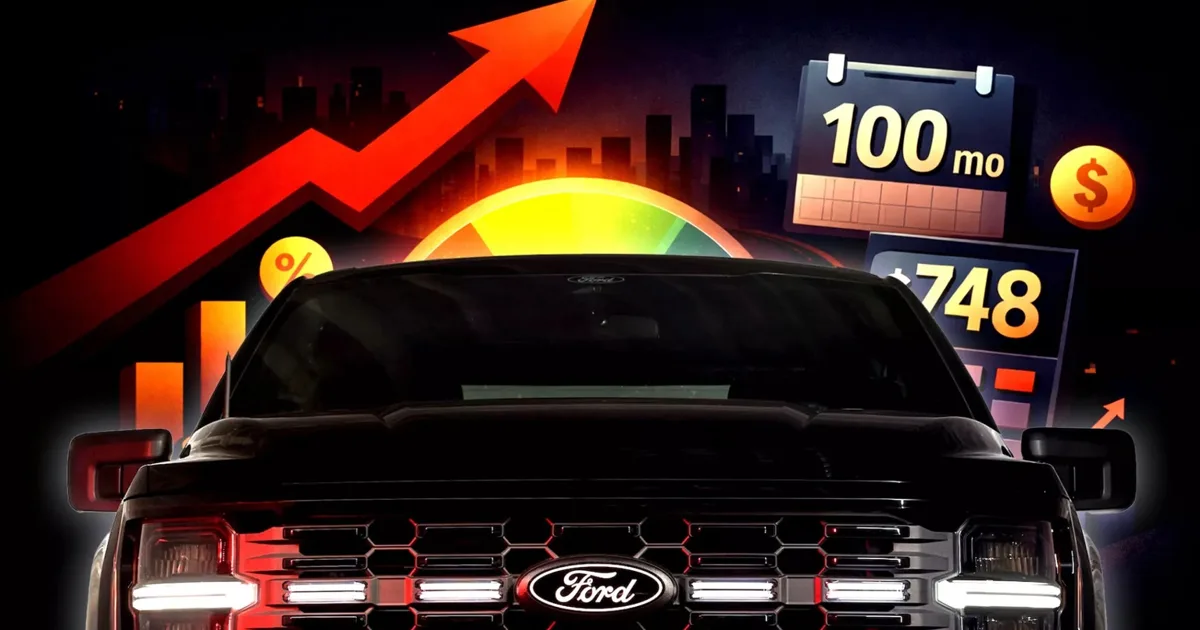
By late 2025, new car payments in the United States had risen so high that buyers started treating auto loans like long-term housing debt, with some contracts stretching out to 100 months just to keep monthly bills survivable.
The numbers landed with the blunt force of a bill you cannot ignore. Most buyers still financed, and the average monthly check for a new car hovered around $748 (about €688, using an approximate $1 to €0.92 conversion). Used cars stayed cheaper per month, but their interest rates bit harder, turning “affordable” into a slow leak.
Longer terms did not fix the market, they simply repackaged the pain.
| Date | Local time | Data point or event | Why it mattered |
| Q3 2025 | not reported | Experian loan averages captured | It showed the market in a high-rate high-price reality |
| Sep 2025 | not reported | Average new-car transaction price crossed $50,000 | Higher sticker prices pushed payments up before interest |
| Dec 25, 2025 | 1:26 p.m. ET (7:26 p.m. CET) | The findings circulated widely | “100-month” loans became a symbol of stretching and risk |
Why the “new mortgage” comparison suddenly made sense
For years, Americans joked that cars were getting too expensive, but by late 2025 the math stopped being funny. When monthly payments climbed into the high hundreds, the comparison to a mortgage did not mean the loan size matched a house. It meant the obligation started to behave like one: recurring, long-lived, and psychologically heavy. A payment is not just a number. It is a monthly constraint that shapes where you live, how you save, and what you can handle when life changes. That is budget pressure meeting routine reality.
The market pressures stacked up in sequence. First, vehicle prices climbed, driven by supply shocks, feature creep, and buyers shifting toward higher-trim trucks and crossovers. Then interest rates rose. Finally, lenders and dealers responded with the most predictable tool available: extend the loan term, lower the monthly bill, and keep the sale alive. That is not a solution. It is a way to keep the machine moving. The outcome was a market built on financing and stretching.
It also mattered that financing was no longer an optional add-on for most new-car shoppers. The share of new buyers using loans sat above 80 percent in the reported period. When the default behavior is debt, the whole system becomes sensitive to rate changes, credit scoring shifts, and small changes in household cash flow. In other words, the auto market behaved like a credit market with wheels. That is credit risk wearing chrome.
What the typical new-car loan looked like in Q3 2025
The average new-car loan in Experian’s third-quarter snapshot came in around $42,332 (roughly €38,946). The typical payment was $748 per month (about €688), and the average interest rate was 6.56%. Those numbers told a simple story: even a “normal” new-car loan was no longer small debt. It was a multi-year commitment priced like a serious financial product. That is principal plus rate turning into lifestyle.
Loan term length mattered as much as rate. The reported average term for new cars was roughly 69 months, or about 5.75 years. That is not a short horizon. It means many owners paid on the same car long after the first tires, the first battery, and the first big maintenance milestone. People were not just buying transportation. They were buying an obligation that survived job changes, relocations, and life events. That is duration meeting fragility.
Interest rate sensitivity also became visible at this scale. In the report, a 1 percent rate change on a $40,000 loan over 72 months was estimated to move the payment by roughly $20 to $25 a month (about €18 to €23). That sounds small until you remember millions of households operate on thin margins. In a world where groceries, insurance, and rent had also risen, “only $25” became the difference between comfort and stress. That is rates translating into stress.
Why 72 months stopped being “long,” and 100 months started showing up
A decade earlier, a six-year loan felt extreme to many buyers. By 2025 it looked normal. Loans at 72 months became common, and the share of loans above 84 months grew. Then a new number entered the conversation: 100 months, more than 8 years. That is a term long enough for a car to age into a different phase of ownership while the loan still lives. It is also long enough for major repairs to show up during the debt period, stacking costs on top of payments. That is term risk turning into maintenance risk.
The appeal of a longer term is obvious. Stretch the same principal over more months and the payment drops. For a buyer trying to keep monthly bills below a psychological threshold, that drop can make the difference between yes and no. But the trade is hidden in plain sight: the longer you borrow, the more interest you pay in total, and the longer you carry the risk of being upside-down on the loan. That is lower monthly cost buying higher lifetime cost.
There is also a behavioral trap. Long terms let buyers shop by payment instead of total price. Dealers know this. Lenders know this. The result is a market where sticker prices can rise because the financing can be engineered to make the monthly number look acceptable. It is the same logic that turned housing into a monthly-payment culture. In autos, it created a feedback loop of payments driving prices.
Used cars looked cheaper per month, but they charged a harsher price
Used-car buyers in the same dataset faced a different version of the problem. Payments averaged $532 per month (about €489), with average loan amounts around $27,128 (about €24,958). That looked like relief compared with new cars, but it came with a sting: average interest rates around 11.4%, almost double the new-car rate. That is the used market’s tax: lower principal paired with higher borrowing cost. It is cheaper entry with expensive money.
The average used-car term was still long, roughly 67 months, or about 5.6 years. That matters because used cars are closer to their major wear-and-tear years. Tires, brakes, suspension components, and electronics can demand attention, and those costs often arrive while the loan is still active. When a used buyer is paying a high rate over a long term, the monthly bill is not the only burden. The total ownership curve can rise fast. That is interest stacked on repairs.
The financing share for used cars in the dataset was far lower than for new cars, roughly 35.48%. That likely reflected more cash buyers in the used market, but it also showed that the financing channel was not equally attractive for everyone. Some buyers avoided used financing because the rate penalty was severe. Others simply could not qualify. Either way, it reinforced how financing access became a gatekeeper. That is approval shaping mobility.
The numbers that mattered most, in one table
Auto loan averages did not just show prices. They showed the market’s structure, who borrowed, on what terms, and at what cost. The snapshot below captured the core contrasts between new and used in Q3 2025.
| Category | New cars | Used cars |
| Monthly payment | $748 (about €688) | $532 (about €489) |
| Loan amount | $42,332 (about €38,946) | $27,128 (about €24,958) |
| Interest rate | 6.56% | 11.40% |
| Loan term | 69.07 months | 67.43 months |
| Average credit score | 754 | 691 |
| Percent of purchases financed | 80.67% | 35.48% |
These figures made a point that got lost in headlines: the “average” borrower for a new car had a relatively strong credit profile. That is important because it means many households with weaker credit were either pushed into older used vehicles, pushed into higher rates, or pushed out of the market entirely. The average hid the edges, where the financial strain was sharpest. That is averages masking pain.
Credit scores changed the payment, but they changed the interest more
Credit scoring shaped this market in two ways. First, it influenced the rate you received. Second, it influenced the amount you could borrow, which changed the payment even if the rate was ugly. In the dataset, borrowers in the “super prime” range (roughly 781 to 850) paid about $727 per month on new cars (about €669). “Prime” borrowers (661 to 780) were around $754 (about €694). The differences were not dramatic because these borrowers were all relatively bankable. That is credit nuance at the top.
Then the pattern got weird in a way that made sense once you looked closer. “Deep subprime” borrowers (roughly 300 to 500) showed an average new-car payment around $748 (about €688), which was not higher than prime. That did not mean the deal was better. It often meant the loan amount was smaller because lenders capped what they would finance, and because buyers in that range selected cheaper vehicles. The payment fell because the principal fell, not because the system became generous. That is smaller loans hiding worse deals.
Rates were the real punishment. Super prime borrowers averaged around 4.88%. Near prime borrowers (about 601 to 660) were around 9.77%. Deep subprime borrowers were quoted around 15.85%, a level that turns a car into a long-term fee stream. In that range, the borrower was not just paying for the car. They were paying for risk and for lack of options. That is rate as penalty.
| Credit score range | New-car monthly payment | Used-car monthly payment |
| Super prime (781 to 850) | $727 (about €669) | $527 (about €485) |
| Prime (661 to 780) | $754 (about €694) | $519 (about €477) |
| Near prime (601 to 660) | $793 (about €730) | $543 (about €500) |
| Subprime (501 to 600) | $780 (about €718) | $555 (about €511) |
| Deep subprime (300 to 500) | $748 (about €688) | $556 (about €512) |
What buyers could do, and what the market still refused to fix
The data was not just a warning. It was a practical map of what mattered when you tried to survive this market. Buyers could not control national rates, but they could control the structure of the deal. The first rule was to stop shopping by monthly payment alone. Monthly numbers can be engineered. Total cost cannot. The second rule was to treat term length as a risk decision, not a convenience. A 100-month loan could be the difference between getting a car and not getting one, but it also increased the chance you would owe more than the car was worth for years. That is structure and risk.
The third rule was to treat rate as negotiable only within limits. Shopping lenders, improving credit, and choosing a cheaper vehicle can move the rate, but not by magic. The fourth rule was to plan for insurance and maintenance like they were part of the payment, because in many cases they were. The fifth rule was to avoid being trapped by a trade-in where the old loan balance rolled into the new loan, a common way buyers ended up paying for yesterday’s car while driving today’s. That is equity loss and repeat debt.
A simple checklist that would have helped buyers in 2025 looked like this:
- Cap the term to what you can justify in risk, not just comfort.
- Compare total interest paid at 60, 72, 84, and 100 months.
- Treat rate differences as permanent, because they compound.
- Add insurance and maintenance to your monthly budget model.
- Avoid negative equity rollovers whenever possible.
None of this fixed the underlying market problem: cars got more expensive faster than wages, and financing extended the pain instead of reducing it. But it gave buyers a way to see the deal clearly, without illusions. In a market built on extended terms, clarity became a competitive advantage. That is literacy as defense.
Q&A
Q: Why did people say car payments became “the new mortgage”?
Because the monthly bill became large and long-lived, and loan terms stretched to 72, 84, and even 100 months, turning car debt into a persistent budget constraint.
Q: What was the average new-car payment in the dataset?
About $748 per month (roughly €688), tied to an average loan around $42,332 and a rate near 6.56%, a combination that pushed payments up.
Q: Why were 100-month loans appearing?
They lowered monthly payments by spreading principal over more months, but they increased total interest and kept borrowers in debt longer.
Q: Were used cars safer financially?
They were cheaper per month on average, around $532 (about €489), but they carried higher average rates around 11.4%, and often faced more maintenance risk during the loan. That is lower payment with higher cost factors.
Q: Why did deep subprime borrowers not always have the highest monthly payments?
Because they often borrowed less, financing smaller amounts, even while paying much higher rates. The payment hid the deal quality. That is smaller principal masking worse terms.
Q: What was the biggest lever a buyer controlled?
Term length and total price. Rates mattered, but cutting principal and avoiding extreme terms reduced the chance of long-term negative equity. That is principal control and risk management.

My Name Is Said I am a dedicated blogger sharing the latest trending blogs from the USA, covering news, updates, and informative stories. My focus is on delivering accurate, engaging, and timely content for readers worldwide.