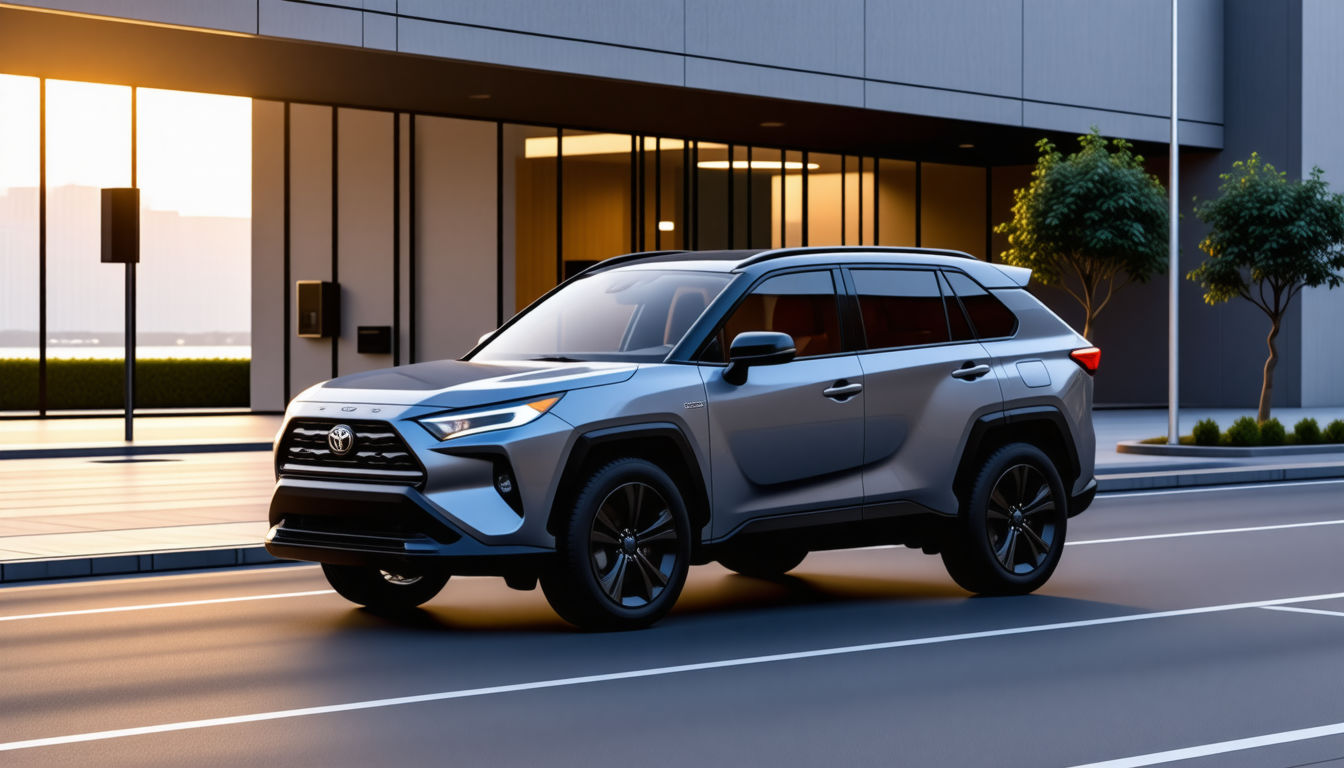
Unveiling an affordable, cutting-edge Japanese SUV that challenges the reigning Toyota RAV4 in price and technology.
The SUV market is evolving at full throttle, and the latest contender is a Japanese hybrid that blends innovation, eco-friendly performance, and practicality—all while undercutting the Toyota RAV4 by a striking €5,000. This vehicle manages to pull off a remarkable feat: offering a more electric hybrid system that brings driving dynamics closer to electric vehicles, without the need for bulky charging setups. Let’s dive into what sets this Japanese SUV apart in the fiercely competitive hybrid space.
How The Japanese Hybrid System Breaks The Traditional Mold
The heart of this SUV’s appeal lies in its revolutionary Electric Hybrid architecture, which dramatically changes the way energy is used and delivered compared to conventional hybrids like the Toyota RAV4.
Unlike typical hybrid systems where the engine and electric motor jointly power the wheels, this Japanese model employs a series hybrid setup. Here, a small turbocharged 1.5-liter gasoline engine acts solely as a generator, feeding electricity to a battery pack that drives electric motors connected to the wheels. In effect, the SUV behaves more like a pure electric vehicle (EV) without ever needing to be plugged in.
This technical nuance translates into a driving experience characterized by fluid, silent acceleration, delivering around 204 horsepower in front-wheel-drive form and up to 213 horsepower with an all-wheel-drive electric motor setup known as e-4ORCE. The absence of a traditional transmission eliminates jerks and shift delays, resulting in smooth power delivery whether cruising city streets or merging onto highways.
City driving becomes a particular highlight, as the system frequently allows for zero-emission electric-only modes, boosting fuel efficiency and reducing noise pollution. Unlike plug-in hybrids or full EVs, there’s no anxiety over charging: the gasoline engine continuously recharges the battery with a consistent RPM.
This leap in hybrid technology underscores ongoing innovation in the automotive industry, carving out a niche where fuel efficiency meets everyday convenience and environmental consciousness.
Spacious Design And Practicality Tailored For Families On The Go
Long gone are the days when eco-friendly vehicles sacrificed space and comfort. This Japanese SUV challenges that stereotype, boasting generous proportions that surpass the Toyota RAV4 in size and family practicality.
Measuring around 4.68 meters in length with a width of 1.84 meters and a height of 1.72 meters, it offers increased interior space, making it an ideal choice for families. It comes in both 5- and 7-seat configurations, flexibly accommodating varied passenger and cargo needs.
The cargo space ranges from a capacious 575 liters up to 585 liters, competitive in its segment and more accommodating than many rivals. Rear passengers benefit from generous legroom and headroom, resulting in comfortable rides for children and adults alike—even over long distances.
The exterior styling resonates with practical elegance: robust and modern lines avoid ostentation while signaling reliability and sturdiness. On the inside, higher trim levels feature twin digital displays, an intuitive control layout, and enhanced material finishes that elevate the experience without reaching the sometimes excessive luxury price tags.
Families looking to combine utility and eco-friendly driving without compromising on comfort will find this SUV a compelling option amidst the sea of hybrid offerings.
Japanese SUVs are redefining family transport with efficient spaces and thoughtful designs that cater to modern lifestyles while respecting eco-friendly values.
Cost Reduction Meets High-End Features: A Competitive Pricing Advantage
One of the most striking advantages of this Japanese SUV over the Toyota RAV4 is its attractive pricing strategy, succeeding in reducing the cost barrier that often discourages hybrid SUV purchases.
Starting at around €34,400 for a well-equipped front-wheel-drive variant, this SUV provides exceptional value for money—especially when compared with the Toyota RAV4’s pricing, which is typically about €5,000 higher at similar trim levels. Feature-rich configurations like the N-Connecta, priced near €38,300, add premium tech like a 12.3-inch digital instrument cluster, connected navigation, a 360-degree camera system, and a powered tailgate, delivering a complete package for much less.
Many European customers find the absence of a plug-in charging requirement another cost-saving factor, avoiding the upfront expense and hassle of installing home charging infrastructure. This cost-conscious approach extends to maintenance as well, since the electric drivetrain experiences less wear and tear on many mechanical components.
In the ultra-competitive SUV market, where affordability often collides with innovation, such pricing strategy underlines how automotive innovation can serve real-world buyers. It appeals especially to peri-urban drivers seeking a practical, eco-friendly vehicle without the traditional hybrid complexities or the high costs of fully electric vehicles.
For savvy shoppers, this represents a smart balance between sustained cost reduction and delivering equipment that goes toe-to-toe with premium brands.
| Trim Level | Price (€) | Key Features |
|---|---|---|
| Acenta 2WD | 34,400 | Basic hybrid system, essential safety tech |
| N-Connecta 2WD | 38,300 | 12.3” digital cluster, navigation, 360° camera, powered tailgate |
| Tekna AWD (e-4ORCE) | 41,500 | All-wheel drive, premium trim, advanced comfort features |
| 7-Seater option | +2,000 to 3,000 | Increased passenger capacity, flexible seating |
Pricing and feature sets tailored to deliver maximum value in the affordable hybrid segment.
Performance And Efficiency For Long Haul Comfort And Economy
Beyond sleek design and cost savings, this Japanese SUV excels in offering an impressive blend of performance and fuel efficiency. Thanks to the electric hybrid system’s linear torque, the driving experience is both responsive and refined.
Its fuel consumption figures hover between 5.8 and 6.5 liters per 100 kilometers, depending on the drivetrain and specific trim, making it an economical choice for frequent commuters and long-distance drivers alike.
One of its biggest selling points remains its substantial range, surpassing 800 kilometers on a single tank. This autonomy alleviates the range anxiety often associated with electric or plug-in hybrid vehicles, positioning the SUV as a excellent option for those who cover significant daily or weekly distances without access to charging facilities.
The e-4ORCE all-wheel-drive system adds stability during adverse weather and highway cruising, combining safety with comfort. This setup appeals to drivers prioritizing confidence and control without compromising on the smooth electric propulsion that defines this SUV’s character.
The blend of technology, eco-friendliness, and practical range ensures the vehicle adapts seamlessly from urban routes to cross-country journeys, tying together key criteria for modern hybrid buyers.
An ideal synergy of performance, efficiency, and range for diverse driving demands.
Future-Proofing Your Drive: Why This Japanese SUV Makes Sense Today
Stepping outside the hype of some electric vehicles, this Japanese SUV offers a realistic and eco-friendly approach to electrification. It caters especially well to drivers unwilling or unable to install charging stations, while still craving the benefits of hybrid technology.
Its quiet operation, near EV driving feel, and reduced emissions make it attractive to urban planners and eco-conscious families alike, supporting policies aimed at reducing carbon footprints without sacrificing convenience.
The vehicle’s competitive pricing also aligns with tightening emissions regulations and the evolving automotive landscape in Europe. As more cities impose low-emission zones, owning a highly efficient hybrid like this model ensures compliance with future rules without breaking the bank.
For those watching the SUV market, this SUV represents a smartly engineered middle ground between pure battery electric vehicles and traditional gasoline-powered SUVs. It reduces complexity for users while enhancing sustainability. In markets including France and much of Europe, it emerges as an affordable hybrid alternative that realistically meets the needs of everyday drivers.
What’s more, the vehicle’s robust build and well-planned technology stack promise reliability and comfort through many years of service—key considerations for families and long-term owners alike.
Bridging traditional powertrains with electric innovation for forward-looking drivers.
The Nissan X-Trail e-Power’s unique hybrid system makes a strong impression during dynamic testing and real-life driving.
Comparative analysis highlights the cost benefits and driving dynamics between the two leading Japanese hybrid SUVs.
How does the hybrid system in this Japanese SUV differ from the Toyota RAV4?
This SUV uses a series hybrid system where the gasoline engine acts solely as a generator to power electric motors, making it drive more like a fully electric vehicle, unlike the RAV4’s parallel hybrid system where both engine and motor drive the wheels.
Is charging infrastructure required for this hybrid SUV?
No, the hybrid system continuously recharges the battery via the gasoline engine, so no external charging or plug-in is necessary.
What advantages does this SUV provide for families?
Its spacious interior with flexible 5- or 7-seat configurations, generous legroom, ample cargo space, and a quiet, smooth driving experience make it ideal for family use.
How does the pricing of this SUV compare to the Toyota RAV4?
It comes at roughly €5,000 less than the RAV4 for similar equipment levels, making it a highly attractive alternative in terms of value and features.
What’s the real-world fuel efficiency and driving range?
Fuel consumption varies from 5.8 to 6.5 L/100 km depending on the version, with an impressive range exceeding 800 km on a full tank.

My Name Is Said I am a dedicated blogger sharing the latest trending blogs from the USA, covering news, updates, and informative stories. My focus is on delivering accurate, engaging, and timely content for readers worldwide.