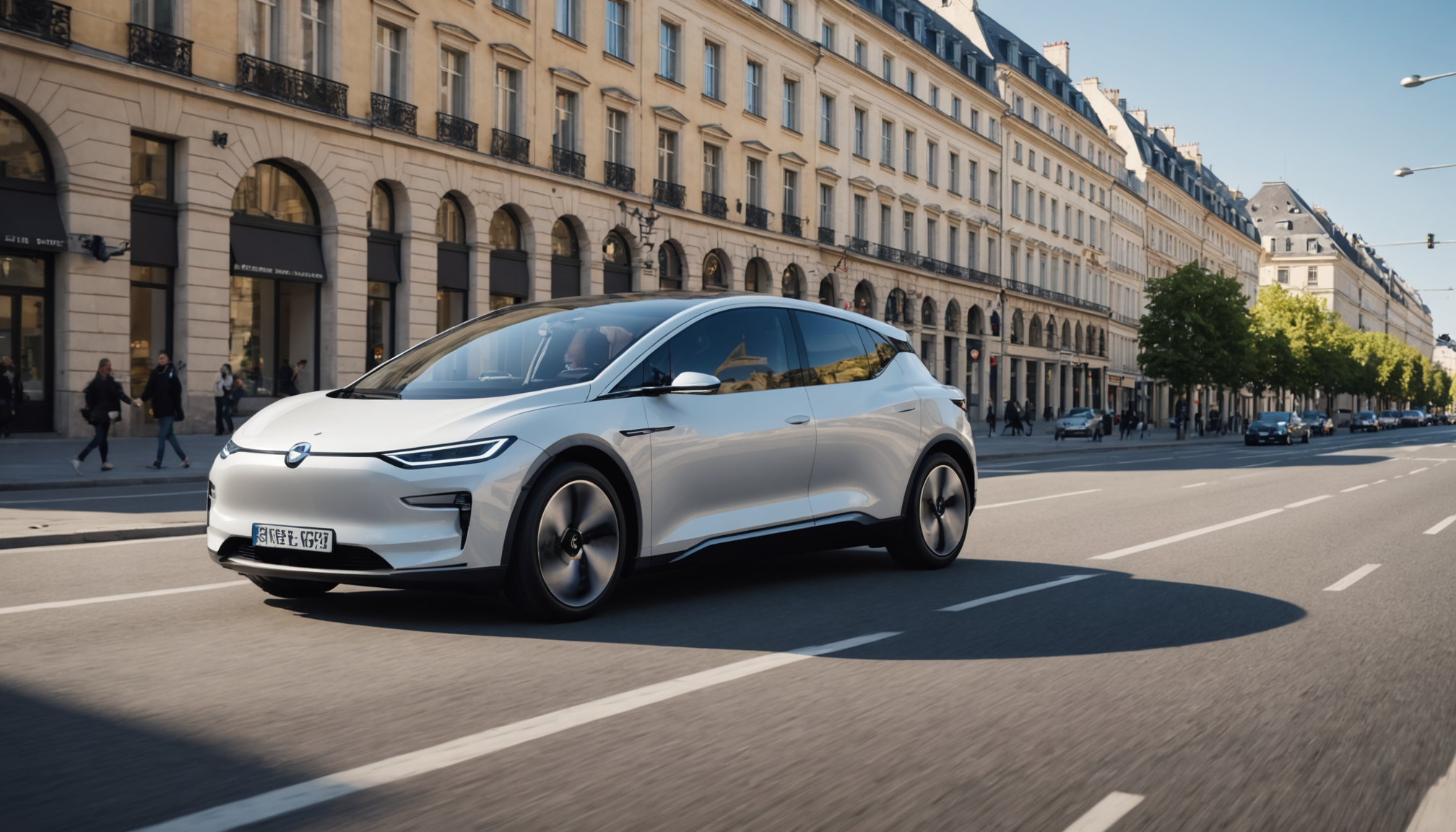
Breaking News: The European Union has unveiled a game-changing new category for compact electric vehicles (EV), aimed squarely at challenging the rapidly expanding footprint of Chinese competitors in Europe’s EV market. This initiative could reshape the trajectory of sustainable transportation across the continent.
The EU is setting the stage for more affordable, simplified electric cars to counterbalance the flood of subsidized imports from China while reviving green technology innovation within its borders.
Today’s automotive arena demands swift adaptation. Europe’s major carmakers are racing against time to reset the playing field. Here’s a thorough exploration of how this new compact EV classification might tilt the scales in Europe’s favor.
Cracking the Price Barrier: A Bold Strategy to Bring Down EV Costs
Europe’s automotive landscape faces enormous pressure to compete with low-cost Chinese electric vehicles. The EU’s approach targets the root cause: manufacturing costs driven up by strict technical regulations. The new “E car” category creates a streamlined path for compact EVs priced between $17,500 and $23,200, equivalent to €15,000 to €20,000. This price point is critical to capturing mass urban buyers.
Previously, regulations demanded advanced safety features such as drowsiness detection, lane positioning assistance, and sudden stop signaling. These systems, while enhancing safety on highways, inflate production expenses for cars designed for city driving. The EU’s new framework eliminates these pricey mandates for smaller, urban-oriented EVs, securing potential cost reduction gains of 10-20% for manufacturers.
Consider Volkswagen: its ID.Polo is slated for release in 2026 at approximately $29,000, while a more affordable ID.1 model promises to break the $23,200 mark in 2027. Similarly, Ford’s collaboration with Renault to develop budget-friendly EVs on the Ampere platform aims to flood the market by 2028 with two new compact electric models, further fueled by Renault’s northern France production hub.
- 🎯 Compact EV price target: $17,500–$23,200
- 🔧 Streamlined tech requirements cut costs by up to 20%
- 🚗 Volkswagen, Ford, Renault making big moves on affordable EVs
| Model | Price ($) | Launch Year | Production Location |
|---|---|---|---|
| ID.Polo (VW) | 29,000 | 2026 | Germany |
| ID.1 (VW) | 23,200 | 2027 | Germany |
| New EVs on Ampere (Ford-Renault) | Under 23,200 | 2028 | France |
🔌 These measures could redefine accessibility to EV ownership across Europe’s sprawling cityscape.
How Regulatory Relaxation Is Designed to Spark Market Dynamics
At the heart of the EU’s strategy lies the relaxation of technical requirements previously mandated on all electric vehicles. These standards, like drowsiness detection and lane assist, though vital for long-distance travel and highway safety, add considerable expense and complexity to vehicle designs.
The move reduces legal and technical barriers for manufacturers to develop specifically urban, compact EVs that don’t need heavy-duty safety systems for city use. This regulatory recalibration aligns perfectly with a growing market segment: short-distance commuters and urban dwellers.
Member states are concurrently exploring incentives such as tax exemptions qualifying these compact EVs. Such fiscal policy aims to boost uptake among consumers hesitant to invest in pricier electric models.
- ⚙️ Removal of costly tech frees manufacturers from excessive compliance hurdles
- 💡 Urban-focused vehicles optimized without highway-centric safety features
- 📉 Tax incentives on the way as carrot to increase market penetration
| Removed Safety Features | Intended Usage | Effect on Cost |
|---|---|---|
| Drowsiness Detection | Highway driving | Costly sensors and software removed |
| Lane Positioning Assistance | Long-distance travel | Reduced vehicle complexity |
| Sudden Stop Signaling | High-speed scenarios | Lower production expenses |
This pragmatic shift reflects the EU’s growing emphasis on balancing safety with affordable urban mobility, setting a precedent for diverse urban EV offerings that fit the economic realities of many consumers.
Chinese EVs’ Growing Hold On European Roads
The rise of Chinese EVs in Europe is a phenomenon rocketing through 2025. Chinese brands managed to capture a remarkable 7% share of Europe’s car market in Q3, doubling their presence year-on-year. The EV market in Europe saw shares increase from 9% to 12%, with Chinese player BYD emerging as the dominant force, outpacing traditional Western brands.
China’s playbook includes government subsidies, lower production costs and aggressive pricing strategies, posing a significant threat to European automakers. Yet, Brussels levies duties up to 45.3% on imports, an attempt to level the competitive field. These tariffs, however, haven’t completely stemmed the influx of affordable, quality Chinese cars.
- 🇨🇳 Chinese EV market share in Europe: 7% as of Q3
- 📈 Year-over-year growth rate: 100%
- 🚙 BYD leads among Chinese brands in Europe
- 💰 EU import duties up to 45.3%
| Chinese Maker | European Plant Location | Annual Production Goal (units) 🏭 | 2024 Sales Figures (units) |
|---|---|---|---|
| BYD | Hungary | Expected growth | Leading brand |
| GAC | Austria (Assembly) | Uncertain qualification for subsidies | Contract-based production |
| Great Wall Motor | Evaluating Spain and Hungary | 300,000 by 2029 | Declined 41% in 2024 |
The EU’s new category could provide a crucial countermeasure, fostering European-made compact EVs that remain price-competitive despite subsidy challenges and tariff dynamics.
Collaborations and Alliances: Europe’s Answer to the Chinese Surge
European automakers are not sitting idle. Strategic partnerships are forming rapidly to fend off the Chinese market competition. The alliance between Ford and Renault demonstrates innovation and cooperation on the Ampere platform, targeting cost-effective, small EV production with deliveries scheduled by early 2028.
Volkswagen’s staggered launch of the ID.Polo and ID.1 signifies its commitment to the compact EV category, bridging affordability and quality. Renault, Stellantis, and others also align their product pipelines with the criteria and incentives introduced under the EU’s new classification.
- 🤝 Cross-company alliances accelerate vehicle development
- 🔋 Ampere platform underpins new affordable models
- 🚗 Multi-brand strategy increases market diversity
| Manufacturer | Project | Target Launch | Key Features |
|---|---|---|---|
| Ford-Renault | Two affordable EVs on Ampere | 2028 | Cost-effective, compact urban-focused |
| Volkswagen | ID.Polo & ID.1 series | 2026 – 2027 | Tiered pricing for broad accessibility |
| Renault & Stellantis | Aligned Compact EV Programs | Ongoing | Leveraging tax incentives, tech relaxation |
This coalescence of stakeholders heralds a robust automotive industry push toward reclaiming market share and accelerating sustainable transportation options for European consumers.
A Look at the Role of Japanese Kei Cars and International Influence
Amid the EU’s compact car push, attention turns to Japanese kei cars—tiny vehicles designed for urban efficiency that could inspire the new compact EV category. Though once criticized as non-tariff barriers, kei cars represent a proven approach to affordable, small-scale green mobility.
Thanks to recent administrative shifts in the US, including directives for domestic “tiny car” production, Japanese automakers may find renewed export opportunities, potentially influencing European offerings. This cross-continental interplay signals a global reevaluation of vehicle size, efficiency, and environmental impact.
- 🇯🇵 Kei cars symbolize compact urban mobility essentials
- 🛣 US policy changes may open new export avenues
- 🌍 International influence reshapes European strategies
| Aspect | Kei Cars Context | Potential EU Impact |
|---|---|---|
| Vehicle Size | Under 11 feet length | Model for EU compact EVs |
| Cost Efficiency | Low manufacturing and ownership costs | Improves affordability goals |
| Regulatory Perception | Earlier met resistance | Now considered viable model |
Embracing this model offers the EU a tested blueprint for expanding green transportation access across densely populated urban centers.

My Name Is Said I am a dedicated blogger sharing the latest trending blogs from the USA, covering news, updates, and informative stories. My focus is on delivering accurate, engaging, and timely content for readers worldwide.