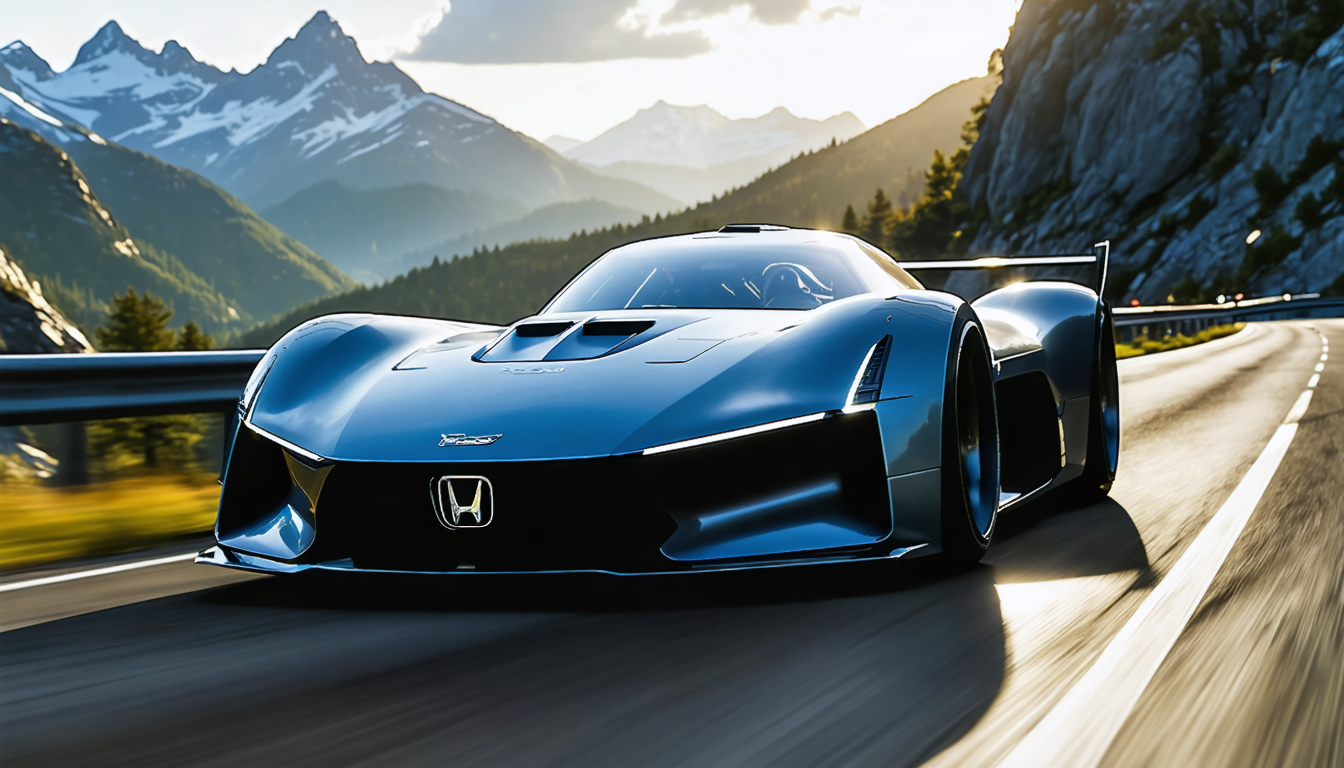
Honda and Aston Martin Tease an Exciting New Road Beast in the Making
Discover how the unexpected alliance between Honda and Aston Martin could redefine the future of high-performance road cars, blending cutting-edge F1 technology with luxury engineering.
The fusion of Honda’s engineering prowess and Aston Martin’s iconic automotive legacy is sparking anticipation for a groundbreaking road project that merges track expertise with street usability. While currently focused on Formula 1 dominance, whispers from leadership hint at thrilling prospects beyond the circuit.
Powering The Partnership: The Shift from Track to Road
Honda’s exit from Red Bull Racing marked a seismic change in the Formula 1 power dynamics, with the Japanese engineering giant stepping in as the exclusive powertrain partner for Aston Martin’s F1 team. This alliance is far from a routine technical collaboration—both brands are channeling their combined expertise into something potentially revolutionary.
Aston Martin’s previous track-road synergy was epitomized by the Valkyrie hypercar, a model heavily influenced by F1 technology and backed by a Red Bull chassis. This hypercar didn’t just borrow from the sport; it was a tangible expression of racing DNA translated to real-world performance, bolstered by design genius Adrian Newey—now the chief architect steering Aston Martin’s F1 endeavors.
The current stage is set for a similar leap. With Honda’s sophisticated power unit integrated under Aston Martin’s hood on the race track, the potential crossover of Formula 1 innovation into a road-ready machine could redefine what performance means on public roads.
Examples in history show that cross-pollination between F1 and road cars has created some of the most groundbreaking vehicles—imagine that influence projected into a car with Aston Martin’s British heritage and Honda’s engineering rigor.
The Dawn of a New Road Car Era?
At a landmark event in Tokyo celebrating this new partnership, Aston Martin’s executive chairman Lawrence Stroll addressed the future candidly. While the immediate focus remains on conquering the F1 arena, he openly acknowledged the prospect of joint ventures extending beyond the track.
Stroll stated, “We have not yet discussed a production vehicle, yet the possibility for a hypercar or supercar developed together is not off the table.” His candid remarks suggest a collaboration where cutting-edge racing tech could transition into consumer-focused high-performance vehicles, potentially shaking up the luxury sports car marketplace.
The enthusiasm is mutual. Honda’s president, Toshihiro Mibe, has voiced excitement about the idea, signaling an eagerness to explore innovative applications born from their racing synergy. The partnership’s foundation appears to be about opening doors, not closing them—a philosophy that hints strongly at a possible future road beast carrying the DNA of both legends.
Consider that Aston Martin’s previous ventures with racing-derived road cars like the Valkyrie have garnered critical acclaim and have redefined hypercar standards. The growth potential here lies in applying lessons learned from fierce F1 competition to cars accessible to enthusiasts craving race-inspired performance without the confines of the track.
What Ingredients Make This Collaboration a Potential Game-Changer?
The secret sauce is the shared passion for innovation and unrelenting pursuit of performance excellence. Honda, long celebrated for its engineering feats and hybrid technologies, partners with Aston Martin’s unmatched reputation for craftsmanship and design elegance.
- Technological Integration: Honda’s F1 power units are some of the most advanced, integrating hybrid powertrains that deliver blistering speed with improved efficiency.
- Design Expertise: Aston Martin’s connection to visionary designers like Adrian Newey ensures that any road car developed alongside Honda would boast both aerodynamic efficiency and aesthetic appeal.
- Brand Synergy: Both brands carry distinct legacies of innovation—Honda’s precision engineering meets Aston Martin’s British luxury, promising a vehicle that’s performance-driven yet exclusive.
- Learning from Racing: Insights derived from rigorous F1 development cycles—heat management, lightweight materials, and powertrain responsiveness—can directly enhance road car performance and reliability.
This collaboration also stands to harness data analytics and simulation technologies honed in racing to produce vehicles that outperform rivals in real-world conditions.
Imagine the flavors of F1 agility and power, tempered by Aston Martin’s superlative road-going comfort—it’s an exciting proposition drawing automotive aficionados’ attention worldwide.
Exploring Market Trends: Why Now for a Road Masterpiece?
The luxury and hypercar segment is evolving rapidly, increasingly driven by technological innovation and environmental considerations. Buyers now expect more than raw power—they demand efficiency, electrification, and sustainability without compromising performance or style.
Honda and Aston Martin’s potential road car project arrives at a perfect moment to seize this emerging trend. While the NSX marked Honda’s last foray into supercars, its discontinuation left a vacuum for a next-gen performance icon.
Here’s why this partnership could redefine segment expectations:
- Hybrid Technology Mastery: Honda’s proven hybrid power units adapted from F1 provide the perfect foundation for a supercar that balances explosive speed and environmental responsibility.
- Consumer Appetite for Authenticity: Enthusiasts want cars grounded in genuine motorsport pedigree—this alliance offers a compelling story that blends racing heritage with road legitimacy.
- Luxury Performance Redefined: Aston Martin’s penchant for elegance combined with cutting-edge technology meets the growing demand for exclusivity in car ownership.
- Regulatory Shifts: Stricter emissions standards globally reward brands investing in hybrid solutions, giving this project a strategic edge in compliance and appeal.
- Limited Edition Potential: Hyper-limited production runs can command premium pricing, ensuring profitability while preserving mystique.
These factors converge to create a compelling platform for a road car that doesn’t just compete—it redefines performance and desirability in a congested market.
The Road Ahead: Timelines and Expectations for Development
The initial focus remains firmly on the forthcoming Formula 1 seasons, where Honda’s powertrain expertise underpins Aston Martin’s ambitions on the circuit. Yet, industry insiders speculate that the fruits of this alliance could start emerging as early as the mid-2020s.
Development timelines for high-performance road cars typically span several years, from prototype testing to final production. Given the robust foundation of F1 technology integration, it’s reasonable to expect that any potential road car would leverage rapid prototyping and advanced simulation tools.
| Milestone | Projected Timeline | Details |
|---|---|---|
| F1 Partnership Launch | Early 2026 | Official beginning of Honda-Aston Martin F1 collaboration |
| Initial Concept Development | Mid 2026 – 2027 | Early design and feasibility studies for road car |
| Prototype Testing | 2028 – 2029 | Refinement of powertrain and chassis integration |
| Production Evaluation | 2030 | Assessment of production viability and market strategy |
| Potential Road Car Launch | 2031 Onwards | Market debut of a joint Honda-Aston Martin hyper/supercar |
Of course, these projections depend on competitive results in Formula 1 and the evolution of market demand. If early success fuels enthusiasm within both companies, development timelines could accelerate, making this collaboration more tangible in the near future.
Behind the Scenes: Leadership Dynamics Fueling Innovation
At the heart of this strategic partnership are visionary leaders who understand not only the technical challenges but also the cultural synergy necessary for success. Koji Watanabe, president of Honda Racing Corporation, has expressed confidence in the unique energy generated by merging Japanese precision with British engineering tradition.
Meanwhile, Adrian Newey, an F1 design legend recently promoted to Aston Martin’s team principal, continues to inject innovative thinking into both the racing and potential road car programs. Newey’s input is often credited with bridging high-performance mechanics and aesthetic design, promising products that are as dynamic in looks as they are in speed.
Lawrence Stroll’s pragmatic approach emphasizes patient, calculated growth, positioning the partnership to capitalize fully on both long-term research and immediate racing success. It’s this combination of engineering brilliance and leadership savvy ensuring that ambitions align with realistic outcomes.
Their collective mindset centers on leveraging racing advances to lift the brand identity and engineering frontiers, both on track and eventually on the roads.
What This Means For The Auto Industry At Large
Should Honda and Aston Martin forge ahead with a joint road car, the ripple effects within the automotive world could be profound. It would demonstrate how companies, transcending traditional competitor boundaries, can innovate through strategic partnerships rooted in performance and heritage.
This kind of collaboration validates the concept that motorsport is not just an isolated spectacle but a fertile ground for development that benefits everyday drivers. The potential road beast would not only symbolize engineering excellence but could also set new benchmarks in hybrid sports car performance.
Moreover, this trend might inspire other manufacturers to adopt similar models — blending expertise, sharing technology, and pooling resources to produce vehicles that respond to modern demands for speed, efficiency, and luxury.
Ultimately, the Honda-Aston Martin venture embarks on a path that could reshape consumer expectations and redefine how high-performance cars are conceived, built, and lived with on roads worldwide.

My Name Is Said I am a dedicated blogger sharing the latest trending blogs from the USA, covering news, updates, and informative stories. My focus is on delivering accurate, engaging, and timely content for readers worldwide.