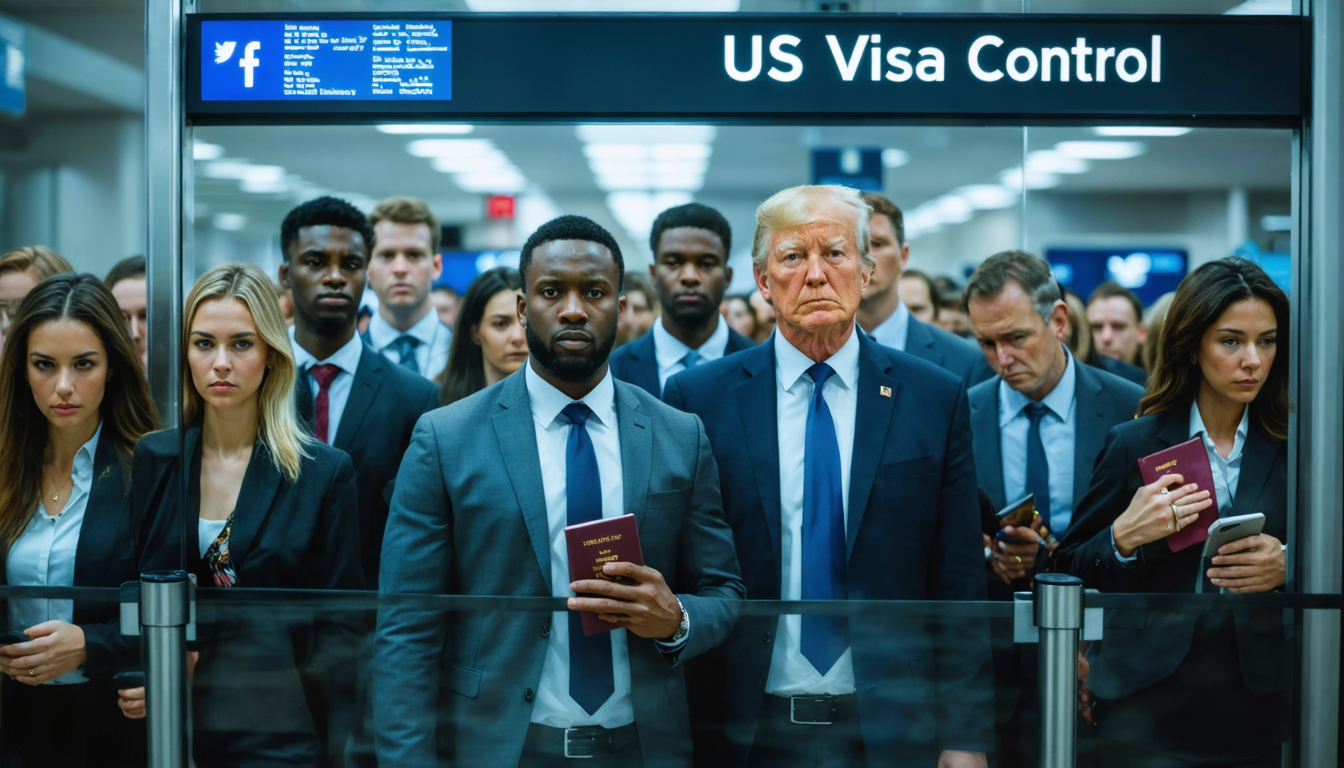
US Visas Face New Restrictions As Fact Checkers And Content Moderators Caught In The Crossfire
American visa policies take a sharp turn, denying entry to foreign professionals involved in digital misinformation control, influenced by past social media account lockouts. This crackdown highlights the escalating tensions over content censorship, social media governance, and the global ripple effects on tech talent migration.
The recent directive from the US State Department echoes through the tech corridors and immigration offices worldwide, targeting fact checkers and content moderators who play a critical role in combating digital misinformation. This sweeping move, rooted in debates about free speech and censorship, also harkens back to high-profile restrictions placed on former President Trump’s social media presence. As the visa denial policy unfolds, its impact raises questions about digital governance, immigration, and the future of media regulation in a hyper-connected world.
Origins of Visa Denials Tied to High-Profile Social Media Controversies
The US government’s move to deny visas for fact checkers and content moderators stems from a heightened sensitivity toward content censorship linked to the controversial lockout of then-President Donald Trump’s accounts on major social media platforms in early 2021. This historical moment, marked by Twitter and Facebook suspending Trump’s accounts following the January 6 Capitol riot, sparked fierce debates about the limits of free speech and the role of social media companies in regulating information.
According to a leaked internal memo, consular officers are now instructed to reject visa applications from foreign workers who have been involved with activities deemed as “censorship or attempted censorship of protected expression in the US.” This specifically targets roles such as:
- Fact checking on contentious topics
- Content moderation related to misinformation or disinformation
- Online safety, compliance, and trust and safety operations
This stance reflects ongoing tension between government advocacy for free speech and the emerging functions of social media platforms as arbiters of information accuracy and user safety.
| Event | Date | Impact |
|---|---|---|
| Trump’s Twitter and Facebook Suspension | January 2021 | Triggered policy re-evaluation on content censorship |
| Implementation of enhanced visa screening for digital moderators | 2025 | Denied entry for professionals linked to “censorship” activities |
The policy shift illustrates how political controversies catalyze immigration controls, targeting a niche but essential workforce involved in managing online content.
Delving Into The Scope Of Enhanced Visa Vetting And Its Complexities
Visa applications from individuals employed in content-related roles now endure unprecedented scrutiny. US consulates globally conduct enhanced background checks, including detailed analysis of applicants’ work histories, LinkedIn profiles, social media footprints, and media mentions. This rigorous investigation aims to identify any association with activities perceived as enforcing “censorship”.
Key areas flagged include:
- Fact checking to combat misinformation or false narratives
- Content moderation in digital platforms across jurisdictions
- Compliance roles ensuring adherence to platform policies
- Trust and safety teams addressing harassment, abuse, and illegal content
For example, a professional who helped moderate misinformation during a pandemic or election campaign could find their visa application denied on grounds of “interfering with protected expression.” This creates a paradox between efforts to preserve public trust online and a form of governmental resistance to perceived overreach in digital speech regulation.
| Role | Risk Factor | Example Activities |
|---|---|---|
| Fact Checker | High | Verification of political claims, health information |
| Content Moderator | Medium | Removal of hate speech, misinformation |
| Compliance Officer | Medium | Policy enforcement on digital platforms |
| Trust and Safety Specialist | High | Monitoring abuse, harassment, and illegal content |
Intersection Of Free Speech, Censorship Accusations, And Immigration Barriers
The new visa restrictions bring to the foreground a difficult debate around free speech versus content censorship. On one hand, fact checkers and moderators function to stem the tide of fake news and harmful content, aiding digital public health and political discourse. On the other hand, these roles are accused of silencing voices and skewing narratives, especially in politically charged environments.
US officials argue that protecting Americans’ freedom to speak outweighs the benefits brought by foreign moderators, suggesting that any external attempt to regulate American speech could be detrimental. Critics warn that this stance conflates content policing with outright censorship, ignoring the nuanced objectives of digital safety.
- Trump’s perspective: Social media censorship is a direct affront to American speech freedom
- Industry view: Fact checking and moderation are critical to curbing misinformation and fostering trustworthy digital spaces
- Visa policy implications: A chilling effect on foreign experts contributing to US digital ecosystems
This tug of war over information governance impacts how the US balances security, immigration, and technological leadership.
Economic And Talent Flow Consequences In The US Tech Sector
The visa denial policy creates tangible repercussions for the US tech industry, which heavily relies on H-1B visas to attract global talent. Nearly a third of technology firms employ foreign workers who specialize in digital trust and safety roles.
By barring experienced fact checkers and content moderators, companies face hurdles in maintaining effective digital safety operations and combating digital misinformation at scale:
- Recruitment challenges due to smaller talent pools
- Increased operational strain for content moderation teams
- Potential decline in platform compliance with US regulations
For example, a Silicon Valley tech company reported a 12% increase in harmful content proliferation after losing foreign experts due to visa denials. The economic impact is also reflected in slowed innovation around AI-driven content moderation tools, reliant on expert input.
| Impact | Description | Estimated Cost (USD) |
|---|---|---|
| Talent Shortage | Reduced availability of skilled fact checkers | $18 million annually in recruitment & training |
| Operational Disruption | Strain on existing moderation teams | $25 million estimated in lost efficiency |
| Regulatory Risks | Failure to meet evolving US media policies | Potential fines exceeding $30 million |
How Digital Platforms Navigate The Visa Crackdown And Media Regulation
In light of US visa restrictions targeting fact checkers and moderators, digital platforms are adapting by reshaping their content governance strategies. Companies diversify solutions such as:
- Investing in AI-powered automation of content moderation
- Enhancing in-house training for native workers to fill gaps
- Relocating moderation operations to countries with less immigration friction
This shifting landscape affects how platforms comply with US rules while managing public perception around content censorship and misinformation. Platforms also lobby lawmakers to clarify policies impacting their workforce diversity and content governance efficacy.
| Strategy | Benefits | Challenges |
|---|---|---|
| AI Automation | Scalable and faster content processing | Limited nuance, higher false positives |
| Local Hiring | Compliance with visa policies | Smaller talent pool, higher training costs |
| Offshore Operations | Access to global talent | Perception of outsourcing censorship |
Global Impact And Future Prospects Of US Visa Restrictions On Fact Checkers
Beyond domestic consequences, the US visa restrictions reverberate globally. Countries hosting tech workers from abroad re-assess their role in digital misinformation control. Furthermore, the policy influences how allied nations approach:
- Cross-border digital speech regulations
- International collaboration on content censorship
- Workforce mobility for specialized tech roles
For example, Indian tech hubs—the biggest source of H-1B visa holders—face stiff challenges as many applicants with content moderation expertise confront visa denials, hampering US-India talent exchange programs.
| Country | Impact | Projected Talent Outflow (Thousands) |
|---|---|---|
| India | Visa denials for tech workers in content roles | 15 |
| Philippines | Rise in offshore moderation hubs | 8 |
| Canada | Enhanced collaboration with US on digital policies | 5 |
The long-term outlook depends on evolving US policy direction and broader debates on digital rights and immigration trends in the high-tech global ecosystem.
US policymakers and industry leaders continue to navigate the precarious balance between sovereign control of digital content and ensuring free flow of international tech talent vital to media regulation and misinformation combat.
My Name Is Said I am a dedicated blogger sharing the latest trending blogs from the USA, covering news, updates, and informative stories. My focus is on delivering accurate, engaging, and timely content for readers worldwide.