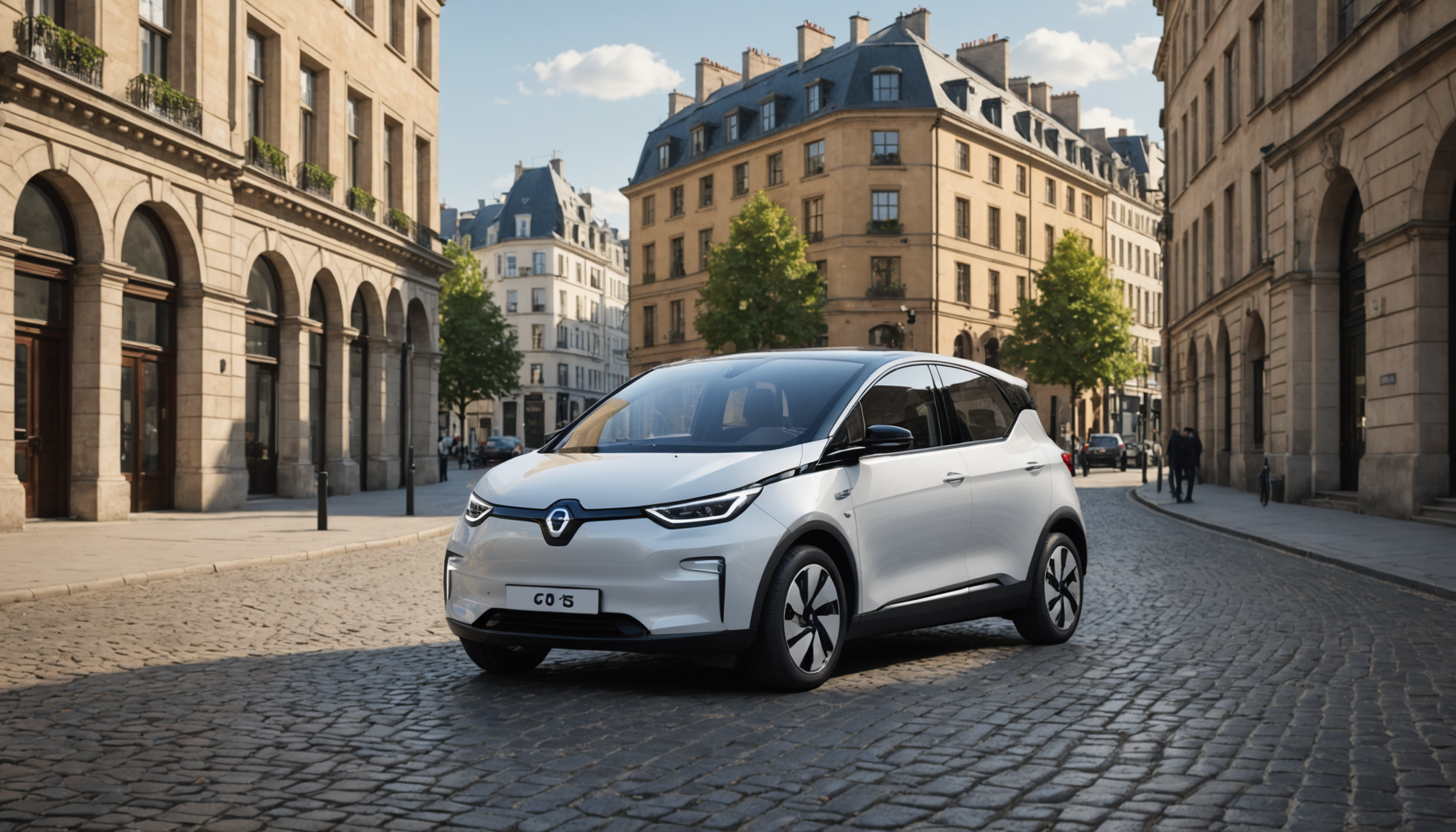
Ford and Renault join forces to revolutionize the European electric vehicle (EV) market with affordable, compact electric cars.
By 2028, expect groundbreaking EVs designed by Ford but powered by Renault’s proven technology, aiming to outpace Chinese competitors and reshape sustainable transportation.
The alliance between these automotive giants does not only promise innovation; it signals a strategic move in the ongoing EV race across Europe.
Here’s a deep dive into what this collaboration means for the automotive industry and how it could accelerate the shift toward battery electric vehicles on the Continent.
The Strategic Alliance: A New Era for Compact Electric Vehicles in Europe
Ford’s decision to partner with Renault marks a pivotal moment in the European automotive industry’s battle to dominate the compact electric vehicle segment. As Chinese EV manufacturers gain ground with competitively priced models and rapid development cycles, traditional automakers face mounting pressure to innovate fast without inflating costs.
This collaboration leverages Renault’s Ampere platform, the underlying technology behind successful models like the Renault 5 E-Tech, Alpine A290, and upcoming Twingo EV. By adopting this proven platform, Ford can skip years of R&D and fast-track the arrival of affordable EVs tailored for European consumers looking for sustainable transportation options.
Ford is committed to maintaining its unique brand identity by leading the design and driving dynamics of these forthcoming electric cars. While Renault provides the robust hardware and assembly facilities, Ford ensures that its vehicles offer the performance and feel buyers expect from the iconic American automaker.
- ⚡ Access to Renault’s Ampere EV platform accelerates Ford’s electric lineup.
- 🔋 Shared EV technology reduces manufacturing costs and speeds up development.
- 🚗 Ford retains the essential driving feel to appeal to its loyal customer base.
- 🌍 Partnership counters rising Chinese competition with affordable, high-quality EVs.
| ⚙️ Focus Area | 🚙 Ford’s Role | 🔧 Renault’s Contribution |
|---|---|---|
| Platform Technology | Customization and Design | Ampere EV platform & engineering |
| Manufacturing | Quality Control & Brand Details | Assembly at French facilities |
| Market Positioning | Brand Identity & Driving Dynamics | Cost-effective production |
Understanding this nuanced division of labor clarifies how the joint effort maximizes each company’s strengths to compete effectively in Europe’s dynamic EV market. This isn’t just a partnership; it’s a strategic blueprint for survival and growth in an era where battery electric vehicles dominate the future landscape. 🚀
Breaking the EV Price Barrier with Innovative Collaboration
One key obstacle for EV adoption in Europe has been the premium price tags attached to many models. Here, Ford and Renault’s alliance aims to disrupt the market by delivering smaller, cost-efficient electric vehicles without compromising quality or performance.
Renault’s affordability-focused Ampere platform uses advancements in battery technology and modular vehicle architecture to reduce production expenses. This allows Ford to price their upcoming EVs competitively, targeting urban commuters and environmentally-conscious buyers who seek accessible sustainable transportation options.
- 📉 Modular platforms cut costs by optimizing shared components between models.
- 🔋 Efficient, smaller batteries lower raw material usage while maintaining range.
- 🛠️ Simplified manufacturing processes at Renault’s plants ensure quality and affordability.
| 🚗 Model | 💰 Estimated Price Range | 🔋 Battery Capacity | 🌐 Release Year (Europe) |
|---|---|---|---|
| Ford Compact EV #1 | $25,000 – $30,000 | 40 kWh | 2028 |
| Ford Compact EV #2 | $28,000 – $33,000 | 45 kWh | 2028 |
The competitive pricing strategy is designed to facilitate wider EV adoption by removing financial barriers—a critical move for meeting Europe’s ambitious climate goals while fulfilling mass market demand for battery electric vehicles.
Commitment to Sustainable Transportation through EV Collaboration
Beyond immediate business interests, this collaboration symbolizes a concerted effort toward sustainable transportation solutions. Europe remains a key battleground in the EV revolution, with governments pushing policies that favor zero-emission vehicles to meet stringent carbon reduction targets.
Ford and Renault are responding to these regulatory pressures not only by delivering compliant products but by investing in green innovation. Their shared use of Renault’s Ampere platform ensures efficient energy consumption and advanced battery technology, contributing to lower carbon footprints across vehicle lifecycles.
- 🌱 Ford’s leadership in vehicle design focused on reducing environmental impact.
- 🔌 Renault’s modular platforms align with electric powertrain efficiency goals.
- 🌍 Joint venture boosts Europe’s EV infrastructure support and market reach.
| 🌿 Environmental Focus | 🔋 Battery Tech | ♻️ Sustainability Features |
|---|---|---|
| Low Emissions Design | Improved energy density | Recyclable battery materials |
| Efficient Charging | Fast charging enabled | Eco-friendly manufacturing |
Their commitment hints at a future where battery electric vehicles become not only mainstream but also a cornerstone of a zero-emission society. In Europe’s quest for sustainable transportation, this partnership holds immense promise. 🌐
Engineering Edge: Maintaining Ford’s Signature Driving Dynamics
Authenticity in the driving experience remains a major selling point for Ford. Even while adopting Renault’s platform, Ford guarantees that its future compact EVs will deliver the responsive handling and robust performance its customers value.
The American automaker’s engineers are focusing on suspension tuning, steering feel, and software calibration to distinctively position these new EVs in a crowded market. By blending cutting-edge electric technology with legendary driving dynamics, Ford ensures brand loyalty stays intact even as the product lineup evolves.
- 🏎️ Customized driving performance tailored to European roads.
- 🧠 Advanced driver assist technologies integrated seamlessly.
- ⚙️ Precision engineering preserves the Ford driving identity.
| 🛠️ Engineering Element | 💡 Ford’s Approach | 📊 Impact on Driving Experience |
|---|---|---|
| Suspension & Handling | Dynamic tuning | Smooth, agile driving feel |
| Steering Response | Calibrated precision | Confident cornering control |
| Software Integration | Adaptive systems | Enhanced safety and comfort |
This careful attention to detail promises that Ford’s EVs won’t just be another set of electric cars; they will redefine what fans expect from driving meets innovation. 🔧
The European Production Impact and Market Entry Timeline
The manufacturing of these Ford-branded compact electric vehicles is set firmly in Europe, at the Renault ElectriCity plant in northern France. This strategic choice not only minimizes logistics complexity and carbon footprint but also taps into Europe’s well-established automotive supply chain.
With production starting within a few years, the first models based on the Ampere platform should arrive on European streets in early 2028, offering new sustainable mobility options for urban and suburban drivers alike.
- 🏭 Local assembly reduces emissions related to transportation and supply chains.
- 🛠️ Utilization of highly skilled European workforce bolsters quality.
- 📈 Production ramp-up aligns with growing European EV market demand.
| 📅 Milestone | 🕒 Date | 🏭 Event |
|---|---|---|
| Alliance Announcement | December 9, 2025 | Ford & Renault partnership revealed |
| Production Commencement | Mid 2027 | Start of assembly at ElectriCity plant |
| Market Launch | Early 2028 | First Ford compact EV available in Europe |
This European-centric production approach enhances Ford’s ability to react swiftly to the continent’s regulatory and consumer trends, reinforcing its competitiveness in a rapidly evolving landscape. 🇪🇺

My Name Is Said I am a dedicated blogger sharing the latest trending blogs from the USA, covering news, updates, and informative stories. My focus is on delivering accurate, engaging, and timely content for readers worldwide.