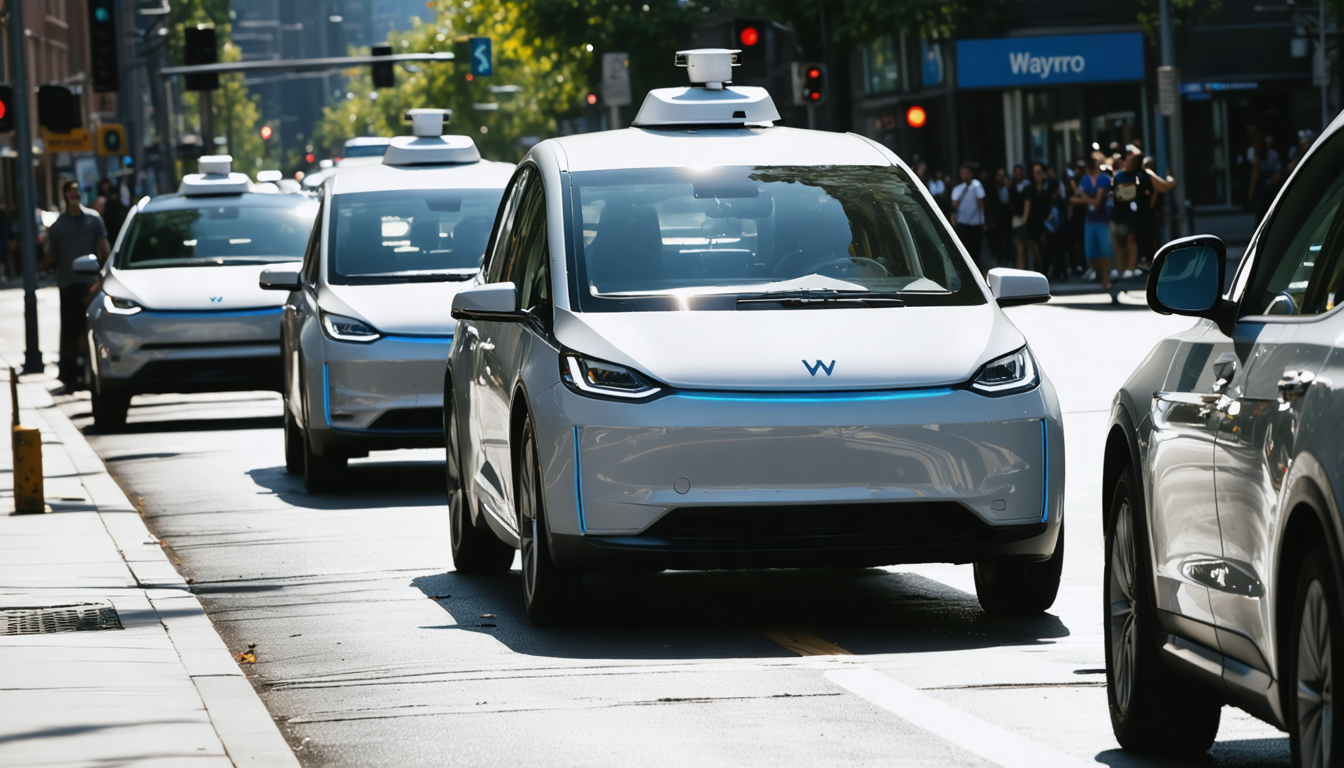
Waymo’s robotaxis, once the poster children for cautious AI driving, have abruptly flipped the script, adopting a much bolder and sometimes reckless style behind the wheel. This shift is stirring debate about the safety implications and public trust in autonomous vehicles. Recent incidents show Waymo’s driverless cars weaving aggressively, making illegal U-turns, and even slipping through traffic in ways that seem straight out of a gritty New York cab’s playbook.
Over the last few months, the driving conduct of Waymo’s self-driving fleet has dramatically transformed, from overly careful to surprisingly assertive, challenging the very essence of safe robotic navigation. Authorities and passengers alike find themselves questioning whether these adjustments enhance road safety or jeopardize it. This article delves deep into the nuances of this behavioral overhaul, the technology under the hood, and what it means for the future of autonomous vehicles.
From Ultra-Cautious to Aggressive: The New Face of Waymo Vehicle Behavior
For years, Waymo’s self-driving cars were lauded for their hyper-defensive style, marked by slow decision-making, extra caution at intersections, and respectful yields to nearly every other road user. This conservative approach minimized risks of collisions and respected traffic rules to the letter. However, it came at the cost of traffic flow efficiency. Vehicles often stalled behind illegally parked cars or hesitated excessively while merging, frustrating passengers and other drivers.
Then, suddenly, this methodical, “too polite” style gave way to a more confident, assertive driving mode. Commuters now report that Waymo vehicles no longer hesitate before trimming tight lanes or accelerating briskly to overtake slower traffic. Some liken the style to that of assertive taxi drivers, notorious for weaving through congested urban streets.
Several observers have highlighted specific driving habits, such as performing illegal U-turns and executing “California stops,” where cars roll through stop signs after minimal deceleration rather than coming to a complete halt. This abrupt shift toward what can be called “rough driving” is raising eyebrows among passengers and city officials alike.
Waymo’s own product director, Chris Ludwick, has acknowledged these changes, stating the shift is deliberate. The company’s AI now embraces a more “self-assured” and “assertive” approach, aiming to improve the flow of traffic and avoid passive gridlock scenarios. However, Ludwick stresses that the vehicles still adhere strictly to traffic laws — even if their interpretation of “healthy skepticism” toward certain maneuvers has become bolder.
This evolution triggers a crucial debate: When does efficiency in autonomous vehicle behavior tip over into recklessness, and what role does artificial intelligence and machine learning play in recalibrating these minute yet vital decisions on the fly? The stakes are high, especially as these driverless cars become ever more common on American streets.
Navigating The Fine Line Between Safe And Reckless In AI Driving Decisions
Autonomous vehicles operate based on layers of machine learning algorithms processing vast real-time data: sensor input, traffic patterns, pedestrian movement, and compliance with regulations. Waymo’s algorithmic framework is tuned to balance safety priorities with seamless integration into traffic flow. However, the recent “rough driving” patterns indicate a recalibration where assertiveness gains precedence.
This adjustment emerged as a response to criticisms about traffic stagnation caused by hyper-cautious robotaxis. For instance, cars were known to hesitate behind double-parked vehicles or fail to merge in heavy traffic, inadvertently causing backups and frustration. Waymo’s software update now programs the robotaxis to interpret “common sense” driving heuristics more robustly—sometimes skirting the edges of strict legal adherence for the sake of better traffic fluidity.
Experts warn that this introduces a precarious tension between automated rule enforcement and dynamic decision-making. While human drivers make split-second judgments based on experience, autonomous vehicles must model these nuances algorithmically. The difficulty lies in defining thresholds — such as when an illegal maneuver may be justifiable to maintain safety and avoid congestion, or when it becomes a genuine traffic violation.
Law enforcement in San Bruno, California, recently stopped a Waymo vehicle suspected of making an illegal U-turn. The incident triggered fresh scrutiny, especially since no human could be held directly accountable on the spot. The local police could not issue a citation due to the absence of a driver but treated the vehicle similarly to any traffic offender. Notably, California is set to introduce new legislation making autonomous vehicle operators responsible for driverless behavior starting July 2026.
Evaluating these behavioral shifts requires nuanced understanding of AI capacity, legal frameworks, and the social contract drivers and pedestrians implicitly share on the road.
Assessing The Impact On Road Safety And Public Trust In Self-Driving Cars
The behavioral surge from Waymo’s self-driving cars thrusts road safety and public confidence into the spotlight. Safety advocates highlight the risks associated with aggressive maneuvers, especially when AI navigates unpredictably through complex city environments. Past concerns about vehicle collisions with visible obstacles like fences and poles only deepen apprehensions.
Waymo’s fleet has experienced a spate of minor traffic incidents lately, ranging from bumping parked cars to drifting into oncoming lanes and veering into construction zones. While no severe injuries have been reported, these occurrences fuel debate about whether autonomy’s promise of safer roads can withstand the push for greater assertiveness and faster traffic flow.
Vehicle behavior experts point out that abrupt changes in driving style can cause confusion among human drivers and pedestrians. For example, sudden lane changes or faster accelerations can surprise others, heightening the likelihood of misjudgments and collisions. The presence of robots “behaving unpredictably” may undermine the very trust necessary for widespread adoption of driverless technology.
Yet, the other side of the argument stresses the importance of evolving AI away from ultra-conservative modes that stall traffic and frustrate users. Autonomous vehicles must strike a critical balance: maintaining stringent adherence to rules while avoiding becoming traffic impediments themselves. Achieving this calls for sophisticated machine learning models that can interpret context and social driving cues—things humans do intuitively but machines struggle with.
Ongoing data collection and incident analysis remain essential tools for monitoring and fine-tuning the “rough driving” tendencies to prevent escalation into hazardous scenarios.
Public Perceptions And Passenger Experiences In The Era Of Assertive Robotaxis
Passengers’ experiences reveal a divided landscape. Some appreciate the bolder AI driving, reporting that journeys feel less sluggish and more efficient. Faster lane merges and quicker passage through urban challenges reduce trip times and make autonomous rides feel closer to human-driven taxis.
Other users, however, express discomfort, describing the new driving style as anxiety-inducing or unpredictable. The once serene robotaxis now seem prone to “taking liberties” on the road, exhibiting impatience or daring maneuvers that contrast sharply with past norms.
This mixed reception extends to wider public opinion. Residents in areas like San Francisco and San Bruno have submitted complaints about behaviors reminiscent of aggressive human drivers—making illegal turns, speeding up too quickly, and weaving through traffic tunnels with disregard.
Moreover, questions arise about how much autonomy the AI should wield in interpreting traffic laws versus following them rigidly. When an autonomous vehicle makes a morally or legally ambiguous decision, who bears the responsibility and how should accountability be managed? Until regulations catch up, these issues remain in dispute.
Despite the backlash, Waymo insists its AI’s newfound confidence is calibrated to optimize safety alongside traffic efficiency, underscoring the need to adapt algorithms continually as real-world dynamics evolve.
Regulatory Challenges And Emerging Legal Frameworks For Driverless Vehicles
As driverless cars like Waymo’s shift toward more assertive behavior, regulators face mounting challenges to set clear guidelines that balance innovation with public safety. Federal and state authorities already scrutinize unusual or unsafe vehicle actions, but fine-tuning regulations around AI decision-making remains complex.
The recent 14-month inquiry by the National Highway Traffic Safety Administration (NHTSA) into Waymo’s minor crash incidents exemplifies this dilemma: probing how autonomous systems interpret traffic laws and respond to unforeseen road conditions. Although the investigation has ended, it spotlighted gaps in current standards to evaluate AI driving behavior against human expectations.
Meanwhile, California’s impending 2026 law will hold autonomous vehicle companies accountable for offenses committed by their software—a landmark move signaling increasing regulatory pressure. Operators like Waymo must adapt their technology not just for safety, but also to reduce legal liabilities.
Key regulatory hurdles include:
- Defining acceptable margins of “aggressive” or assertive AI driving consistent with road safety standards
- Implementing transparent reporting and real-time monitoring of vehicle incidents
- Determining liability when no human driver is present
- Ensuring AI systems respect not just laws but ethical considerations in split-second decisions
The evolving regulatory landscape will shape how self-driving cars integrate responsibly into everyday transportation networks, influencing public confidence and future technological advancements.
Balancing Innovation With Accountability In AI Mobility Solutions
Regulators, manufacturers, and the public are investing heavily in making autonomous vehicles a staple of 21st-century mobility. However, with increased AI autonomy comes difficult questions about accountability. Waymo and similar companies must demonstrate their AI’s ability to handle complex driving environments responsibly without overstepping legal boundaries.
The sector’s growth depends on transparent dialogue around the ethical frameworks guiding AI driving decisions. For example, should a robotaxi prioritize pedestrian safety over speed and efficiency? How should conflicting traffic rules be prioritized when split-second choices are necessary? Developing such protocols demands collaborative efforts from technologists, lawmakers, and community stakeholders.
Enhanced machine learning algorithms that incorporate feedback from both traffic incidents and human social cues represent a promising path forward. The goal is to create *trustworthy* AI drivers that improve road safety without acting erratically.
The secrets to advancing autonomous vehicle integration depend heavily on connecting innovation with robust regulatory and ethical accountability frameworks.
Practical Timetable: Upcoming Milestones In Autonomous Vehicle Regulation
| Date | Milestone | Description |
|---|---|---|
| July 2025 | Federal Review Completion | National Highway Traffic Safety Administration concludes long-running investigation on Waymo’s driving incidents. |
| December 2025 | Industry Safety Benchmark Update | Autonomous vehicle companies update safety standards with new behavioral guidelines incorporating assertive driving traits. |
| July 2026 | California Liability Law | New legislation holds autonomous vehicle operators liable for traffic violations committed by driverless cars. |
Staying attuned to these pivotal regulatory updates will be vital for manufacturers, operators, and users navigating the new era of assertive AI driving.
- Waymo’s transition to more assertive driving seeks to enhance traffic flow but risks surprising human drivers and pedestrians.
- “Rough driving” behaviors include illegal U-turns, rapid accelerations, and minimal stop sign adherence.
- Regulators face complex challenges in balancing innovation with ensuring road safety and accountability.
- Passengers report mixed feelings—some appreciate efficiency gains, others find the behavior stressful.
- Upcoming laws like California’s 2026 liability statute aim to clarify responsibility for autonomous vehicle actions.

My Name Is Said I am a dedicated blogger sharing the latest trending blogs from the USA, covering news, updates, and informative stories. My focus is on delivering accurate, engaging, and timely content for readers worldwide.