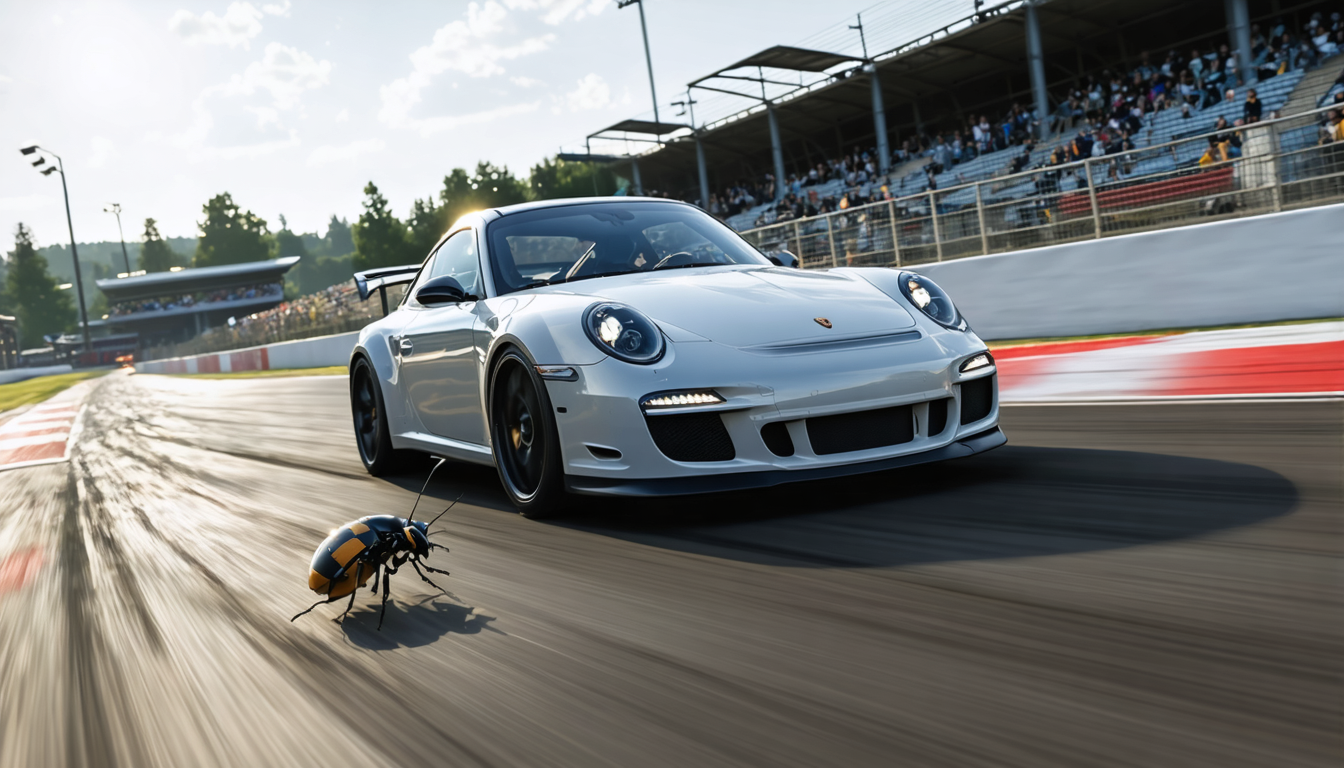
This classic Volkswagen Beetle is flipping the script, leaving a Porsche 911 GT3 eating its dust in the crucial 0-60 mph sprint with a jaw-dropping electric makeover.
Underneath its vintage exterior, a revolutionary electric powerhouse has transformed this humble Beetle into a street-legal missile, redefining what we think about timeless design and raw performance. What happens when old-school aesthetics meet cutting-edge EV tech? A car that tricks the eye and flattens your expectations, clocking 0-60 mph in a blistering 2.9 seconds—faster than many supercars today. Join us as we dissect every riveting detail of this astonishing build—from the unique powertrain fusion to the suspension overhauls that keep it glued to the asphalt, making even Porsche fans sit up and take notice.
Reimagining the Icon: What Drives This Beetle’s Shocking Speed
The Volkswagen Beetle is a symbol of simplicity and reliability, originally equipped with an engine barely producing 50 horsepower. In 2025, that image is shattered by a radical transformation engineered by German specialists Knepper Bugs & More. This Beetle hides a Tesla Model S motor, recalibrated and enhanced to push out more than 600 horsepower and an astonishing 516 lb-ft (700 Nm) of torque. This is nearly triple the output of typical modern hatchbacks and crafts a performance profile unheard of in such a compact package.
Integrating such power requires more than just a better motor. Knepper’s team harnessed driving shafts from a Porsche 930 to handle the intense torque delivery, while the energy storage comes from 17 Porsche Taycan battery modules. This blending of components from distinct automotive legends creates a Frankenstein-style powerhouse that turns a modest classic into an EV speed demon.
The result? The unassuming Beetle reaches 0-62 mph in just 2.9 seconds, rivaling even exotic supercars like Lamborghini’s new twin-turbo V8 hybrid, which manages 2.7 seconds in the same sprint. Surprisingly, this Beetle leaves behind some late-model Porsche 911 GT3s needing 3.4 seconds, a benchmark for many enthusiasts.
This build underlines a larger EV revolution—where traditional vehicle archetypes are being redefined, showcasing just how far electric technology extends performance limits.
The Strategic Combination of Tesla Power and Porsche Engineering
This Beetle isn’t simply slapped together with off-the-shelf parts but features deliberate component choices that elevate performance while maintaining reliability. The Tesla Model S rear motor, originally optimized for luxury and speed, is tweaked to run at higher voltages, increasing horsepower beyond stock limits.
Porsche 930’s drive shafts are used to translate this newfound power effectively to the wheels, ensuring durability under immense strain. Energy supply is no afterthought: while most EV conversions rely on generic battery packs, the use of Porsche Taycan’s high-capacity modules ensures a dependable and refined energy source supporting performance and range.
This engineering cocktail is not only about power but also about preserving the vehicle’s fundamental mechanics, blending vintage charm with modern tech. The powertrain choice pays homage to the legacies of both Tesla’s electric innovation and Porsche’s masterful drivetrain design, resulting in extraordinary synergy.
Ultimately, this cohesion of technology demonstrates how strategic part sourcing can create a hyper-enhanced classic with driving characteristics previously impossible for the Beetle’s original layout.
Engineering Upgrades That Keep Pace with Supercar Performance
Raw power alone doesn’t guarantee a car will handle or brake well, but this EV Beetle also features extensive suspension and braking upgrades lifted from Porsche 944 models and fitted with components from premium brands like KW and Bilstein. These additions provide the chassis with the ability to translate astonishing power into controlled speed on real roads.
The suspension tuning lowers the ride height significantly, contributing to a more aggressive stance and improved aerodynamic stability. This setup ensures that the Beetle remains planted, resisting the body-roll and instability usually expected when boosting a classic car with modern engine components.
Braking improvements stem from reinforced Porsche 944 hardware, delivering the stopping power necessary to control this newfound aggression. Together, these mechanical upgrades balance the car’s performance envelope, crafting a ride that’s both thrilling and manageable at the limit.
Beyond function, the Beetle’s subtle height adjustment and fitted Porsche wheels hint at a performance edge without sacrificing the timeless silhouette that makes the car instantly recognizable.
Maintaining Driving Dynamics Amidst Substantial Power Gains
Performance cars are often measured by more than just acceleration—they require nuanced dynamics and predictable handling. The VW Beetle’s collaboration with Porsche suspension components and high-end shock absorbers from KW and Bilstein gives it chassis feel and composure that surprises even seasoned drivers.
Efforts to reduce body roll, improve cornering capability, and enhance braking confidence ensure the car does not merely drag race but handles tight bends and spirited driving sessions with poise. This balance showcases the underlying commitment to a comprehensive performance upgrade rather than merely raw power.
Driving enthusiasts value how the Beetle retains a tangible connection to its roots, with a simple interior and analog instruments, allowing the driver’s skill and machine to engage in pure form, even amid blazing acceleration.
Reinvented Aesthetic and Interior Touches Conceal Brutal Power
This Beetle’s design cleverly masks the surge of modern muscle under its vintage skin. The body is painted in Marathon Blue, a refined color choice that endows the car with timeless appeal and visual depth. Classic Porsche wheels complement the look, enhancing the sporty vibe while maintaining elegance.
The exterior is kept mostly clean and subtle, avoiding oversized spoilers or flashy aerodynamic aids. A modest carbon fiber rear spoiler adds just enough flair for downforce without disrupting the Beetle’s iconic form.
Inside, the transformation focuses on comfort and a touch of modernity. Retaining the original dashboard, now meticulously refinished, preserves authenticity. New Recaro seats borrowed from a BMW 2002 offer enhanced support to withstand aggressive driving, while a small touchscreen replaces the mechanical shifter to control the electric powertrain’s gears—marrying classic charm with contemporary convenience.
This thoughtful approach honors the Beetle’s heritage while acknowledging the needs of a high-performance EV.
Comfort and Classic Sensibility Amid Upgraded Technology
Preserving the driver’s tactile connection, the Beetle’s cabin balances old and new effortlessly. The original gauge cluster offers a nostalgic nod, while digital gear selectors provide a smooth transition to EV functionality. This synthesis enhances usability without overwhelming the driver.
Attention to ergonomics and aesthetics ensures that this car is as comfortable on long journeys as it is on the drag strip. The inclusion of high-quality Recaro seats is a statement on the importance of driver support and safety in the face of extraordinary speed.
Every interior detail reinforces that this is a collector-worthy vehicle crafted with passion, not just speed milestones. It proves that technological upgrades can coexist with traditional design philosophy, creating a unique driving experience.
World Tour: Pushing Limits Beyond the Tarmac
This Beetle didn’t just make a flashy appearance; it also passed the ultimate test of durability and versatility. Earlier this year, Knepper Bugs & More embarked on an ambitious 8,000 km (about 5,000 miles) journey across Europe—traveling through Belgium, France, Spain, Portugal, Luxembourg—and even crossing into North Africa via the Strait of Gibraltar.
This expedition was designed to prove the car’s dependability under real-world conditions, blending spirited driving with long-distance travel. The Beetle confidently handled diverse road conditions, varying climates, and logistical challenges, proving that an electric conversion is not only about explosive performance but practical usability as well.
It demonstrated impressive range management—peak travel is around 250 km (155 miles) on a single full charge, dropping to roughly 100 km (62 miles) under aggressive driving. While not unrivaled for EV range, this balance is perfectly sensible given the performance-oriented build.
Such endurance journeys are rare among EV conversions, underlining how deeply the Knepper team engineered this Beetle not just to shock enthusiasts on the street but to perform reliably as a daily driver or road trip companion.
Extended Reliability and Range in a High-Powered Electric Classic
Long-range capabilities and robust durability elevate this build beyond mere showcase status. The 8,000 km journey wasn’t just a stunt but a sincere effort to validate engineering decisions—from battery management to suspension resilience under real driving conditions.
This kind of rigorous testing displays the electric Beetle’s ability to compete with much newer EVs on reliability, addressing typical concerns such as range anxiety, battery longevity, and charging convenience.
Critically, this reveals that old classics can become future-proofed icons without losing their soul, blending the nostalgia of yesteryears with the exciting promise of electric performance.
Performance Highlights and Specifications Table
| Specification | Detail |
|---|---|
| Power Source | Tesla Model S Rear Motor (Modified for High Voltage) |
| Horsepower | 600+ |
| Torque | 516 lb-ft (700 Nm) |
| Battery Modules | 17 Porsche Taycan Modules |
| 0-62 mph Acceleration | 2.9 seconds |
| Range (Mixed Driving) | Approx. 250 km (155 miles) |
| Range (Aggressive Driving) | Approx. 100 km (62 miles) |
| Suspension Components | Porsche 944 Hardware, KW & Bilstein |
| Exterior Color | Marathon Blue |
| Weight (Estimated Increase) | Unconfirmed, but substantial due to batteries |
Wide-Ranging Impact of This Build on EV Enthusiasts and Classic Car Culture
This Beetle’s incredible performance, blend of proven technology, and respect for automotive heritage positions it as a game-changer for enthusiasts who crave innovation without sacrificing character. It sets new expectations for EV conversions, suggesting that electric powertrains can breathe new life into classics, achieving both frenetic acceleration and usable range.
The build exemplifies how thoughtfully merging legacy cars with cutting-edge engineering can create vehicles that satisfy multiple passions: nostalgia, performance, and sustainability. It stands as a bold statement to the car community that the past and future are no longer exclusive realms.
Expect more surprises as this approach influences future projects, potentially revolutionizing how we convert, restore, and experience vintage vehicles in the electric era.
This electrified Beetle challenges the norms of automotive speed, showing up faster than a Porsche 911 GT3 on the quarter-mile. Watch the thrilling drag race that pits classic against performance icon with a twist.
Explore the legendary 8,000 km road journey documenting this Beetle’s endurance and daily usability, proving that an electric classic can double as a practical, high-speed tourer.

My Name Is Said I am a dedicated blogger sharing the latest trending blogs from the USA, covering news, updates, and informative stories. My focus is on delivering accurate, engaging, and timely content for readers worldwide.