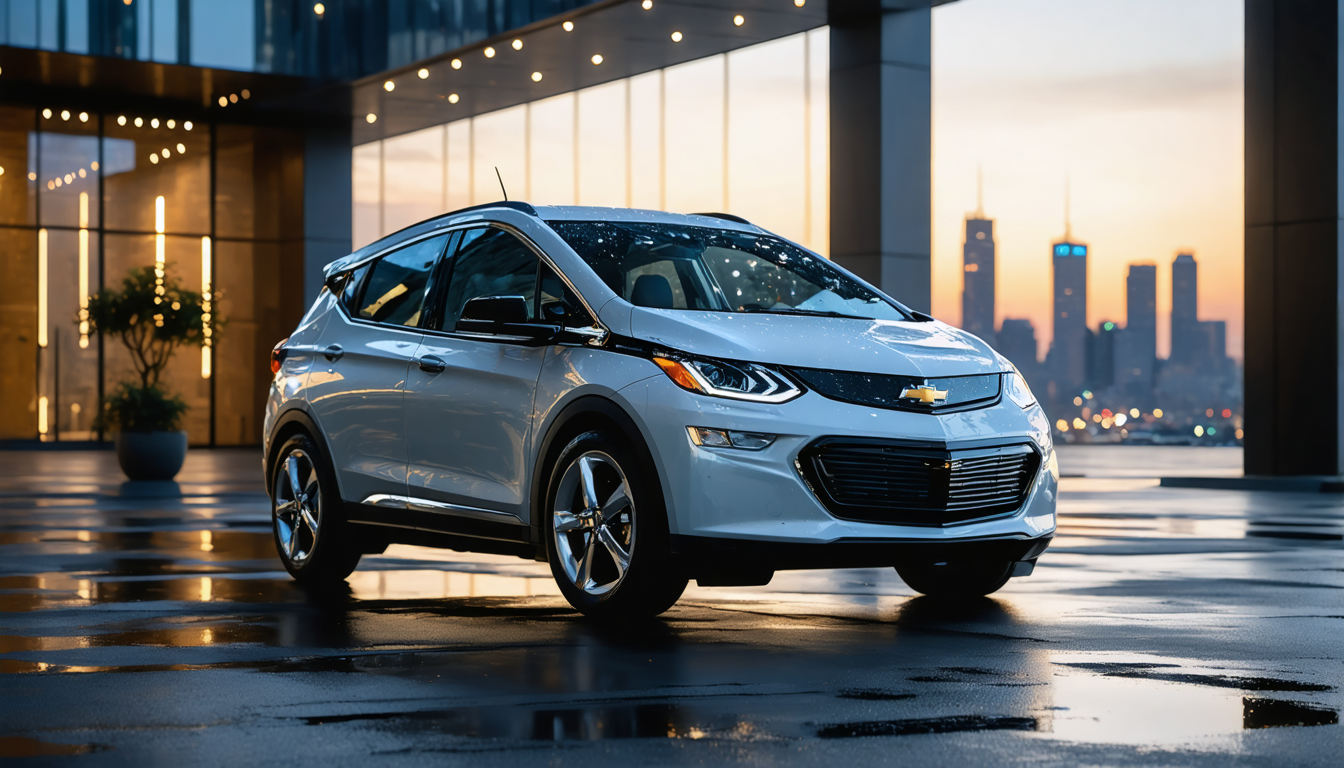
Chevrolet Bolt’s unexpected return is short-lived as GM plans to drop production by 2027 amid shifting market needs and regulatory pressures.
The 2027 Bolt promises upgrades and affordability but faces an early exit due to production reshuffles and changing industry rules. GM’s bold gamble highlights the ongoing challenges within the evolving electric vehicle landscape.
GM’s Strategic Shift: Why the Chevrolet Bolt Faces the Axe by 2027
General Motors recently reignited hopes among EV enthusiasts by bringing back the Chevrolet Bolt for the 2027 model year. However, this revival is already facing an expiration date. Production at the Kansas plant, the Bolt’s manufacturing home, is slated to cease roughly 18 months after the model’s reintroduction. This short production run is the result of GM’s broader corporate recalibration aimed at addressing both logistical constraints and external pressures.
The Kansas plant, which primarily churned out the Bolt, is set to pivot towards producing internal combustion engine (ICE) models: specifically, the next-generation Buick Envision and the Chevrolet Equinox. Both vehicles are currently manufactured overseas (China for Buick Envision and Mexico for Equinox) but are moving stateside, reflecting GM’s strategy to reshore production in response to tariffs, supply chain security, and regulatory relaxation favoring gas vehicles.
GM’s decision underlines the delicate balance automakers face. On one hand, EVs represent the future of personal mobility. On the other, evolving regulations—especially under the Trump administration’s relaxed fuel economy standards—and economic factors compel manufacturers to juggle investments between electric and combustion platforms. As Chevrolet’s spokesperson clarifies, the 2027 Bolt is being marketed as a limited edition to gauge customer demand while supporting Chevy’s EV lineup alongside the Equinox EV. However, its time in the spotlight is destined to be brief.
This strategic shift offers a window into GM’s complex response to political, economic, and regulatory headwinds. The Bolt’s curtailed run is less about the model’s appeal and more about broader manufacturing priorities and evolving market realities. Though the Bolt carries the torch for electric mobility affordability, GM’s choice to lighten its production footprint signals a cautious approach amid an uncertain automotive climate.
Assessing GM’s Maneuver Amid Industry and Regulatory Challenges
The 2027 Chevrolet Bolt: A Heavily Updated EV with Affordable Appeal
The 2027 iteration of the Chevrolet Bolt is less a brand-new model and more a substantial overhaul of the first-generation EV beloved for its practicality and range. GM has invested heavily in modernizing the vehicle’s underpinnings while maintaining an accessible price point to attract mass-market buyers. The Bolt’s evolution highlights the company’s attempt to refresh its offering without incurring the massive costs of an entirely new design.
Key upgrades include a refined battery architecture utilizing lithium iron phosphate (LFP) cells—a shift that brings durability and cost savings, helping to drive the starting price down to under $30,000 USD for the LT trim with Comfort Package. This is significant in a market where EV prices often soar above the reach of many consumers. The battery packs 65 kWh capacity beneath the floor, enabling an EPA-rated range of approximately 255 miles (410 km), a modest boost from the original Bolt’s figures but competitive enough to meet typical daily commuting needs.
Powertrain enhancements include a 157 kW motor shared with the Chevrolet Equinox EV, delivering brisk acceleration and efficiency improvements. Notably, fast-charging capabilities have been raised to 150 kW, allowing for shorter recharge stops and better compatibility with public DC fast chargers. Safety and tech features also receive attention, with available semi-autonomous driving tech “SuperCruise,” a Panoramic roof option, and over-the-air software updates that keep the Bolt technologically current.
By balancing improvements in range, charging, and comfort with affordability, GM frames the 2027 Bolt as a competitive electric car for urban drivers and budget-minded buyers. However, the limited production window tempers this optimism, as consumers weigh a brief market presence against the vehicle’s tangible benefits.
Modernizing Legacy: How the Updated Bolt Attempts to Capture New EV Buyers
Market Response and the EV Landscape in 2026: Bolt’s Place Amid Fierce Competition
The return of the Chevrolet Bolt is stirring mixed reactions within the automotive world. The EV market in 2026 is more crowded, with numerous established and emerging players offering compelling electric vehicles boasting greater ranges and advanced features. Still, the Bolt’s legacy as one of the more affordable EVs allows it to retain a niche appeal, especially for price-sensitive buyers exploring electric alternatives.
General Motors sold approximately 62,000 Bolt units in the Bolt’s last full production year, showcasing that demand persists despite production halts and industry shifts. The decision to launch the revamped Bolt despite the impending discontinuation reflects GM’s wish to hold onto this loyal customer base while managing manufacturing resources smartly. The limited-run release also aligns with maintaining market presence and honing GM’s experience with lithium iron phosphate technology within an electric lineup that includes more expensive models.
Competitive pressure, however, is fierce. Rivals have pushed the envelope, often offering EVs with longer ranges, wider infrastructure compatibility, and more futuristic designs. Tesla, Hyundai, Nissan, and Ford, to name a few, have invested heavily in EV platforms, raising the stakes for mainstream players like Chevrolet. Customers increasingly expect vehicles with advanced infotainment, driver-assist tech, and robust warranty packages—features whose development burdens automakers financially.
This environment forces GM to balance affordability, innovation, and pragmatic production planning. The Bolt’s staged return, timed with the Equinox EV’s rollout, leverages existing manufacturing capabilities but also reveals the constraints faced by volume manufacturers amid an accelerating yet volatile sector.
Challenges & Opportunities for Affordable EVs in a Competitive Market
Implications of Reshoring Production and Regulatory Changes on EV Strategies
One of the critical drivers behind the Bolt’s impending discontinuation is GM’s production reshuffling as it relocates key vehicle assembly back to the U.S. This reshoring strategy is largely a response to elevated tariffs and supply chain concerns that emerged in recent years. Moving manufacturing closer to home aims to reduce costs, mitigate supply disruptions, and align with policies incentivizing domestic production under current U.S. trade regimes.
However, this shift comes with tradeoffs. The Kansas plant currently dedicated to the Bolt will begin producing two prominent gas-powered vehicles, the Buick Envision and Chevrolet Equinox, both models reshaped for the next chapter but reliant on internal combustion engines. This choice, seemingly contradictory to the EV trend, is explained by regulatory rollback on emissions and fuel efficiency standards under the current federal administration, allowing automakers more latitude to focus on profitable ICE vehicles alongside EVs.
Moreover, regulatory uncertainties have complicated GM’s planning. Changes in tax credits at the federal level curtail consumer incentives for EV purchases, directly shaking demand maturity in domestic markets. Reports of regulatory challenges affecting the Bolt’s compliance further cloud its prospects, suggesting the model may soon face tightened environmental requirements it cannot meet without costly redesigns.
In all, GM’s recalibrated manufacturing and product strategy reflect a broader industry-wide tension: balancing aggressive electrification targets against the practical realities of policy flux and market demand. The Bolt’s final act underscores the complex dance automakers must perform to stay profitable while navigating an EV revolution in constant motion.
How Policy and Production Realities Shape the Future of EVs at GM
| Event | Date/Period | Details |
|---|---|---|
| Revived 2027 Chevrolet Bolt Launch | Late 2025 / Early 2026 | Production restarted at Kansas plant; limited edition release |
| Chevrolet Bolt Production Ends | Mid 2027 | Plant transitions to Buick Envision and Chevrolet Equinox ICE production |
| Shift of Buick Envision Production | 2027 | New generation brought from China to Kansas plant |
| Chevrolet Equinox Production Move | 2027 | Equinox shifted from Mexico to Kansas factory |
| Federal EV Tax Credit Changes | 2025-2026 | EV incentives scaled back, impacting sales and demand |
What the Bolt’s Journey Reveals About the Electric Vehicle Industry’s Crossroads
The Chevrolet Bolt’s short-lived resurgence offers a telling case study on the volatility and complexity embedded in the North American EV market today. GM’s balancing act — bringing back a popular, affordable EV quickly before shelving it again — highlights how external forces beyond consumer demand influence corporate decisions.
The model’s trajectory shows the importance of manufacturing flexibility: how a single plant can pivot between powering electric models and conventional vehicles based on shifting policies and market pressures. GM must navigate tariffs, regulatory changes, and fluctuating incentives while striving to maintain a coherent EV lineup. The Bolt’s story also reflects the challenges of scaling battery technology costs, supply chain stability, and consumer expectations in a competitive landscape.
For industry watchers and consumers alike, the Bolt’s phase-out is a reminder that the embrace of electric vehicles is neither linear nor guaranteed. It underscores the continued relevance of legacy fuels and the role of government policy in shaping automotive futures. Ultimately, GM’s experience with the Bolt may inform how automakers worldwide balance innovation against practical production realities and market uncertainties as they pursue electrification goals.
Mapping EV Industry Challenges Through Chevrolet Bolt’s Market Lifecycle

My Name Is Said I am a dedicated blogger sharing the latest trending blogs from the USA, covering news, updates, and informative stories. My focus is on delivering accurate, engaging, and timely content for readers worldwide.