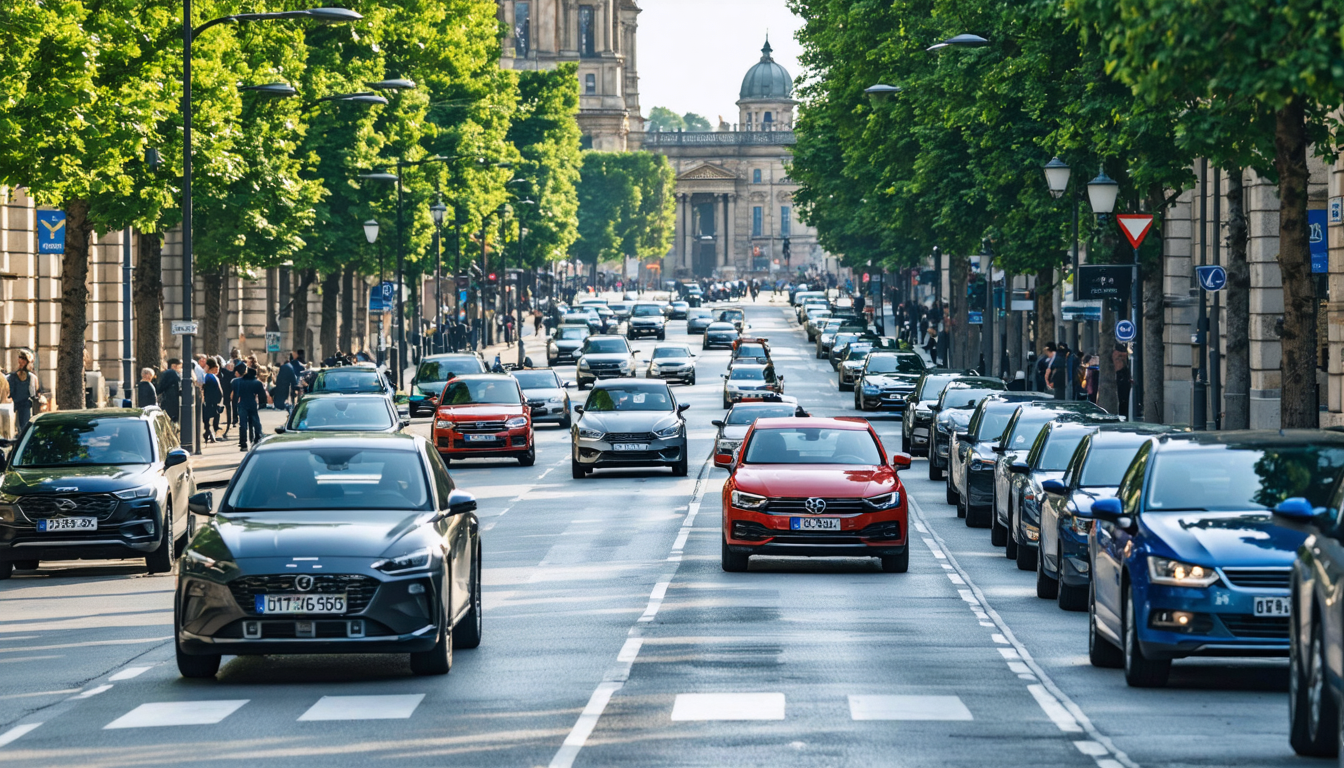
Chinese-made cars have stormed the European market, grabbing an astonishing 10% share last month and rewriting the auto sales narrative.
Europe’s auto industry is witnessing what many might have considered improbable just a few years ago. The rise of Chinese automotive brands in Europe is no longer a trickle but a tide, challenging old hierarchies and reshaping consumer preferences.
Explosive Growth of Chinese Automakers in Europe’s New Vehicle Market
In recent months, the foothold of Chinese car manufacturers in Europe has transformed from cautious expansion to commanding presence. Last month alone, Chinese-made vehicles accounted for a remarkable 10% of new car sales across European markets, signaling a seismic shift in consumer acceptance and market dynamics. This milestone is the culmination of consistent growth years in the making. Sales data from industry trackers report over 810,000 vehicles sold in Europe in 2025, doubling their figures from the previous year.
This surge isn’t random or limited to isolated markets but cuts across key European countries including the UK, Germany, France, and the Nordics. December 2025 marked a particular peak: it was the first time monthly sales from Chinese brands crossed the 100,000 mark, illustrating the rapid acceleration of their market share.
What fuels this impressive expansion? Several factors play into this robust momentum. Firstly, Chinese automakers have honed in on electric and plug-in hybrid vehicles (PHEVs) — a segment rapidly growing in Europe due to regulatory pressures and consumer demand for green alternatives. Models like BYD’s Seal U and MG’s latest SUVs have found eager audiences due to their competitive pricing, advanced tech features, and favorable incentive schemes.
This growth also reflects a strategic response to regulatory hurdles. The European Union’s anti-subsidy tariffs and import duties have compelled Chinese brands to innovate their market approach, create localized assembly lines where possible, and sharpen their product offerings to fit European tastes and quality expectations.
By outmatching certain traditional rivals on price-performance ratios, these companies are not only appealing to budget-conscious buyers but also to tech-savvy consumers who desire value without sacrificing features or environmental goals. The rise in Chinese vehicle registrations has spurred intense competition, causing ripple effects across many established European and Japanese brands.
A Closer Look at the Manufacturers Driving This Surge
Among the front-runners, MG, owned by SAIC Motor, leads with over 300,000 units sold in Europe, largely driven by its electric and hybrid SUVs. BYD, often touted as a powerhouse in electrification, has sky-rocketed too, selling close to 187,000 vehicles, with standout models such as the Seal U and Dolphin Surf, particularly excelling in PHEV sales.
Chery and its associated brands have also made major inroads, increasing sales more than sevenfold compared to the prior year. The Jaecoo brand’s rapid ascendance has been a game-changer, bringing in nearly 57,000 sales thanks to bold design and affordable electric options. Geely doesn’t lag either, combining the legacy of Volvo with fresh energy from emerging names like Polestar and Zeekr.
Stellantis-backed Leapmotor’s presence with its entry-level electric minicar T03 is another noteworthy example, registering over 33,000 vehicles. This demonstrates Chinese automakers’ wide-ranging strategy, from luxury electrics to affordable city vehicles.
Leveraging Technology and Sustainability to Win European Hearts
The secret weapon Chinese automakers wield is a relentless focus on modernization and sustainability. Europe’s car buyers are not only price-conscious but deeply concerned about carbon footprints and regulatory compliance. Chinese manufacturers have leveraged this priority by pouring resources into electric vehicle (EV) and plug-in hybrid technologies that meet European standards.
This has resulted in an impressive lineup of vehicles featuring cutting-edge battery technology, enhanced driving ranges, and fast-charging capabilities — aspects that make them competitive with or even superior to offerings from legacy manufacturers. The BYD Seal U, for example, stood out as Europe’s best-selling Plug-in Hybrid Electric Vehicle (PHEV) in 2025, with over 79,000 units sold.
Besides technology, the sustainability narrative helps brands connect with environmentally conscious consumers and governmental incentives favoring cleaner transport. This alignment is no accident; it reflects a coordinated strategy where Chinese companies integrate eco-friendly features while keeping prices affordable.
Another cornerstone of their success is the integration of smart, connected technologies. Chinese EVs often come loaded with the latest infotainment systems, AI-assisted driving aids, and seamless smartphone integration. This tech-first mindset appeals especially to younger European buyers, increasingly drawn to digital vehicle experiences.
Taking into account Europe’s rapid push for clean energy, it’s clear Chinese carmakers have tapped into market desires perfectly — achieving the synergy of technology, affordability, and sustainability needed to disrupt.
Smart Systems and Green Innovation Drive Consumer Demand
Innovations in battery tech, digital driving aids, and eco-efficiency are core reasons consumers shift towards Chinese models, adding tangible value beyond basic transport needs.
How Tariffs and Regulations Shape the Chinese Automakers’ European Playbook
One cannot ignore the role of trade dynamics in this unfolding scenario. The European Union has imposed duties — including anti-subsidy tariffs of up to 35.3% plus standard import tariffs — aiming to protect domestic industry. Yet, Chinese companies have embraced these barriers as part of their business calculus, not as roadblocks.
To navigate these constraints, manufacturers have pursued a slew of strategies:
- Local assembly and partnerships: Building or utilizing assembly plants in Europe to reduce import levies and supply chain costs.
- Product adaptation: Tailoring vehicles to meet European safety and emissions standards rigorously.
- Expansion of hybrid options: Exploiting loopholes where certain hybrids face fewer restrictions than pure EVs.
- Focused marketing: Emphasizing price competitiveness and technology to win over skeptical consumers.
Interestingly, these challenges have fostered innovation and pushed companies to adopt more diversified portfolios rather than relying solely on pure electric vehicles. Their sales data from 2025 reveals PHEVs playing a critical role, with BYD’s Seal U proving the tactic effective.
This multifaceted approach also softens geopolitical risks, making Chinese brands a persistent and adaptive force on European roads. The resulting momentum is hard to reverse, particularly as consumer trust in Chinese automakers grows.
Adaptive Strategies Defy Trade Barriers and Market Resistance
The ability to pivot around trade duties reflects a sophisticated understanding of global markets, creating resilience and long-term gains.
Influence on European Legacy Brands and Market Dynamics
The rise of Chinese cars isn’t just a story about new entrants; it’s a shake-up that legacy brands cannot ignore. With Chinese automakers posting double-digit growth in a mostly stable or declining market, traditional European manufacturers are feeling the heat.
Established players like Volkswagen, Renault, and Peugeot face renewed competition, particularly in the electric and hybrid segments, where Chinese vehicles offer impressive features for less money. This competitive pressure forces legacy brands to accelerate their own electrification strategies and reassess pricing models.
Sales rankings underscore this shift. MG secured the 16th place among all car brands in Europe, ahead of names such as Nissan and Fiat. BYD followed closely at 22nd, pushing past Suzuki, Mini, and Mazda.
Additionally, new entrants like Jaecoo and Polestar cracked the top 35, signifying how Chinese-backed marques are swiftly escalating market presence.
Consumers increasingly view Chinese vehicles as viable or even preferable options due to innovation, affordability, and warranty policies, translating into shifting market shares and altered brand perceptions.
European Auto Market Recalibrates Amid New Chinese Entrants
This rising competition stimulates positive disruption, invoking better choices and innovation across the entire sector.
2026 Prospects: Rising Demand and Strategic Shifts Ahead
The momentum Chinese automakers gathered through 2025 is expected to intensify in 2026. Analysts predict their market share may well surpass 10% consistently, potentially aiming for 15% within the decade, fueled by ongoing investment and expanding local production.
Key to this trajectory are plans for European assembly plants, continued electrification, and expanded portfolios with models targeting both luxury and entry-level buyers. For instance, Polestar’s introduction of new models and BYD’s expansion in PHEV offerings could attract even more buyers.
Government incentives and infrastructure development to support EV usage are also crystalline factors. As European customers become more environmentally conscious and EV technology becomes mainstream, Chinese companies stand poised to capitalize further.
Below is a summary schedule outlining critical timelines for vehicle launches and market expansions slated for 2026, reflecting the industry’s pulse and strategic priorities.
| Time Period | Event | Impact |
|---|---|---|
| Q1 2026 | Launch of BYD Seal U Plus Version | Boost PHEV sales with enhanced battery range |
| Q2 2026 | MG Opens New Assembly Plant in Spain | Reduces import tariffs, strengthens local presence |
| Q3 2026 | Polestar Introduces New Electric SUV Model | Attracts premium buyers, expands portfolio |
| Q4 2026 | Chery Launches Budget Electric City Car | Targets urban markets with affordable EV |
Watch for these market-moving events in coming months
Anticipating these launches helps understand how Chinese automakers aim to deepen their European footprint and challenge entrenched brands.

My Name Is Said I am a dedicated blogger sharing the latest trending blogs from the USA, covering news, updates, and informative stories. My focus is on delivering accurate, engaging, and timely content for readers worldwide.