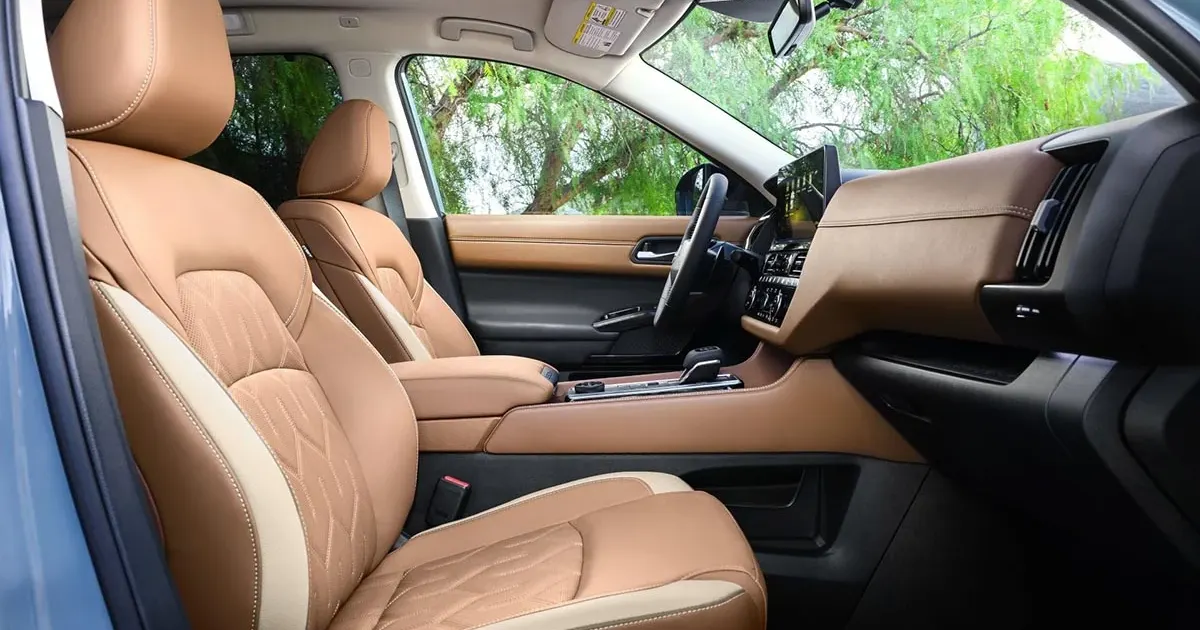
The 2026 refresh didn’t chase electrification, it doubled down on proven muscle: a naturally aspirated V6, three rows, and an AWD setup that still aimed at dirt as much as school runs.
At a time when most rivals trimmed cylinders and added batteries, this big seven-seater stayed stubbornly old-school in the ways that mattered to buyers who tow, travel, and leave pavement behind. The update was subtle on the outside, louder on the inside, and it quietly targeted the two things families actually notice: screens and usability. The catch was obvious: in markets tightening emissions rules, this kind of powertrain became a niche play rather than a mainstream plan. Still, for the people who wanted a simple V6 and honest capability, the formula remained strangely hard to replace.
A refresh that played it safe, on purpose
The 2026 update didn’t try to reinvent the shape, and that was the point. This SUV stayed boxy and upright, with changes that looked like a tune-up rather than a redesign: a reworked grille, small bumper tweaks, and a new color called Baltic teal that gave the truck a fresher face without changing its stance.
That restraint mattered because this segment had already drifted into sameness. Many newer family SUVs chased sleekand aero, sometimes at the expense of visibility and practicality. Here, the refresh kept the “big American-style family hauler” posture, which still worked if your priorities were space and confidence more than showroom drama.
A key part of the message sat in the off-road flavored trim. The Rock Creek variant kept its rugged cues and its AWD-first intent, leaning into roof rails, darker trim, and the idea that you might actually use the dirt modes rather than just talk about them.
The cabin upgrade that finally mattered
Inside, the refresh stopped whispering and started talking. The old infotainment setup got replaced by a 12.3-inchtouchscreen across the lineup, and it brought standard wireless Apple CarPlay and Android Auto. That single move dragged the cabin into the modern conversation without forcing a complete interior redesign.
Higher trims also gained a 12.3-inch digital gauge cluster, which made the driver’s seat feel more current in daily use. The best part was not the spec-sheet bragging, but the simple fact that the interface became easier to read at a glance, especially on long trips where clarity and low fatigue matter more than flashy animations.
Nissan also shifted physical controls to a more intuitive spot below the screen, which sounds minor until you try to adjust audio while bouncing over broken pavement. That small ergonomic tweak was the kind of practical improvement families and road-trippers actually feel.
Then there was the wireless charger: upgraded to 15 watts with a cooling fan and a magnetic positioning setup meant to keep phones from skating around. It was a very 2026 fix for a very 2022 annoyance.
The cameras that made off-road feel less like guesswork
Driver-assist tech often sounded like marketing, but the camera upgrades had real value if you ever threaded a large SUV through tight spaces or rocky trails. The updated surround-view system added 180-degree views and an “invisible hood” style perspective that helped you judge obstacles near the front bumper. That wasn’t just a parking trick, it was confidencetech for slow-speed terrain.
For buyers who used their SUV as a tool, this mattered because modern vehicles had gotten bigger, while trails and parking lots had not. A camera system that reduced “front corner mystery” could be the difference between a clean weekend and a scraped bumper. In that sense, the upgrade supported the vehicle’s 4×4 claim without changing a single mechanical part.
And it reinforced the broader theme of this refresh: keep the hardware steady, refine the interfaces, and remove friction from everyday use.
The powertrain that refused to follow the trend
Under the hood, the story stayed blunt. This SUV kept a 3.5-liter naturally aspirated V6, paired with a nine-speed automatic. Output remained 284 hp in most trims, while the Rock Creek tune pushed it to 295 hp. In an era of turbo fours and electrified torque tricks, that choice looked almost defiant.
For some buyers, “no turbo” was the feature. A naturally aspirated engine tended to deliver power in a more predictable way, especially when towing or climbing grades, and it avoided the heat-management complexity that can come with boosting. The appeal was simplicity and consistency, not maximum efficiency.
The trade-off was just as clear: without hybrid help, fuel economy and emissions would never be the headline. In places where regulations and urban restrictions tightened, that made the V6 setup feel less universal and more like a nichesolution for people who valued capability over compliance.
Space and daily livability, where the numbers actually matter
This kind of SUV lived or died on packaging, and the refresh didn’t mess with the fundamentals. Three rows remained the core promise, aimed at families who needed real seats rather than “occasional” cushions. The second row stayed the workhorse, and the third row stayed the backup plan, still useful for shorter trips or smaller passengers, which is how many owners actually used it.
In real life, usability came down to small moments: how easily the second row tilted, how quickly you could access the third row, and whether the cabin stayed calm over long distances. The refreshed interior tech supported that daily rhythm by reducing small irritations: better connectivity, clearer navigation, fewer cable tangles.
It also kept the vehicle’s identity intact: this was still a “big family SUV” built for comfort and road miles, not a sharp-edged crossover pretending to be sporty.
The “real 4×4” claim, and what it really meant here
Let’s be honest: most buyers didn’t need rock-crawling heroics. What they needed was the ability to handle bad weather, unpaved roads, and the occasional rough track without drama. This SUV’s AWD option, and the off-road oriented Rock Creek positioning, aimed directly at that reality: more traction, more forgiveness, less stress.
The refresh didn’t magically turn it into a hardcore trail rig, but it didn’t have to. In this class, “real off-road” usually meant a solid AWD system, useful drive modes, decent approach to rough surfaces, and the confidence to tow a trailer to a muddy campsite without cooking the drivetrain.
In that sense, the 2026 refresh reinforced the vehicle’s role as a multi-tool: family hauler on weekdays, outdoor shuttle on weekends, long-distance cruiser when the calendar demanded it.
Dates and timing, what was known and what was implied
The rollout talk was straightforward: the refreshed model was expected to reach dealerships in early 2026, with pricing likely a bit higher than the prior year.
Here’s a simple timeline table that kept the key milestones in one place:
| milestone | timeframe | what it meant |
| refresh details surfaced | late 2025 | design tweaks and tech upgrades became public |
| dealership arrival | early 2026 | first deliveries and test drives were expected |
| pricing clarity | near launch | final MSRP was expected to land slightly above 2025 |
If you were tracking it from Europe, the bigger question wasn’t the month, it was whether a large naturally aspirated V6 SUV even fit the direction of the market anymore. Timing mattered, but policy and fuel costs mattered more.
Cet article explore why this kind of V6 family 4×4 still made sense for some buyers
Cet article explore how a quiet tech refresh could change daily usability more than styling ever did
Cet article explore what the old-school powertrain offered, and what it cost in 2026 reality
Cet article explore where this formula fit as regulations and expectations kept shifting
Q&A
Q: Was the 2026 refresh mainly about performance or technology?
A: It was mostly technology and usability: the 12.3-inch screen, wireless phone integration, and updated cameras did more day-to-day than any power bump.
Q: What made the Rock Creek version different?
A: It leaned into rugged positioning, standard AWD, and a higher-output tune at 295 hp, plus appearance and package choices aimed at light off-road use.
Q: Did it switch to a turbo or hybrid system?
A: No. It kept the 3.5-liter naturally aspirated V6 and a nine-speed automatic, which was increasingly rare in this segment.
Q: When was it expected to arrive at dealerships?
A: The refreshed model was expected in early 2026.
Q: Why did the “invisible hood” camera view matter?
A: It helped with obstacle visibility at low speeds, useful both for tight parking and for rough paths where you needed to see what the front tires were about to hit.

My Name Is Said I am a dedicated blogger sharing the latest trending blogs from the USA, covering news, updates, and informative stories. My focus is on delivering accurate, engaging, and timely content for readers worldwide.