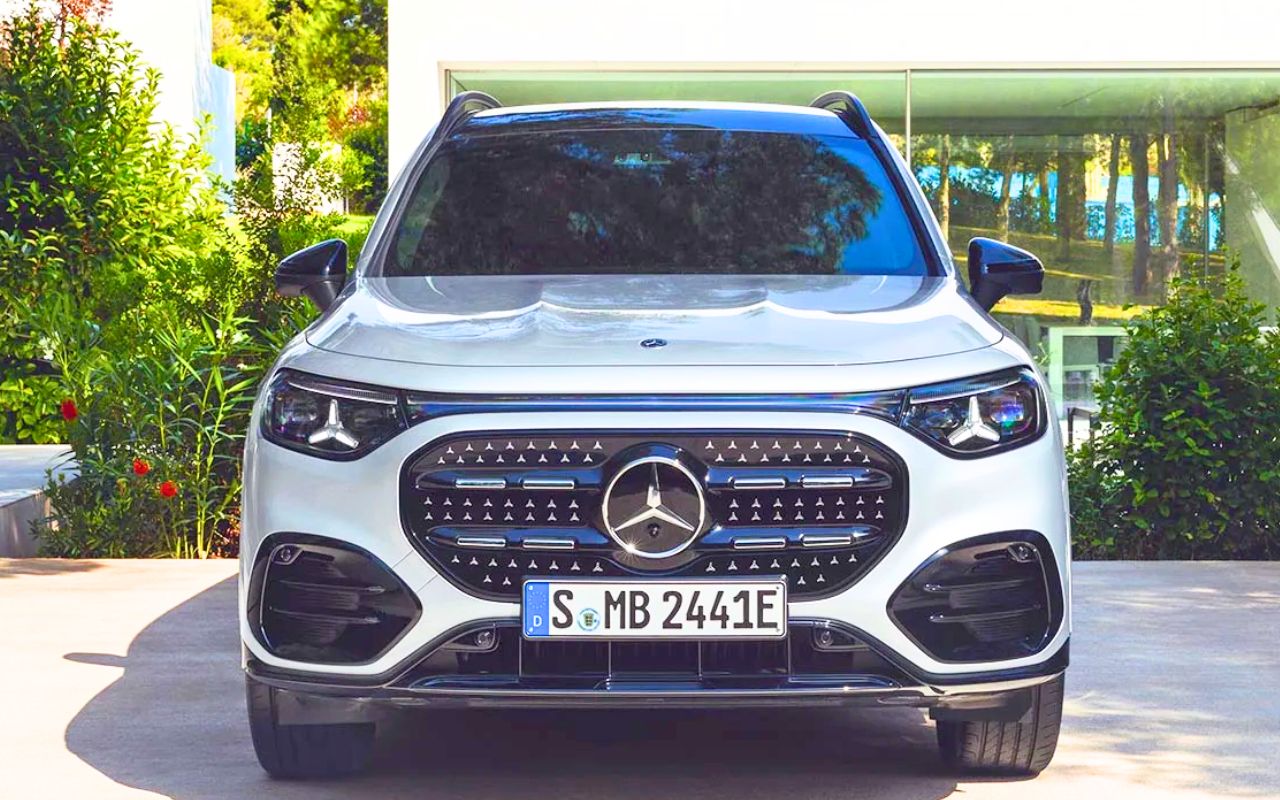
Mercedes had already refined the compact family SUV, but with the next-generation GLB, the brand deliberately pushed electrification, modular space, and digital interfaces to their logical extreme.
The new GLB generation was not a simple facelift. It was a strategic reset. Mercedes had reshaped the 7-seat compact SUV into a platform-first vehicle, designed around batteries, software, and flexible family use rather than engines alone. By the time development milestones were locked in, the GLB had grown in size, ambition, and technological depth. It aimed to stay compact while acting far larger than its footprint suggested. What emerged was a premium family SUV that tried to sit exactly at the intersection of electrification, digital comfort, and real-world practicality without drifting into excess.
A compact SUV that quietly grew into a family weapon
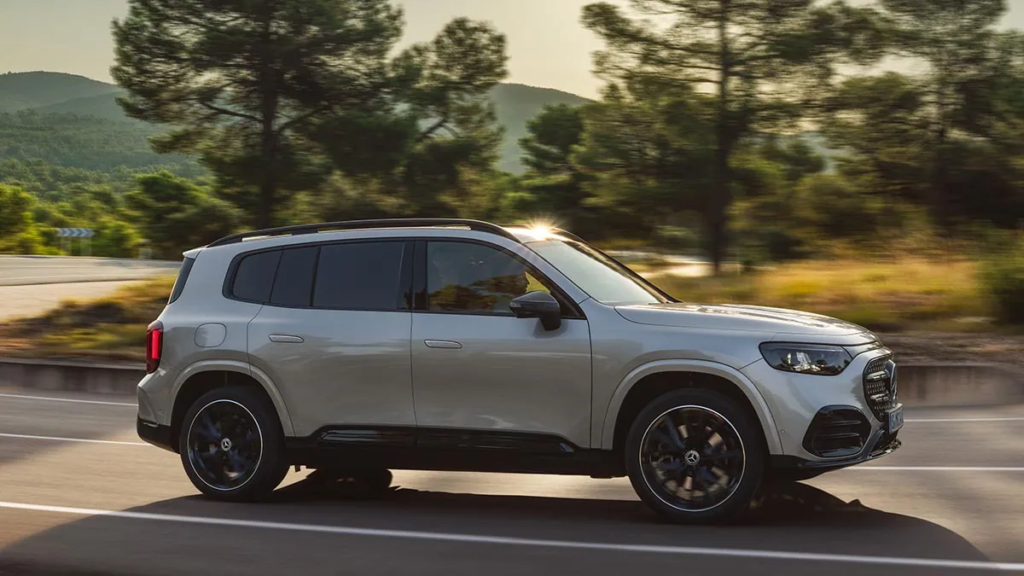
When Mercedes finalized the new GLB program, it was clear the brand no longer viewed the model as a niche bridge between GLA and GLC. The GLB had expanded dimensions, reworked proportions, and a clear mandate: remain compact outside while becoming significantly more livable inside. The vehicle had grown slightly longer and wider, improving rear legroom and making the optional third row less symbolic than before. With smarter packaging, Mercedes managed to offer seven-seat flexibility in a footprint still suitable for dense urban use. This growth was not about presence alone. It was about function. The GLB was expected to handle daily commuting, school runs, and long-distance travel without forcing families into a larger SUV class. Mercedes clearly aimed to capture buyers who wanted versatility without stepping up to a GLC or GLE. By refining proportions instead of inflating them, the GLB became one of the few compact premium SUVs that genuinely balanced urban usability and family capacity.
Electric first, but not electric only
The most important shift happened under the bodywork. Mercedes had repositioned the GLB around an electrified platform, designed from the outset to support full electric, hybrid, and transitional powertrains. The fully electric GLB variant relied on an estimated 85 kWh battery, delivering a projected range between 280 and 310 miles (450–500 km WLTP). In real-world mixed use, engineers expected the GLB to comfortably exceed 250 mileswithout anxiety. Fast charging was another priority. With DC charging up to 170 kW, the GLB was able to recover roughly 80% charge in about 30 minutes, aligning it with class leaders rather than trailing behind. Mercedes deliberately avoided extreme performance figures. Instead, it focused on usable torque, smooth delivery, and energy efficiency qualities that mattered more to families than raw acceleration. The electric GLB was positioned as a calm, confident long-distance companion rather than a headline-grabbing EV.
Interior tech became the main selling point
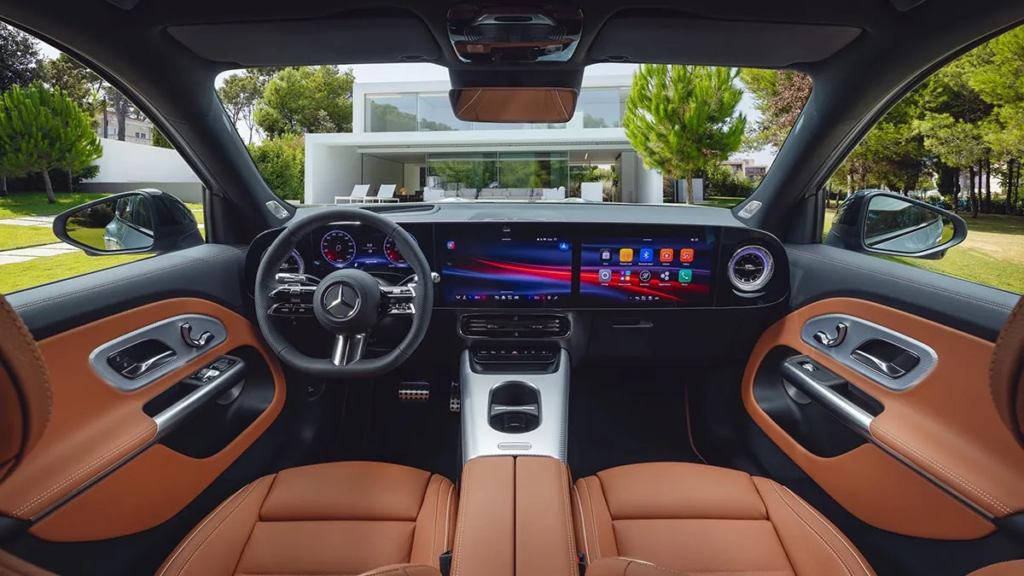
Inside the cabin, the transformation was far more visible. Mercedes had clearly treated the GLB as a digital product, not just a vehicle. The dashboard adopted a three-screen layout, combining driver display, central infotainment, and an optional passenger screen. The latest MBUX software introduced faster responses, cleaner menus, and improved voice recognition. Unlike earlier iterations, the system felt less intrusive and more supportive, especially during navigation and charging planning. Physical controls were not eliminated entirely. Mercedes retained tactile switches for key climate and driving functions, acknowledging that touch-only interfaces frustrated users during real driving. Material quality improved subtly rather than extravagantly. Soft-touch surfaces, aluminum accents, and refined ambient lighting elevated the cabin without pushing it into luxury excess. The GLB remained premium, but intentionally functional premium.
Seven seats that finally made sense
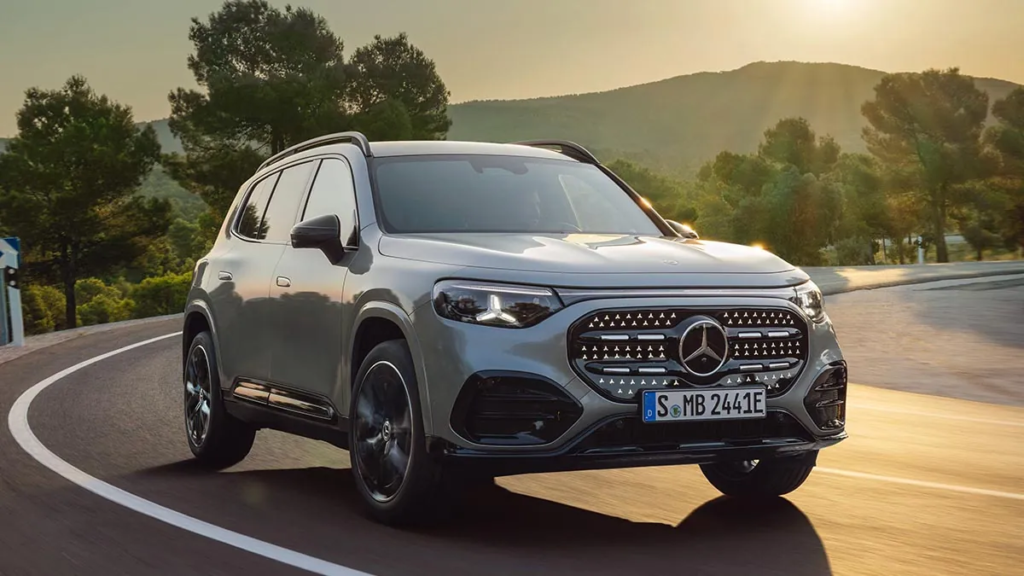
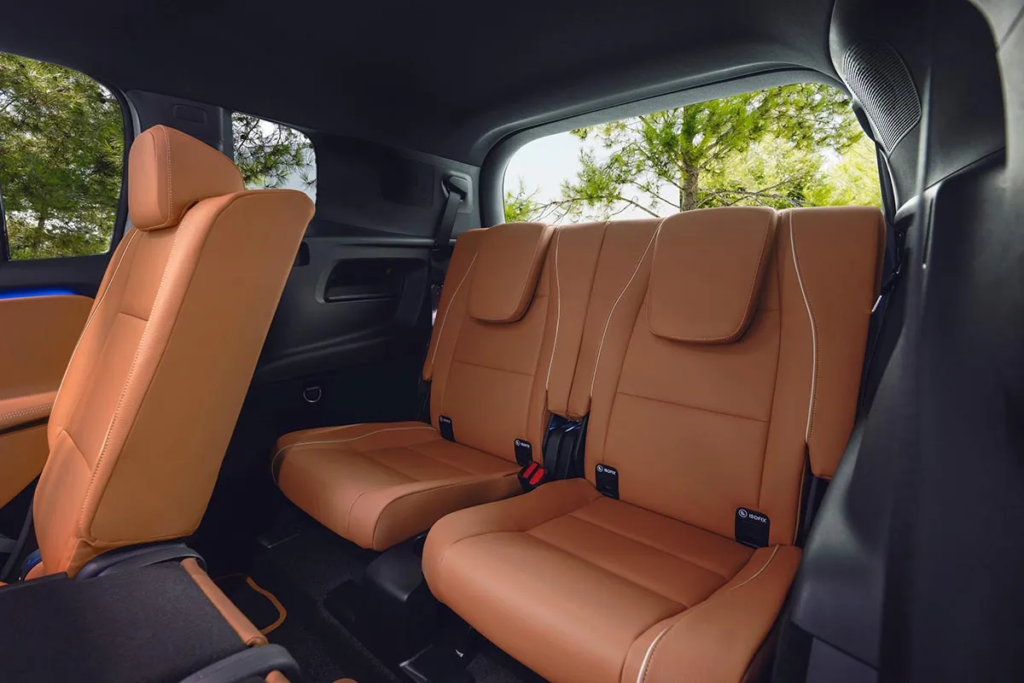
One of the GLB’s defining features remained its optional third row, but this time it was treated more seriously. Improved door openings, sliding second-row seats, and better footwell packaging allowed the rear seats to accommodate children and short trips for adults. In five-seat configuration, cargo space approached 24.7 cubic feet (≈700 liters), nearly double the previous generation’s practical volume. Folding the second row created a flat load floor suitable for furniture, sports gear, or long holiday luggage. Mercedes did not invent a new seating concept, but it refined every millimeter. The result was a compact SUV that behaved like a class above when it came to interior flexibility and storage efficiency. This approach allowed the GLB to serve as a one-car solution for families unwilling to compromise between size and versatility.
A platform designed for software, not just teel
Underneath, Mercedes had moved decisively toward a software-defined vehicle philosophy. The GLB supported over-the-air updates, remote diagnostics, and evolving driver assistance features without requiring dealership visits. Advanced ADAS systems were integrated more cleanly into the vehicle’s structure, improving sensor placement and reducing visual clutter. Adaptive cruise, lane centering, and automated parking felt smoother and less abrupt than previous systems. Mercedes also prepared the GLB for future feature unlocks, allowing owners to activate new functions digitally rather than through hardware retrofits. This strategy aligned the GLB with how consumers now interacted with smartphones and connected devices. The GLB became less of a fixed product and more of a platform that evolved over time, extending relevance well beyond its launch window.
Pricing pressure in a brutal segment
Despite its technical maturity, the GLB faced a harsh reality: pricing. In European markets, entry versions of the outgoing model already hovered around €50,000, and the electric GLB was expected to cross €60,000 before incentives. That placed it directly against rivals like the Tesla Model Y, Volkswagen ID.4, and Peugeot e-3008 vehicles often larger, sometimes cheaper, and aggressively marketed. Mercedes appeared aware of this tension. The brand positioned the GLB as a premium rational choice, not a value leader. Buyers were expected to pay for refinement, digital depth, and build quality rather than sheer battery size or performance. Whether that strategy would succeed depended heavily on incentives, leasing terms, and consumer confidence in Mercedes’ electric reliability.
Key dates and market timeline
| Event | Timeline |
| Final Design Validation | 2024 |
| Electric Platform Lock | Early 2025 |
| Public Reveal | Late 2025 |
| Production Start | 2026 |
| Market Launch (EU) | 2026 |
A strategic bet on intelligent versatility
Mercedes did not reinvent the SUV with the new GLB. Instead, it carefully adjusted every variable that mattered most: space efficiency, electrification, digital comfort, and long-term adaptability. The GLB avoided extremes. It was not the cheapest, the fastest, or the boldest-looking SUV in its class. What it offered instead was coherence an SUV that felt engineered around how families actually lived in a rapidly electrifying world. In that sense, the GLB was less about spectacle and more about strategic maturity. Mercedes had quietly built a compact SUV capable of aging well in a market obsessed with novelty.

My Name Is Said I am a dedicated blogger sharing the latest trending blogs from the USA, covering news, updates, and informative stories. My focus is on delivering accurate, engaging, and timely content for readers worldwide.