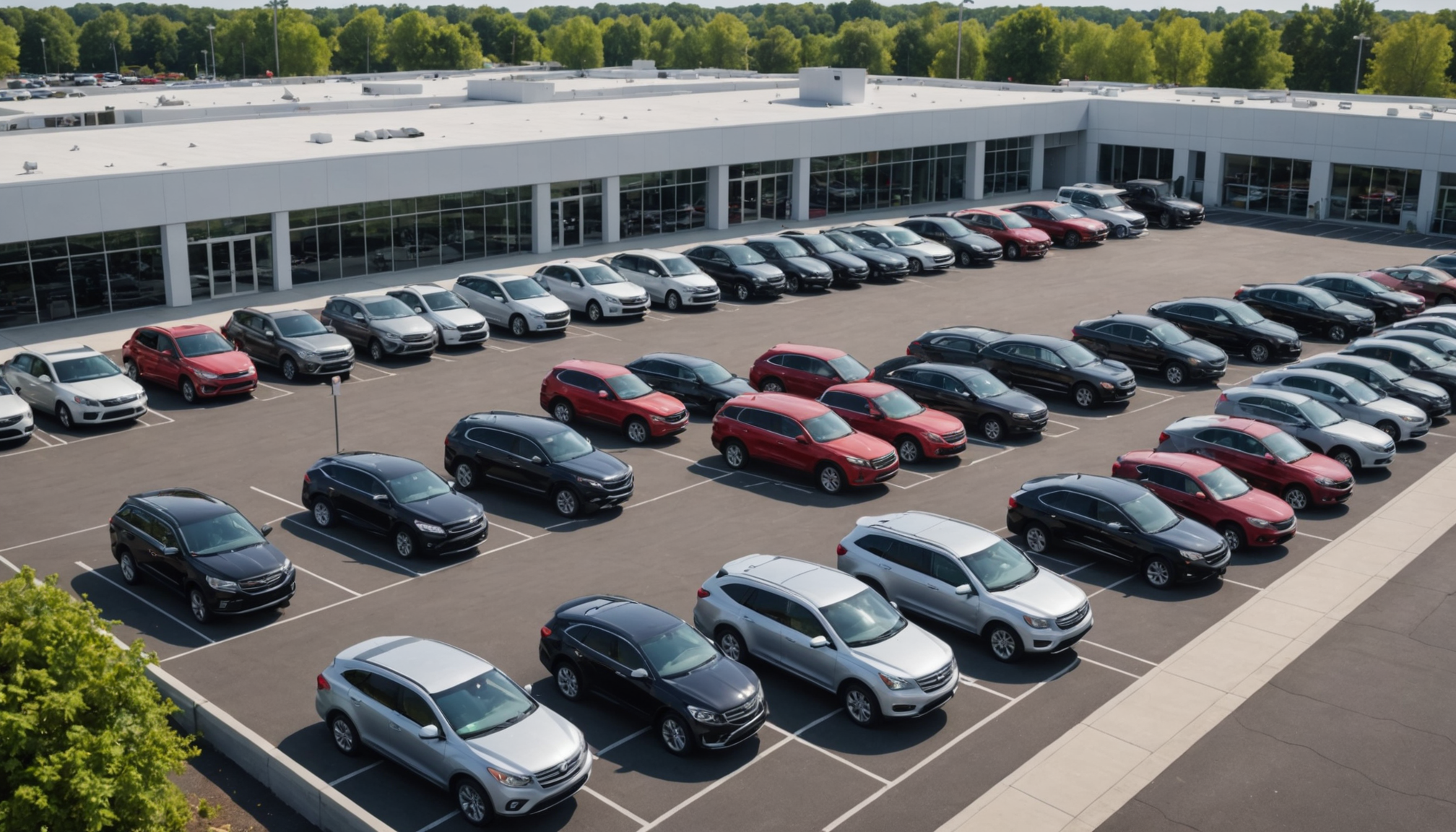
• The U.S. automotive sector maintains a steady new vehicle inventory near 3 million units despite softer demand.
• Average listing prices climb to around $49,400, backed by strong SUV and luxury vehicle sales.
• Automakers balance cautious inventory management with selective incentives aimed at clearing 2025 models.
• The affordability crisis continues to challenge many consumers, pushing automakers to refine their pricing strategies.
• Brand-level disparities in inventory days supply reveal varying market dynamics across automakers.
As the calendar ticks toward 2026, the American automotive industry stands at a crossroads marked by steady but cautious new vehicle inventory levels. Car dealerships experience a balancing act with supply chain constraints easing but consumer demand showing signs of sluggishness. Despite economic headwinds, luxury SUVs and trucks keep their grip on buyer attention, pushing average listing prices upward in a market grappling with the affordability dilemma. Automakers carefully calibrate production and incentives, especially as the year ends, signaling strategic shifts that will influence vehicle sales trajectories into the new year.
New Vehicle Inventory Trends Reflect Market Stability Amid Shifting Demand
Inventory management in the automotive industry is a game of precision, and December 2025 paints a picture of equilibrium. Reports from Cox Automotive’s vAuto Live Market View reveal the new vehicle inventory hovering at approximately 3.01 million units, a modest 6% drop from the previous year’s timeline but still maintaining a solid presence. The supply, roughly a 90-day stack, remains consistent month over month, barely moving from 2.97 million units in early November. This steadiness highlights automakers’ resolve to avoid the pitfalls of overstocking—a shift from past volatile cycles that led to surplus and clearance markdowns.
Meanwhile, the pace of new vehicle sales lags slightly behind 2024, down about 4.3% over the preceding 30 days, revealing a softening demand rather than a supply shortage. Industry insiders interpret this dynamic as a careful dance between production and buyer activity, with OEMs holding a close watch on evolving market signals while steering clear of flooding dealer lots. This tightrope act underscores a matured approach in inventory management that prioritizes stability over market saturation.
Strategies in the automotive supply chain reflect a wholesale adoption of data-driven demand forecasting, transforming raw inventory counts into calibrated production runs and targeted dealer allocations. For example, manufacturers align orders to real-time sales performance and geographic disparities influencing vehicle demand. This smart inventory equilibrium reduces dealership pressure and helps sustain average prices, critical in an era where consumers juggle inflation and cautious spending.
Analytical insights reveal a refined approach to supply chain and production in the automotive world.
Brand-Level Inventory Variances Showcase Diverse Market Realities
Peeling back the aggregate numbers exposes a wide divergence between brands in managing their auction-to-showroom vehicle flux. Industry leaders like Toyota and Lexus continue to exhibit ultra-efficient inventory turnover with days’ supply hovering at 45 and 44 respectively. These figures signify agile stock movement and marketplace responsiveness, possibly fueled by robust demand for their SUV and crossover segments. In contrast, Stellantis brands such as Chrysler, Jeep, and Ram, along with luxury marque Audi, face inventory levels exceeding 130 days. This extended holding period suggests potential challenges with demand or overproduction, forcing strategic considerations around discounts and marketing to restore balance.
Other manufacturers such as Honda, BMW, Subaru, and Chevrolet occupy a middle ground with balanced days of inventory that indicate good product-market fit. Their figures reveal a nuanced interplay between consumer preferences, production planning, and geographic demand distribution shaping inventory profiles. This disparity among brands stresses the importance of targeted inventory management rather than blanket strategies in dealing with shifting vehicle demand.
| 🏷️ Brand | 📅 Days’ Supply | 🛻 Vehicle Type Strength |
|---|---|---|
| Toyota | 45 | SUVs, Crossovers |
| Lexus | 44 | Luxury SUVs |
| Honda | 75 | Sedans, Crossovers |
| BMW | 70 | Luxury Sedans, SUVs |
| Subaru | 80 | All-wheel Drive Vehicles |
| Chevrolet | 78 | Trucks, SUVs |
| Chrysler | 130+ | Family Cars, SUVs |
| Jeep | 135+ | Off-Road SUVs |
| Ram | 140+ | Pickup Trucks |
| Audi | 130+ | Luxury Sedans, SUVs |
This brand-level breakdown is crucial for understanding how automotive manufacturers tailor their inventory management tactics in response to variable consumer preferences and market dynamics that shape car sales volumes across regions and categories.
Data points illuminate the competitive and operational differences among top automotive brands.
Price Dynamics: Affordability Tensions and Market Responses
Despite a dip in new vehicle demand, the industry has successfully maintained—and slightly increased—average listing prices, which now hover around an eye-catching $49,422. This 1.4% hike year-over-year signals resilient pricing power amid challenging economic conditions. The SUV and luxury vehicle segments lead this trend, with strong consumer pull supporting premium pricing even as affordability questions linger.
However, the pricing picture is layered and reflects a distinct affordability paradox. Vehicles concentrated in the $40,000 to $50,000 bracket experience the highest days’ supply—nearly 100 days—indicating buyers’ keen price sensitivity or hesitation. Mid-market consumers seem reluctant to pull the trigger at these price points, forcing dealers to hold inventory longer or offer incentives to stimulate demand. Conversely, vehicles priced under $40,000 move more briskly, catering to a segment of shoppers focused on value. Luxury models priced north of $80,000 maintain strong turnover rates driven by affluent buyers relatively unaffected by economic pressures.
- 🚗 SUVs and trucks: Continue as volume leaders, pulling prices upward.
- 💰 Luxury vehicles: Exhibit price resilience with minimal discounts.
- ⏳ Mid-market cars ($40K-$50K): Face slower sales and longer inventory days.
- ⚖️ Value segment (under $40K): Maintains faster sales velocity.
This mixed pricing environment is a tactical puzzle for dealers who must juggle consumer affordability against holding costs and margin aspirations.
The complex interplay of price, demand, and consumer budgets shapes automotive sales.
Model Year Transitions and Inventory Turnover Accelerate
The mix of new vehicles inventory reveals a decisive shift toward 2026 models, now comprising over 60% of all stock. Older models have nearly vanished, with prior-year vehicles at a meager 0.5%, underscoring a brisk turnover that benefits automakers in messaging and margins.
Manufacturers are expected to deploy more selective incentives in the closing weeks of 2025, focusing discounts on remaining 2025 models that struggle to sell, especially in the fiercely competitive <$50,000 price range. Such incentives aim to clear older inventory without devaluing newer releases or cannibalizing profit margins, demonstrating a strategic finesse absent in previous years’ extra-heavy discounting.
This approach also corresponds to an industry-wide effort to reduce excess aging inventory, a critical factor in inventory management that directly affects dealer profitability and consumer pricing.
Strategic incentives smooth the transition between model years while preserving profit balance.
Forecasting the Automotive Landscape as 2025 Closes
Looking ahead, automakers face a cautious path navigating persistent affordability headwinds and evolving vehicle demand shaped by the electric vehicle transition and inflation pressures. Several factors come into play:
- 📉 Moderate demand softness likely to continue into early 2026, pressuring inventory turnover.
- 💵 Targeted incentives on end-of-year 2025 models expected to intensify, especially in the $40K-$50K segment.
- ⚡ EV adoption acceleration may reshape supply chains and inventory strategies in the near future.
- 🏆 Luxury and SUV segments likely to maintain pricing strength and consumer interest.
Notably, early strong new-vehicle sales in 2025 may buffer total volumes, tipping year-end figures above those of 2024. However, the longevity of this trend hinges on how automakers and dealers manage supply chain flexibility, pricing discipline, and evolving consumer preferences in an uncertain economic backdrop.
Strategic foresight will dictate how the industry weathers economic and technological shifts.

My Name Is Said I am a dedicated blogger sharing the latest trending blogs from the USA, covering news, updates, and informative stories. My focus is on delivering accurate, engaging, and timely content for readers worldwide.