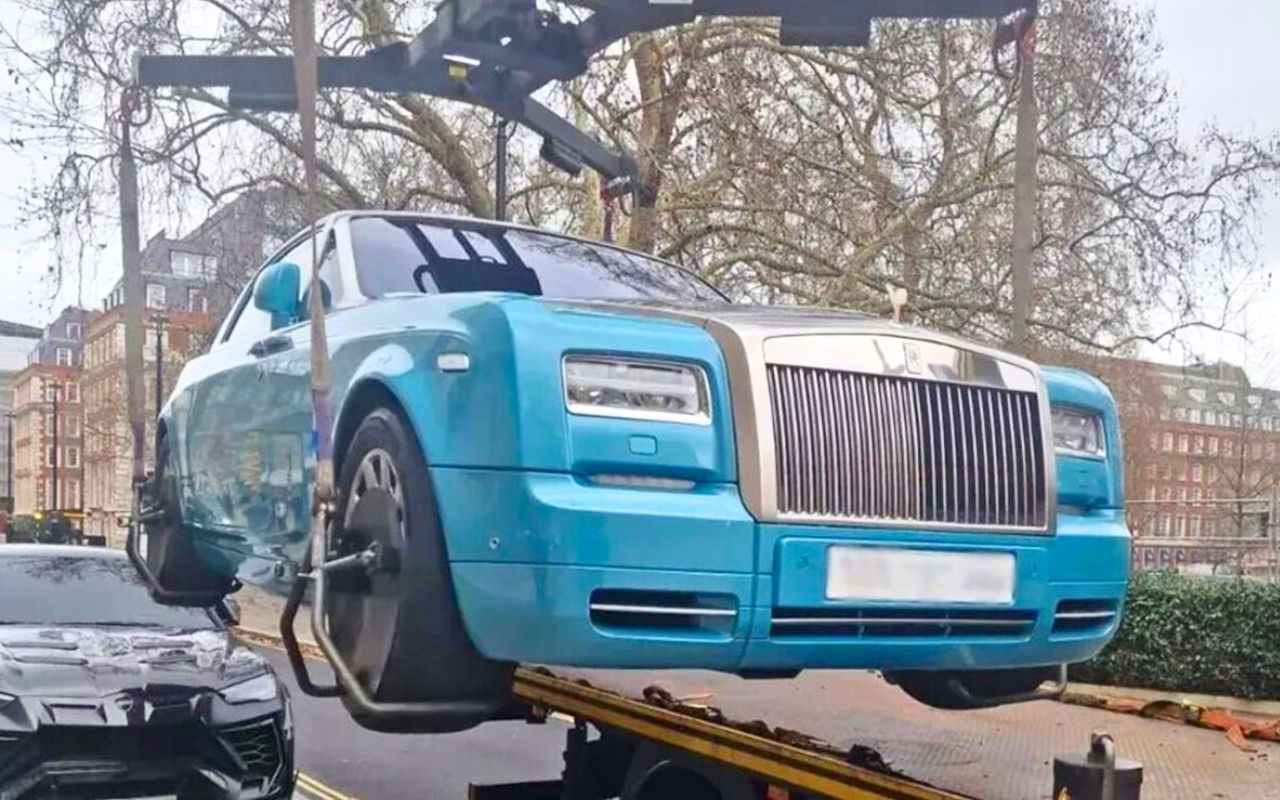
A flood of sidewalk-blocking supercars pushed a wealthy London pocket into an unusually blunt response: officials stopped chasing unpaid tickets and started physically moving the vehicles.
In Mayfair, the complaint wasn’t subtle: the sidewalk outside a high-end hotel kept turning into a private parking lot for the richest guests. Rolls-Royces and Lamborghinis reportedly sat where pedestrians were supposed to walk, and locals said they’d had enough. When routine enforcement didn’t change behavior, the city tried a tactic that didn’t require anyone to suddenly grow a conscience. It simply moved the cars, out of sight, out of the way, and straight into the owners’ schedules.
The sidewalk became a red carpet, just for cars
The story wasn’t really about a hotel. It was about sidewalk space getting treated like a private amenity for people who arrived in luxury cars and didn’t feel like searching for a legal spot. In a neighborhood built on money and discretion, that kind of casual rule-breaking still landed hard, because it happened in the most visible place possible: right where residents and pedestrians had to pass. What made it combustible was the pattern. Locals weren’t describing a one-off slip or an overwhelmed valet. They were describing repeat behavior that turned the public realm into a convenient extension of a guest’s itinerary. Once the public access problem became routine, it stopped being a nuisance and started looking like entitlement with chrome trim.
The city tried tickets, and the rich treated them like spam
Westminster’s message was blunt: the usual tools didn’t work, so it escalated. The usual tools were parking fines and standard enforcement, the stuff that changes behavior for almost everyone else. But with certain drivers, penalties were easier to ignore, especially when the vehicle was registered abroad or the owner rarely faced any meaningful friction. So the city pivoted to a concept that doesn’t require perfect compliance systems: create a direct inconvenience. A ticket can be delayed, disputed, or simply forgotten. A relocated car triggers immediate disruption and personal urgency. You can’t outsource the annoyance of hunting down your own vehicle.
The new tactic was simple: move the problem, literally
Instead of sending the cars to an impound lot, Westminster described using a relocation truck to tow illegally parked vehicles to nearby streets. That mattered. It wasn’t punishment in the cinematic sense. It was administrative judo: the city didn’t have to warehouse a Rolls-Royce, it just had to remove it from the sidewalk and force the owner to spend time and attention dealing with the outcome. That approach also carried a quiet psychological sting. The city didn’t crush anyone’s fantasy with a dramatic clamp or a viral boot. It did something more irritating: it disrupted the owner’s control. The moment a car disappeared from where it was “left,” the driver lost the illusion that their status bubble could override street rules.
| Date | Time (London) | Time (New York) | What happened |
| Dec 17, 2025 | 9:53 a.m. | 4:53 a.m. | The situation drew wider attention after reports described Westminster’s new approach: relocating illegally parked luxury cars to nearby streets. |
| Mid-Dec 2025 | N/A | N/A | Westminster described receiving ongoing resident complaints about high-end cars blocking the sidewalk and said it escalated enforcement by bringing in a relocation truck. |
Why foreign plates and global wealth made enforcement messy
One reason this kind of behavior lingered was the cross-border headache. When cars were registered in other countries, enforcement leaned on imperfect systems: private agencies, slow collection processes, and legal friction that didn’t match the speed of a luxury traveler’s life. That gap created a predictable result: some drivers treated fines like background noise. The city’s relocation approach didn’t solve every legal complexity, but it cut through the biggest weakness of fines: delayed consequences. Moving the vehicle created instant accountability without waiting for the perfect bureaucratic path to catch up.
The hotel price tag symbolized the problem, even if it wasn’t the whole story
The flashpoint reportedly centered around The Chancery Rosewood in Grosvenor Square, with commentary suggesting its top-end room rates could hit about €17,000 on peak dates, or roughly $20,000 using mid-December 2025 exchange rates. That number mattered less as a factoid and more as a symbol: this was a place designed for guests who could pay almost anything, including, apparently, the “cost” of bending norms. But what pushed the backlash wasn’t jealousy. It was the basic feeling that sidewalks are non-negotiable civic infrastructure. When a neighborhood starts to feel like it has two sets of rules, the anger becomes less about money and more about dignity, safety, and public space.
“Touching the cars” was a cultural line in the sand
There was something uniquely modern about the city’s move. It didn’t frame the crackdown as moral outrage. It framed it as operational necessity. Westminster essentially said: residents complained, fines didn’t work, so we took a firmer step by physically relocating vehicles. That phrasing mattered. It cast the action as a response to repeat violations, not a war on wealth. It also sent a signal that the city was willing to be practical instead of performative. The point wasn’t to shame drivers. The point was to stop sidewalks from becoming a luxury convenience feature.
What this episode revealed about modern cities and old money
In the end, this wasn’t a story about towing. It was a story about how cities adapt when traditional compliance breaks down in the face of global mobility and concentrated wealth. If fines don’t move the needle, governments look for interventions that create friction in real time. That’s what relocation did: it turned a passive penalty into an active inconvenience. It also exposed the tension cities carry every day: they want high-end tourism and investment, but they also need the street to function for everyone else. When the balance tipped too far toward the people who could ignore rules, the city reached for a lever that worked immediately: physical enforcement and visible correction.

My Name Is Said I am a dedicated blogger sharing the latest trending blogs from the USA, covering news, updates, and informative stories. My focus is on delivering accurate, engaging, and timely content for readers worldwide.