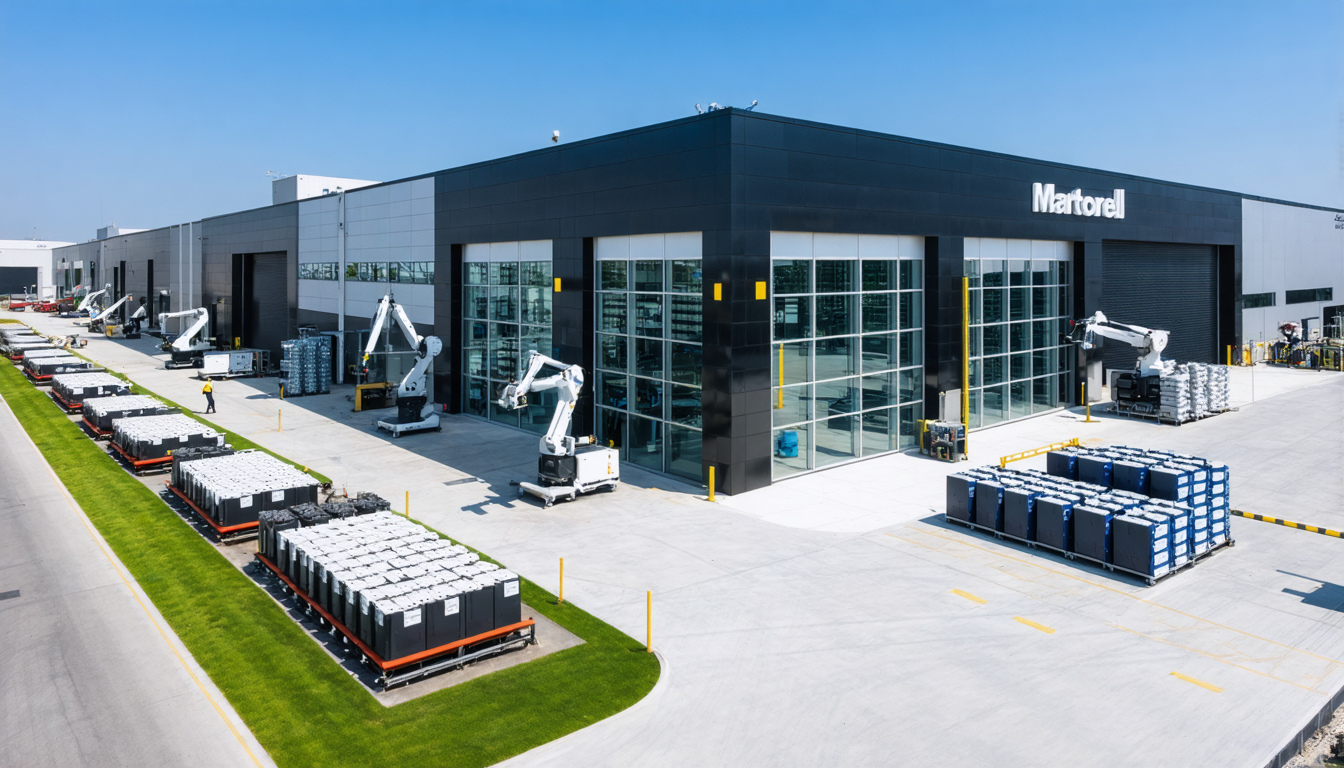
Seat just flipped the switch on a game-changing battery assembly plant in Martorell, setting the stage for a new era in electric vehicle production and sustainable manufacturing in Spain.
This sprawling facility promises to churn out 300,000 cutting-edge battery systems annually, targeting the Volkswagen Group’s electric compact cars, with bold steps to slash carbon footprints and redefine energy storage standards across Europe.
State-of-the-Art Production Facility Powers Spain’s Electric Vehicle Ambitions
In a decisive leap toward cleaner, more efficient automotive manufacturing, Seat unveiled its new battery assembly plant in Martorell, Spain. This production facility covers an impressive 64,000 square meters and boasts the ability to produce a fully assembled battery system every 45 seconds—translating to nearly 300,000 battery packs annually.
The plant’s capacity is tailor-made for the upcoming models such as the Cupra Raval and Volkswagen ID. Polo, which will roll off production lines starting 2026. These vehicles are poised to make significant dents in the European electric vehicle market. The seamless integration of the plant into the wider automotive industry ecosystem symbolizes a profound commitment to electrification and innovation.
Key to the plant’s design is an automated system where battery systems traverse a 600-meter-long bridge directly into the vehicle assembly area, orchestrating a symphony of precision and efficiency that embodies clean technology.
- Approximate daily output: 1,200 battery systems
- Annual production goal: 300,000 battery systems
- Facility size: 64,000 m²
- Investment: €300 million
- Automated logistics with a 600-meter transport bridge
The Martorell facility doesn’t just promise quantity. This venture marks an industrial and environmental milestone, asserting Spain’s strategic role as a European hub for electromobility and sustainable manufacturing practices.
How Martorell Sets a New Standard for Sustainable Manufacturing
Beyond raw production numbers, the new Seat plant shines by integrating sustainability at every turn. More than 11,000 solar panels atop the sprawling roof harvest natural energy, supplying approximately 70% of the power needed for the battery assembly processes. This harnessing of solar energy sharply curtails the plant’s carbon footprint.
In addition, a sophisticated water collection system captures and recycles water on a scale comparable to three Olympic swimming pools. This highlights a strategic dedication to reducing environmental impact through resource conservation.
This dual commitment to energy and water sustainability positions Martorell not only as a pinnacle of advanced battery assembly but also as a benchmark for future automotive plants vying for true green credentials.
- 11,000+ solar panels generating 70% of assembly power
- Water recycling system equivalent to 3 Olympic-sized pools
- Focus on minimizing CO2 emissions and resource use
The implementation of these sustainable features doesn’t just optimize manufacturing; it embodies a transformative approach that aligns profitability with ecological responsibility, a rare feat in energy storage production.
Powering the Future: The Revolutionary Cell-to-Pack Battery System
Underpinning the Martorell plant’s capability is the introduction of an innovative cell-to-pack battery configuration. Unlike traditional batteries that rely on modules, this system eliminates them by directly integrating the cells into the pack, increasing energy density while slashing costs—crucial for price-sensitive electric vehicles in the compact segment.
This breakthrough is driven by the use of standardized battery cells—dubbed the “unified cell” platform—that harmonizes with multiple chemistries, including lithium-iron-phosphate variants, which are prized for safety and longevity.
The global significance of this technology cannot be overstated. According to Günther Mendl, head of Volkswagen Group’s Center of Excellence Battery, this platform boosts speed, scalability, and flexibility across different vehicle brands and markets. It signals a paradigm shift, pushing chargers from mere components into integral, highly optimized powerhouses that directly affect vehicle range and cost-efficiency.
- Elimination of battery modules via cell-to-pack design
- Increased energy density means longer vehicle ranges
- Support for diverse chemistries, including safer lithium iron phosphate
- Rapid scalability fulfilling European EV market demand
Raising the bar for energy storage, Martorell’s assembly line exemplifies how automotive manufacturers are innovating to overcome the cost and weight barriers traditionally hampering electric vehicle adoption.
The Untold Story Behind Battery Cell Origins and Supply Chains
One tantalizing detail remains unclear: the ultimate source of the battery cells transforming into full systems at Martorell. Originally, plans pointed to the Volkswagen group’s new battery factory in Sagunt near Valencia, but delays have pushed its operational date.
For now, the PowerCo cell factory in Salzgitter, gearing up to start production in late 2025, is expected to fill the gap. This arrangement underscores the complexities and interdependencies inherent in the automotive industry’s shift to electrification. Supply chain agility is becoming a competitive advantage, with geographic and logistical factors dictating manufacturing rhythms.
Decoding these dynamics exposes the critical role of robust supply networks in powering clean technology ventures. As Martorell boosts battery assembly, the supporting cell factories’ readiness will determine the speed and scale of EV rollout across Europe.
From Passenger to Driver: Seat’s Strategic Shift in Electric Vehicle Leadership
Markus Haupt, CEO of Seat and Cupra, frames the Martorell plant as a “watershed moment” in the brands’ electric journeys. The facility transitions the company from a peripheral role to the “driver’s seat” of innovation within the Volkswagen family.
This heightened role means more than just local production. It entails a leadership position in setting the pace and standards for electric vehicle manufacturing across Spain and Europe. The plant is the heartbeat of a wider electrification roadmap, marking a shift that positions the region at the forefront of sustainable mobility solutions.
The urban-centric design of vehicles like the Cupra Raval further cements Seat’s commitment to reshaping mobility for the 21st century, marrying sleek design with smart energy systems tailored for dense metropolitan environments.
Creating Jobs and Innovating Local Economies with Clean Technology
The Martorell project has economic ripples that stretch far beyond production lines. The infusion of €300 million has ignited local job creation and stimulated innovations in supplier networks, research centers, and clean energy startups.
This synergy between industrial growth and sustainable development highlights a rare win-win scenario. Employees gain stable, meaningful employment in a cutting-edge sector, while communities benefit from cleaner air, fewer emissions, and a future-proof industrial base.
Such developments turn Martorell into more than a manufacturing hub — it becomes a nucleus of European competitiveness in electric mobility and energy storage technology advancements.
| Phase | Details | Timeline |
|---|---|---|
| Plant Construction | Complete building of 64,000 m² facility | Late 2022 – Early 2025 |
| Trial Battery Assembly | Pre-series production start for testing | November 2024 |
| Mass Production Launch | Begin fully automated battery system assembly | January 2026 |
| Supporting Cell Factory | PowerCo plant operational start in Salzgitter | December 2025 (expected) |
Transforming the Automotive Industry with High-Volume Electric Vehicle Production
The Martorell facility’s capacity signals a new chapter where mass-market electric cars can be produced efficiently without compromising environmental goals. With the ability to supply up to 300,000 battery systems yearly, Seat is not only supporting its own models but is a vital cog in the Volkswagen Group’s electrification strategy.
The plant’s design and technology suggest a future where sustainable manufacturing aligns with rapid scalability, key to meeting growing market demand worldwide. This model challenges traditional automotive production’s environmental impact while remaining highly competitive.
In effect, Martorell is a vivid snapshot of the broader transformation sweeping the *automotive industry*—embedding clean technology deeply into the DNA of car manufacturing and energy storage systems.
- Production efficiency designed for electric vehicle boom
- Strong environmental safeguards reducing carbon and water usage
- Integration into emerging European electric vehicle ecosystems
As electric vehicles become mainstream, the Martorell plant exemplifies how manufacturing can evolve to support cleaner, affordable, and accessible transportation solutions.

My Name Is Said I am a dedicated blogger sharing the latest trending blogs from the USA, covering news, updates, and informative stories. My focus is on delivering accurate, engaging, and timely content for readers worldwide.