Dacia’s 2026 Duster Hybrid-G 150 4×4 didn’t try to be premium, it tried to be useful, and its rear electric “AWD without a driveshaft” setup quietly rewrote the playbook for cheap off-roaders.
Dacia had teased “affordable adventure” for years, but the 2026 update made it tangible. The headline wasn’t a bigger screen or a flashier badge, it was traction, clearance, and a drivetrain built around cost and simplicity. A compact SUV showed up with real geometry for rough tracks, plus a new AWD concept that avoided the usual heavy hardware. It was the kind of engineering move that sounded small on paper, then mattered the first time the front tires lost grip.
The Budget SUV That Still Looked Like a Tool, Not a Toy
Dacia didn’t reinvent the SUV shape; it hardened it. The Duster stayed compact at about 4.34 m, roughly 14.2 ft, but it carried itself like something that expected dirt. The key numbers were the ones that didn’t photograph well: 217 mmground clearance (about 8.5 in), and off-road angles that moved the needle around 31° approach, 36° departure, and 24°breakover. Those are “don’t scrape the belly” stats, not showroom vanity. That mattered because most affordable crossovers got sold as “outdoorsy” while riding low, wearing street tires, and relying on traction control to do miracles. The Duster’s pitch remained blunt: you could daily it, but you could also point it at snow, ruts, or a muddy farm lane and not immediately regret the decision. It was practical engineering aimed at real-world abuse exactly why the name kept selling.
The “4×4” Move That Ditched the Driveshaft
The big twist was the AWD system. Instead of a traditional mechanical link running front-to-rear, Dacia went with a front combustion setup plus a rear electric drive unit an approach that cut complexity where cheap cars usually get punished: weight, packaging, and cost. The rear axle got its own 48V electric motor and crucially a two-speed arrangement intended to mimic the effect of a low-range helper in tricky conditions. This was not a plug-in hybrid pretending to be a trail rig. It was a mild-hybrid style system designed to add torque at the exact moment the front end started scrabbling. No long EV range fantasies, no dependence on a charging routine just a drivetrain choice that tried to keep the Duster’s core promise intact: simple, cheap, and capable enough to justify the badge.
Hybrid-G, Explained Like a Normal Person
The Hybrid-G label was where Dacia layered in its usual value logic. “G” pointed to LPG compatibility in Dacia-speak, and the broader idea was straightforward: you got a turbocharged small gasoline engine up front (commonly described as a 1.2-liter three-cylinder in early reporting), plus the rear electric assist for traction, not for long-distance EV cruising. In practice, this meant the car behaved like a normal SUV most of the time then quietly redistributed effort when traction got bad. The battery was tiny by EV standards reported around 0.8 kWh because it didn’t need to be big. It needed to be ready. That’s the point people missed when they saw “48V” and assumed it was just stop-start plus marketing. The system aimed at efficiency and traction, not at turning the Duster into a silent city commuter.
Modes That Did the Thinking for You
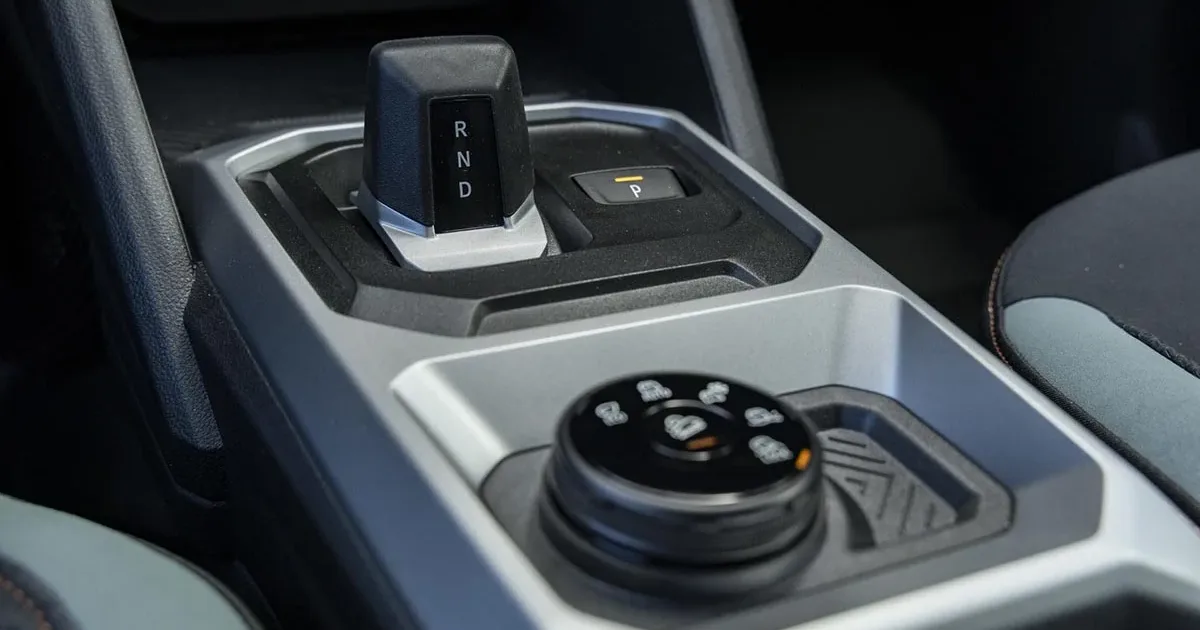
Dacia leaned into software because software was cheaper than hardware and it did the job if the fundamentals were there. The 2026 setup highlighted drive modes like Eco, Snow, Mud/Sand, and a Lock-style mode that prioritized traction when things got ugly. The pitch wasn’t “become an off-road expert.” It was “tap a mode, keep moving.” That’s a subtle but important shift: the car was built for drivers who wanted confidence, not a lesson in differential theory. And because the rear axle could be powered without a mechanical shaft, the system could respond quickly without the packaging compromises of a traditional AWD layout. In a vehicle that lived and died by cost, that was the whole strategy: deliver capability with less hardware.
The Price Story Was the Real Weapon
Dacia’s pricing was always the argument, and it stayed that way here. Early European reporting pegged the 4×4 Hybrid-G at around €27,490 in some markets, with other figures floating depending on trim structure and country taxes. In U.S. money at late-2025/early-2026-era exchange ranges, that translated roughly to the low $30,000s still “budget” by modern SUV standards, especially for anything claiming genuine AWD chops. The point wasn’t that it undercut every rival in every configuration. The point was that it made AWD and trail geometry accessible again, at a time when many brands used “adventure” as a reason to push sticker prices upward.
Why It Looked Smarter Than a Lot of Costlier Rivals
Most affordable AWD systems in this class were either (1) light-duty, (2) expensive when you added the option packages, or (3) attached to heavier plug-in complexity. The Duster’s approach sat in the middle: it didn’t promise miracles, but it tried to maximize the moments that mattered starting on a slippery incline, crawling through mud, or maintaining control on snow without turning the car into a maintenance headache. That blend of simplicity and function was the Duster’s brand in one sentence. And looming over everything was regulation pressure. In Europe, vehicle rules had moved toward mandatory safety systems under the revised General Safety Regulation, applying from July 6, 2022, and expanding requirements through new vehicle approvals and registrations. That regulatory direction shaped what “affordable” could even mean. Dacia’s trick was finding capability gains that didn’t explode cost.
Dates, Rollout, and What “2026” Actually Meant
The announcement cycle and availability talk created confusion because “arrives in 2026” could mean different things depending on market. Reporting pointed to spring 2026 for deliveries in at least some European contexts, rather than a vague “sometime next year.”
Here’s the cleanest way to read the timeline without pretending we had a universal global on-sale date:
| Milestone | What Happened | Timing Mentioned Publicly |
| Hybrid-G 4×4 concept/details surfaced | AWD-by-electric-rear strategy became the headline | 2025 reporting cycle |
| Delivery window guidance | Some outlets pointed to a real season, not a shrug | Spring 2026 |
| Pricing talk | Market-dependent, but clustered around the high-€20k range | Around €27,490 cited |
The bigger takeaway: Dacia didn’t pitch a science project. It pitched a near-term product, with an availability window tight enough to sound like production planning not wishful thinking.
Q&A
Was this a “real” 4×4 if it didn’t have a driveshaft?
Yes in function, different in method. The rear axle could receive electric drive independently, so you still got dual-axle traction. It wasn’t the classic mechanical recipe, but it aimed at the same traction outcome.
Did it run as an EV for long distances?
No. The system was built around 48V mild-hybrid style hardware and a small battery, so it focused on assistance and AWD behavior, not long EV-only commuting.
What made the off-road numbers matter?
Clearance and angles decide whether you scrape, get stuck, or simply turn around. Around 217 mm clearance and improved angles were the practical backbone of the vehicle’s off-road claim.
Why did Dacia bother with a two-speed rear setup?
Because low-speed torque control is where cheap AWD systems usually fall apart. A two-speed concept helped the rear unit deliver the right kind of pull in slow, technical conditions.
Was it cheap because it skipped safety tech?
Europe’s rules increasingly required advanced safety systems across new vehicles under the revised General Safety Regulation framework, so “skipping” wasn’t the easy loophole it used to be. Any market version still had to live inside those regulatory boundaries.
What was the expected price level?
Reports cited figures such as €27,490 (market-dependent). In U.S. dollars, that roughly landed in the low $30,000s depending on exchange rates and local taxes.
Did this setup make maintenance easier or harder?
Potentially easier in some ways because it avoided a traditional rear driveshaft and related hardware, but it also introduced electric components at the rear. The bet was simpler mechanics overall, paired with manageable electrification.

My Name Is Said I am a dedicated blogger sharing the latest trending blogs from the USA, covering news, updates, and informative stories. My focus is on delivering accurate, engaging, and timely content for readers worldwide.