It looked wrong, sounded excessive, and made no practical sense, yet it became one of the most fascinating American automotive misfires of the 2000s.
At a time when SUVs and pickup trucks ruled American roads, Chevrolet decided to break every rule at once. The result was the SSR, a bizarre mix of retro pickup, V8 roadster, and rolling provocation. It failed commercially, confused buyers, and disappeared quickly. Two decades later, it quietly earned cult status as one of Detroit’s boldest experiments.
A rolling UFO from General Motors
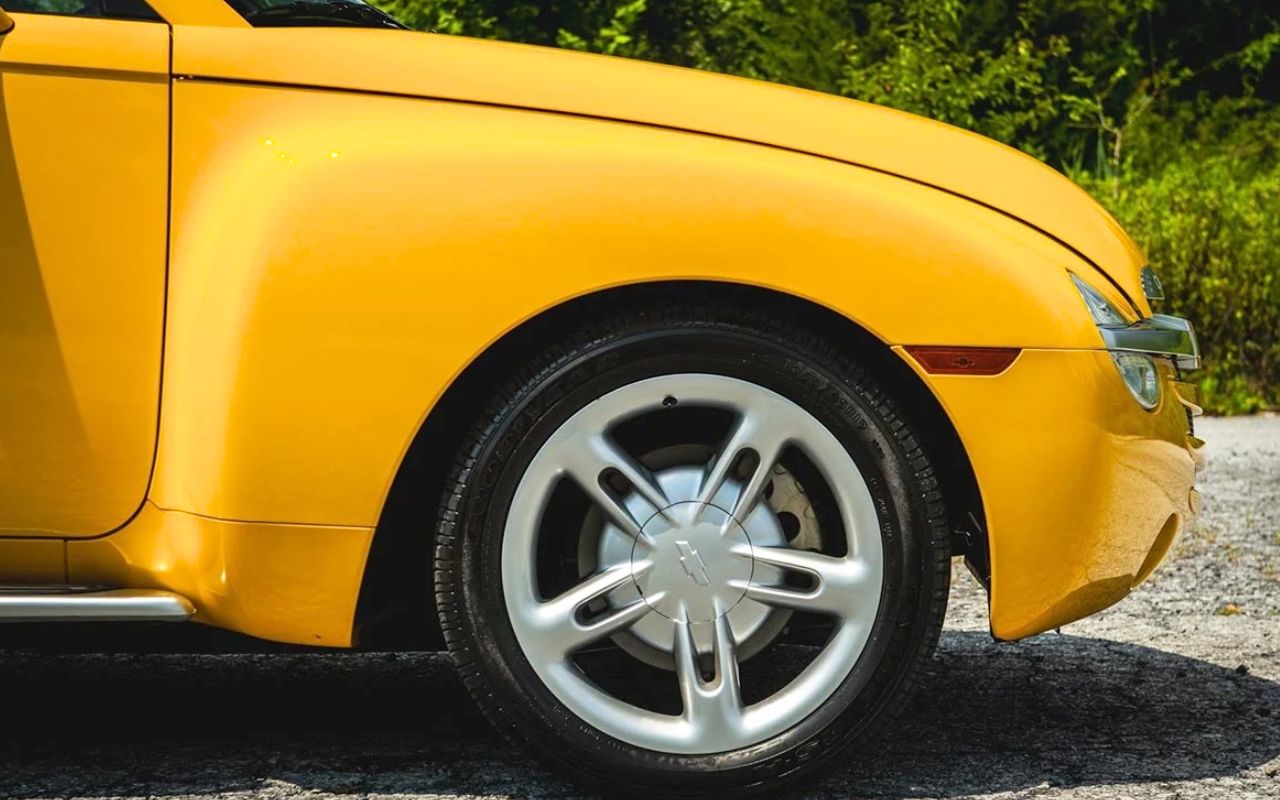
When Chevrolet launched the SSR in the early 2000s, it felt completely disconnected from market logic. Built during an era obsessed with full-size trucks, muscle engines, and safe design formulas, the SSR went the opposite way. It combined a two-seat pickup, a hardtop convertible, and 1950s retro styling into a single vehicle that no focus group could ever have approved. General Motors had taken inspiration from its classic Advance Design pickups of the postwar era, then wrapped that nostalgia around modern proportions, oversized fenders, and massive chrome wheels. The SSR did not try to be subtle. It tried to be memorable, and it succeeded instantly, for better or worse. At launch, the SSR landed in showrooms with a price hovering around $50,000, positioning it uncomfortably close to genuine sports cars while offering none of their handling precision or practicality. Buyers did not know what to do with it, and neither did Chevrolet.
A design that refused to apologize
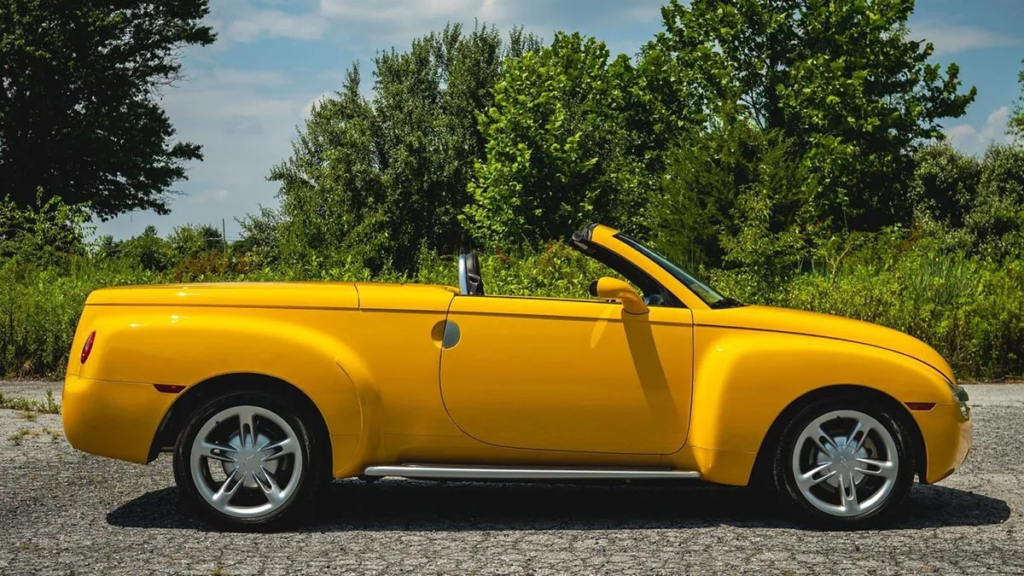
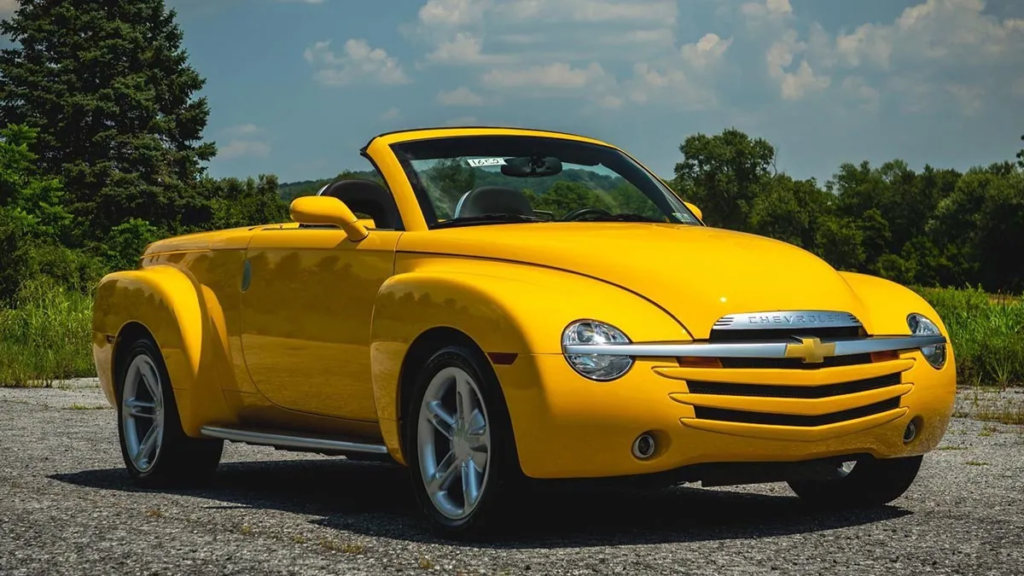
Visually, the SSR doubled down on retro excess, curved bodywork, and oversized proportions. The front end featured round headlights, a bold chrome grille, and a plunging hood that looked more hot rod than pickup. From the side, swollen fenders wrapped around massive wheels, while the rear hid a short cargo bed sealed by a body-colored hard cover. The retractable hardtop, developed by Karmann, was one of the most technically ambitious features ever fitted to a pickup. At the push of a button, the roof folded itself into the bed, transforming the SSR into a full convertible. It was heavy, complex, and wildly impractical, but undeniably impressive. Nothing about the SSR tried to blend in. It was deliberately irrational, visually loud, and emotionally driven, which made it either irresistible or unbearable, depending on who you asked.
V8 power that made no excuses
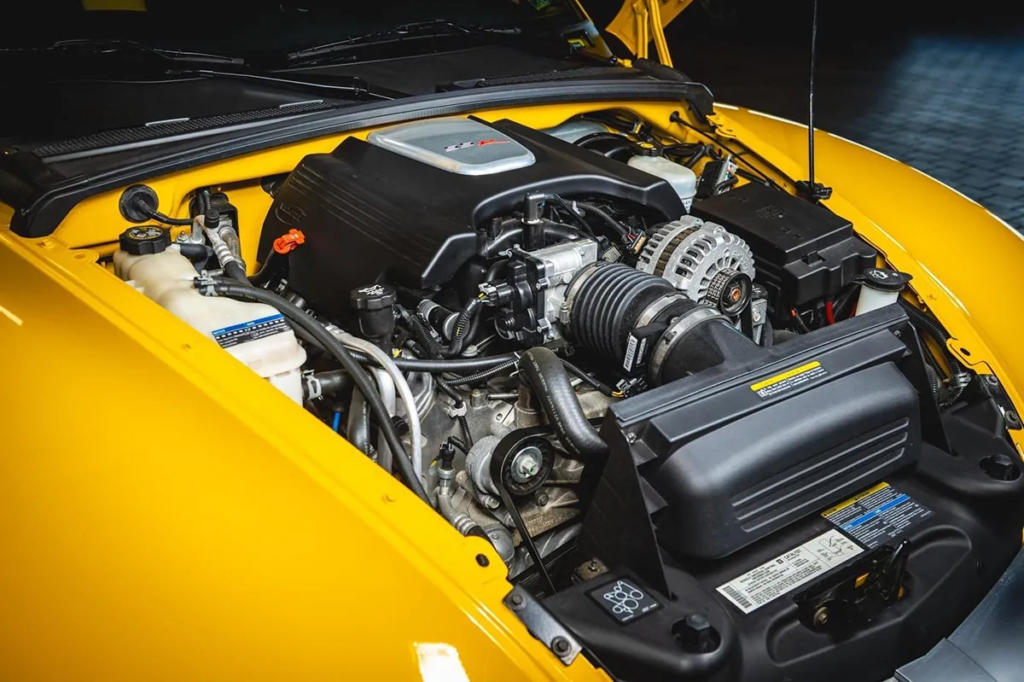
Under the hood, Chevrolet made sure the SSR sounded as dramatic as it looked. Early models used a 5.3-liter V8 producing 305 horsepower, paired exclusively with a four-speed automatic transmission. That alone made the SSR quick in a straight line, but far from agile. In 2005, Chevrolet escalated the madness by installing the LS2 6.0-liter V8 borrowed directly from the Corvette C6. Output jumped to 395 horsepower, or 400 horsepower when paired with the rare six-speed manual transmission. Suddenly, this strange pickup-roadster could sprint from 0 to 62 mph in about 5.3 seconds, despite weighing nearly 2,000 kg. Fuel consumption was predictably brutal, often exceeding 14 liters per 100 km, and the chassis, borrowed from the TrailBlazer SUV, struggled to cope with the power. Still, the V8 soundtrack, rear-wheel drive, and raw accelerationgave the SSR a distinctly American charm that numbers alone could not capture.
An interior stuck between nostalgia and confusion
Inside, the SSR leaned heavily into retro cues, body-colored panels, and chrome accents. Circular gauges and a simple dashboard layout echoed classic trucks, while modern infotainment remained minimal even by early-2000s standards. Material quality felt solid but not luxurious, especially given the price. For roughly $50,000 at launch, buyers expected refinement closer to a Corvette or premium SUV, not a cabin that felt intentionally playful but inconsistently executed. That said, the SSR interior had character. It embraced style over logic, emotion over ergonomics, and that decision aged better than anyone expected. What once felt odd later became part of its charm.
Why it failed when it was new
Commercially, the SSR struggled almost immediately. Between 2003 and 2006, Chevrolet built just 24,150 units, far below internal expectations. The reasons were obvious. First, the price placed it in direct competition with vehicles that made far more sense. Second, its cargo bed was nearly useless, its cabin too small, and its identity impossible to define. It was not a sports car, not a real pickup, and not a practical convertible. Timing also worked against it. By 2005, buyers had grown cautious, fuel prices were rising, and eccentric vehicles fell out of favor. Chevrolet quietly pulled the plug, leaving the SSR as a short-lived curiosity. At the time, it was labeled a failure. History would disagree.
From embarrassment to cult icon
Years after production ended, perception shifted. Enthusiasts began to appreciate the SSR not for what it lacked, but for what it represented. It became a symbol of corporate courage, design freedom, and pre-crisis excess that modern automakers rarely dare to repeat. On the used market, clean examples now trade between $38,000 and $60,000, depending on mileage, condition, and drivetrain. Manual LS2 models are especially sought after, valued for their rarity and mechanical purity. In the United States, the SSR found its audience among collectors who admire bold mistakes more than safe successes. It became a conversation piece, a rolling time capsule of early-2000s optimism.
Why the SSR still matters today
The Chevrolet SSR mattered because it proved that even giant corporations could still take risks. It ignored efficiency, practicality, and market logic in favor of personality, sound, and visual impact. Today, as automotive design grows increasingly homogenized, the SSR stands out as a reminder of what happens when engineers and designers are allowed to follow instinct instead of spreadsheets.

My Name Is Said I am a dedicated blogger sharing the latest trending blogs from the USA, covering news, updates, and informative stories. My focus is on delivering accurate, engaging, and timely content for readers worldwide.