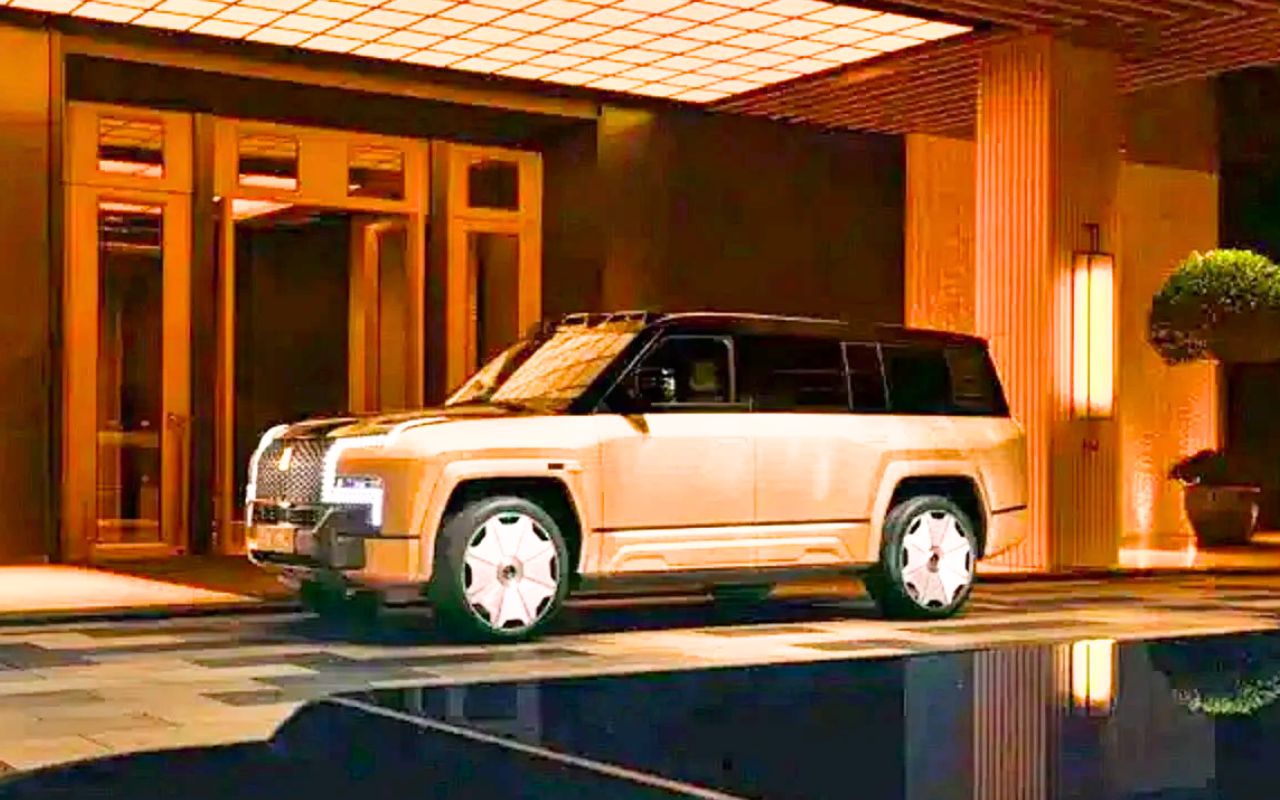
China no longer played catch-up in luxury automotive design. With the Yangwang U8L, BYD had openly challenged Europe’s most prestigious SUV icons on size, technology, and ambition.
The U8L was not positioned as an experiment. It arrived as a statement oversized, overpowered, and unapologetically premium, built to prove that ultra-luxury no longer belonged exclusively to British or German brands. Stretching far beyond conventional SUV dimensions, the U8L combined limousine space, electric dominance, and off-road capability into a single, intimidating package. What emerged was not a copy, but a new benchmark attempt one that forced the luxury market to pay attention.
A chinese SUV that redefined size and status
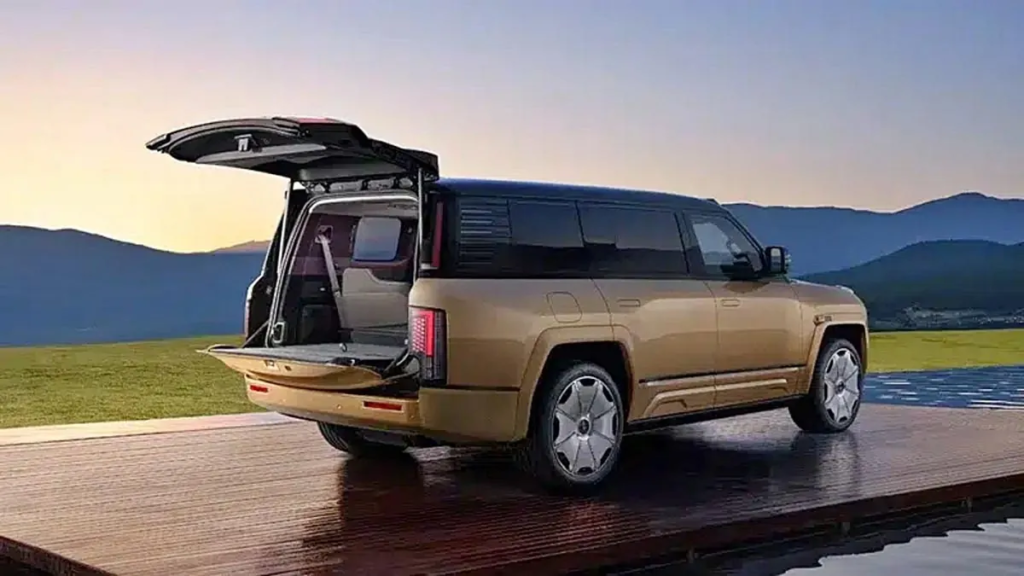
In the ultra-luxury segment, physical presence had always equaled prestige. The Yangwang U8L embraced that logic fully. Measuring roughly 17.7 feet long (5.4 meters), over 6.7 feet wide, and nearly 6.6 feet tall, it exceeded the Range Rover LWB and even rivaled the Rolls-Royce Cullinan in sheer volume. This massive footprint rested on a wheelbase of approximately 10.7 feet, allowing designers to treat the cabin like a rolling lounge rather than a traditional SUV interior. The proportions felt closer to a raised limousine than a family vehicle. The design language mixed boxy authority with futuristic precision. Sharp edges, vertical surfaces, and military-inspired geometry gave the U8L a commanding road presence. It neither tried to appear elegant nor discreet it looked deliberately dominant. For buyers accustomed to size as a luxury signal, the U8L delivered something unmistakable: visual superiority without European heritage constraints.
An interior that borrowed from private aviation
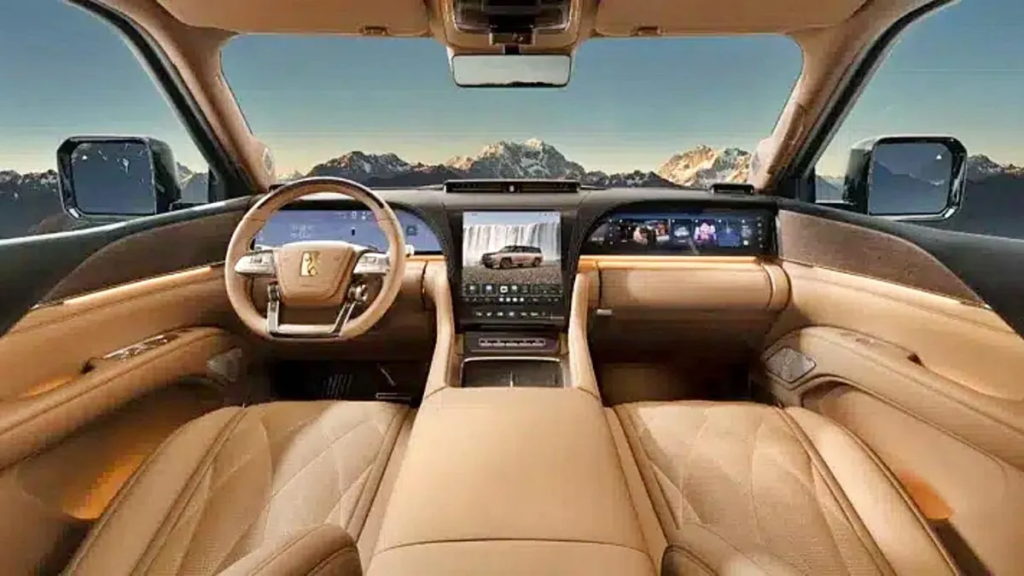
Stepping inside the Yangwang U8L felt closer to entering a private jet cabin than a conventional vehicle. The 2+2+2 seating layout offered six individual seats, each designed as a self-contained comfort zone rather than part of a bench. Every seat featured full-grain leather, extensive electric adjustments, heating, ventilation, and an advanced zero-gravity mode. Rear passengers benefited most, with up to 18 massage programs, adjustable leg rests, and headrest-integrated speakers. Materials were chosen to eliminate visible cost-cutting. Real wood, brushed aluminum, and stitched leather replaced plastic entirely. The second row resembled a mobile executive lounge, complete with retractable tables, wireless chargers, and personalized touchscreens. This was not minimalism. It was controlled excess, engineered to overwhelm rather than impress subtly.
Four electric motors and power that ignored physics
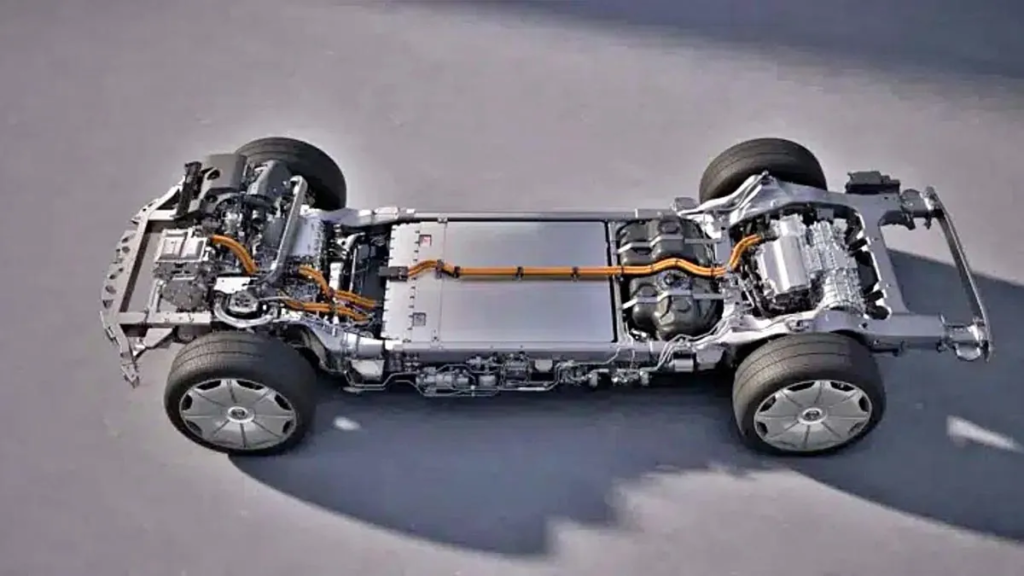
Behind the opulence, the Yangwang U8L relied on BYD’s e4 platform, a radical drivetrain configuration built around four independent electric motors one per wheel supported by a turbocharged gasoline generator. Total output reached 1,180 horsepower, with a staggering 1,520 Nm of torque. Despite weighing over 6,600 pounds(approximately 3,000 kg), the U8L accelerated from 0 to 62 mph in about 3.5 seconds. The gasoline engine never powered the wheels directly. It functioned solely as a range-extending generator, feeding electricity to a 55.5 kWh Blade battery. This allowed electric driving behavior without range anxiety, especially in markets lacking dense charging infrastructure. Performance was not the objective alone. The system enabled precise torque control at each wheel, unlocking movement capabilities previously reserved for military or concept vehicles.
Tank turns, crab walks, and real off-road authority
Despite its luxury focus, the U8L possessed genuine off-road credibility. Thanks to its independent motors and advanced control software, it performed maneuvers unheard of in this segment.The vehicle executed tank turns, rotating in place by spinning wheels in opposite directions. It also performed crab walking, allowing lateral movement to navigate tight trails or obstacles. Adaptive suspension and terrain management systems adjusted ride height and damping dynamically, enabling the SUV to handle mud, sand, rocks, and steep inclines despite its size. This combination of luxury dominance and technical agility redefined expectations. The U8L did not merely survive off-road it demonstrated technological superiority while doing so.
Autonomous systems designed to dominate perception
BYD equipped the Yangwang U8L with its most advanced driver-assistance stack, branded God’s Eye. The system relied on three LiDAR units, five millimeter-wave radars, 14 ultrasonic sensors, and 18 cameras. This sensor fusion created a real-time 360-degree perception model, enabling high-level automated driving functions, predictive hazard detection, and complex parking automation. Unlike many systems tuned conservatively, BYD emphasized assertive autonomy, aiming to handle dense urban traffic, highways, and off-road navigation with minimal driver intervention. Each seating row featured its own digital interface, while centralized AI learned user preferences over time. Technology did not hide it defined the experience.
Price strategy that challenged european logic
The most disruptive element remained the pricing. In its home market, the Yangwang U8L launched at an estimated €150,000 to €160,000, positioning it below Bentleys and Rolls-Royces while offering far more technology per euro. This undercutting strategy forced uncomfortable comparisons. European luxury brands relied heavily on heritage, craftsmanship narratives, and brand mythology. BYD relied on engineering density and visible innovation. For buyers motivated by features, space, and performance rather than lineage, the value proposition became difficult to ignore. The question was no longer whether Chinese brands could compete but whether traditional luxury brands could justify their premiums without matching technological ambition.
Key development and launch timeline
| Milestone | Date |
| Platform Finalization | 2024 |
| Public Reveal | Early 2025 |
| Domestic Market Launch | Mid-2025 |
| Export Evaluation Phase | Late 2025 |
| Global Expansion Decision | Pending |
A turning point for global automotive luxury
The Yangwang U8L did not attempt to imitate Bentley, Range Rover, or Maybach. It bypassed tradition entirely, replacing it with scale, software, and spectacle. Its existence marked a clear shift: luxury was no longer defined solely by craftsmanship heritage, but by technological dominance and experiential intensity. Whether Western markets fully embraced such vehicles remained uncertain. But one fact became undeniable the center of gravity in ultra-luxury automotive innovation had begun to shift eastward.

My Name Is Said I am a dedicated blogger sharing the latest trending blogs from the USA, covering news, updates, and informative stories. My focus is on delivering accurate, engaging, and timely content for readers worldwide.