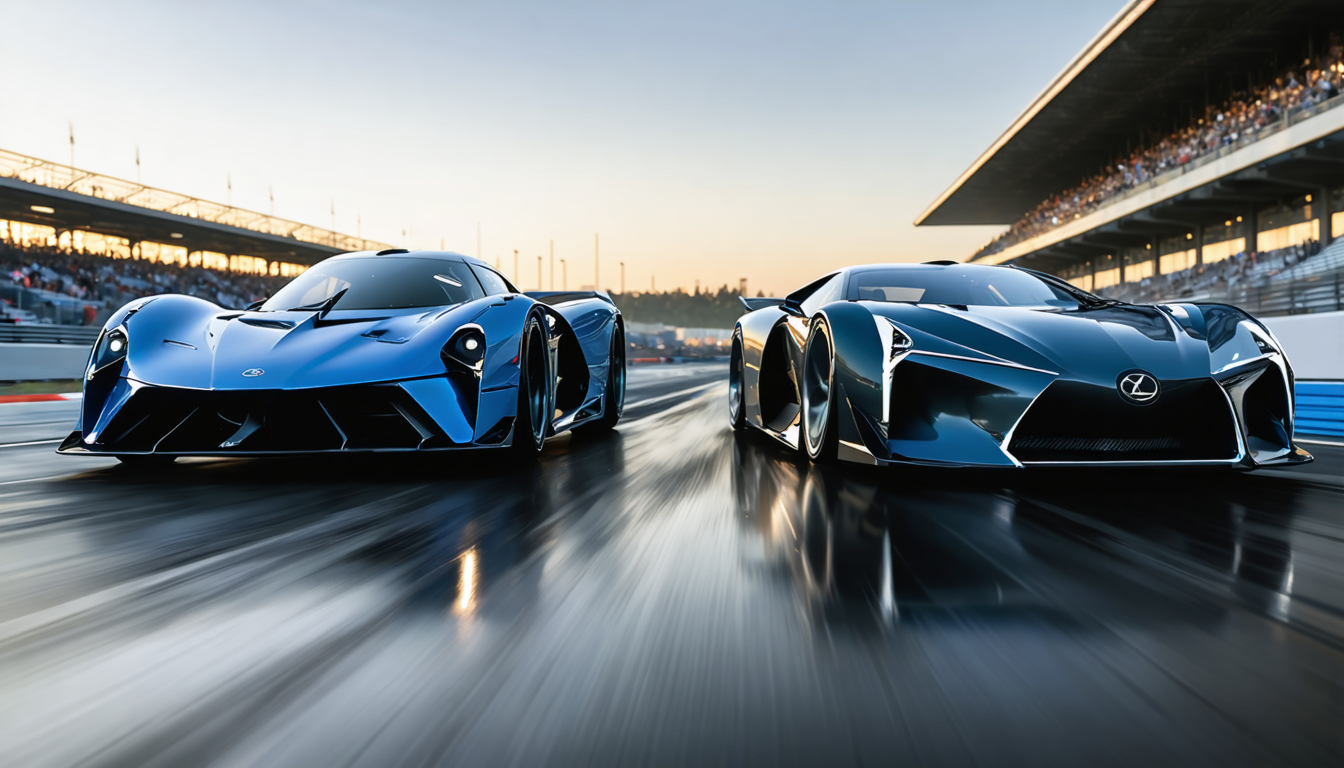
Discover How Toyota and Lexus Are Revolutionizing The Supercar Landscape With Their Latest Powerful Creations!
In a bold move, Toyota and Lexus introduce groundbreaking supercars that share foundational engineering yet deliver dramatically different driving experiences. Explore the fierce rivalry between hybrid V8 muscle and sleek electric prowess as these Japanese automotive giants race toward 2027.
The Distinct Philosophy Behind Toyota’s GR GT and Lexus’s Electric LFA
The automotive world is buzzing with anticipation as Toyota and Lexus roll out their upcoming supercar models, each brand carving its own niche while sharing a core architectural DNA. The Toyota GR GT stands as an aggressive, driver-focused beast powered by a twin-turbo V8 engine pushing out an impressive 641 horsepower. On the other side of the garage, Lexus reinvents its legendary LFA with a fully electric powertrain, emphasizing sophistication and smoothness.
Both vehicles, rooted in the same chassis blueprint, diverge sharply in execution and philosophy. Toyota’s GR GT embodies raw performance—highlighted by rally-inspired aerodynamic elements such as large intercooler openings and a hood vent channeling air strategically. The GR GT’s setup reflects its goal: a visceral, immersive experience tailored to enthusiastic drivers who crave feedback and control.
Lexus’s electric LFA, by contrast, ditches aggressive aerodynamic aggressiveness for sleekness and elegance. Its design features flowing compound curves and elongated hood strakes, sculpted to take full advantage of electric propulsion’s cooling and drag reduction needs. The ambiance inside leans toward refinement, with a split-cabin layout that isolates driver focus with delicate controls, emphasizing luxury while maintaining a sporty edge.
This duality reveals a deliberate strategy: Toyota markets an intense, tech-heavy supercar with mechanical authenticity, while Lexus pursues a future-forward electric halo model embracing electrification and sophistication without sacrificing the LFA’s legendary essence.
Performance That Reflects Individual Brand Identities
The heart of the GR GT is a high-output twin-turbo V8 hybrid powerplant producing 641 hp (477 kW). Alongside this brute force is a meticulous focus on driver ergonomics: low seating, digital shift lights integrated into the gauge cluster, and clear sightlines—carefully engineered to boost the driving connection. Its four selectable drive modes (custom, normal, sport, and track) enable varying degrees of aggression on-road and track.
Lexus’s electric LFA takes a different route with full electric propulsion, removing traditional exhaust heat and requiring no extensive venting. This freedom allowed designers to pursue more sinuous and mature aesthetics. The interior echoes this with an emphasis on calm sophistication, smaller controls, and a layout that separates driver and passenger zones, highlighting an exclusive driving environment.
The contrast is no accident. Toyota leans into mechanical intensity and track-ready tendencies reminiscent of muscle relics like the Dodge Viper, while Lexus channels a quieter yet confident energy, venturing into the electric future while respecting its heritage.
Blueprint Sharing and Its Unique Impact on Car Identity
At first glance, these vehicles might seem related beyond their shared architectural bones—expected given industry trends toward modular platforms. However, Toyota and Lexus meticulously fine-tune each car’s character to avoid overlapping market spaces or cannibalizing sales.
Shared chassis components include suspension geometry and frame design, optimized for balance and rigidity. Yet, the specifics in tuning, weight distribution, and systems integration produce completely unique driving impressions.
For example, the GR GT capitalizes on solid rear-wheel drive dynamics combined with hybrid torque fill to provide instantaneous throttle response and thrilling acceleration, a combination designed for intense driver engagement. The Lexus LFA’s electric setup, meanwhile, favors smooth power delivery and cutting-edge traction management, perfect for city or highway cruise with an electric supercar’s whisper-quiet demeanor.
This duality embodies how shared mechanical DNA can be engineered to deliver vastly different user experiences. It’s a modern take on the “same bones, different souls” theme, ensuring both Toyota and Lexus enthusiasts find a distinct hero within the supercar class.
Comparing Shared Chassis Benefits Versus Brand Differentiation
- Cost Efficiency: Joint development lowers R&D expenses, accelerating innovation cycles for both brands.
- Performance Optimization: Shared structural elements ensure both cars have a strong, lightweight foundation ideal for supercar demands.
- Customization: Distinct powertrains and tuning allow each to express brand identity freely.
The Implications of Toyota’s Return To GT3 Racing Through GR GT3
Beyond street-legal supercars, Toyota’s GR GT platform spawns a dedicated GT3 race car, signaling Toyota Gazoo Racing’s aggressive reentry into elite motorsport competition. This race-only variant strips away all comfort in favor of extreme weight reduction, comprehensive roll cage integration, and aerodynamic enhancements.
The GR GT3 stands as a technological showcase, embodying Toyota’s racing pedigree with a carbon-heavy build and race-spec equipment. Its broad rear spoiler and tailored downforce characteristics not only ensure cornering dominance but prepare Toyota’s return to the white-knuckle world of international GT racing.
Historically, such race cars push street models to evolve rapidly, sharing innovations like active aerodynamics, hybrid tech improvements, and suspension breakthroughs. This synergy promises an exciting future where Toyota’s street and track supercars benefit directly from racing advancements.
Motorsport’s Role In Accelerating Supercar Technology
Historically, race cars serve as test beds for breakthroughs in materials, hybrid systems, and driver aids. The GT3 race car acts as a crucible, intensifying performance parameters far beyond consumer limits and feeding valuable insights back to production models.
Interior Design Innovations That Define Driving Experience
While powertrain and aerodynamics dominate supercar headlines, cabin design remains crucial to defining each car’s personality. Toyota’s GR GT asserts a functional, unpretentious approach: tactile physical buttons replace touchscreens to minimize distraction, the driving position is low and commanding, and digital instrumentation highlights vital data like shift lights for precision racing performance.
Conversely, the Lexus electric LFA embraces elegance and comfort, with a split-cabin structure isolating driver engagement while maintaining passenger luxury. Smaller, refined controls and a focus on ambient balance add to the electric supercar’s softer appeal, offering a harmonious blend of power and serenity.
The differing interiors mirror their mechanical souls, from raw, track-ready Toyota to refined, electrified Lexus. Each environment caters to the expectations of its target audience, making every drive an expression of vision and values.
How Interior Choices Influence Perceived Performance
- Driver Integration: Low seating and direct visibility heighten confidence and car control in Toyota’s GR GT.
- Comfort Balance: Lexus opts for quiet sophistication, ensuring that electrification brings not just power but placidity.
- Usability: Physical buttons for rapid control in Toyota contrast with Lexus’s delicate tactile interfaces, reflecting different priorities.
Expected Availability and Launch Timeline For These Japanese Supercars
Both supercars are slated to hit markets around the mid-2027 timeline, giving engineers ample time to finalize performance, safety, and electric powertrain systems. Toyota’s GR GT will likely debut shortly after a strong motorsport presence solidifies its reputation, with Lexus following closely with its production electric LFA successor.
| Model | Expected Launch | Key Feature | Price Estimate |
|---|---|---|---|
| Toyota GR GT | Q3 2027 | Twin-Turbo V8 Hybrid, Driver Focused | $150,000+ |
| Lexus Electric LFA | Q4 2027 | All-Electric Powertrain, Elegant Design | $180,000+ |
| GR GT3 Race Car | Mid-2027 (Race Only) | FIA-Compliant, Track Optimized | Not Available (Race Car) |
This timeline outlines a competitive launch window that reinforces Toyota and Lexus’ ambitions to continue their heritage as important players in the supercar arena while adapting to evolving market demands and regulations.

My Name Is Said I am a dedicated blogger sharing the latest trending blogs from the USA, covering news, updates, and informative stories. My focus is on delivering accurate, engaging, and timely content for readers worldwide.