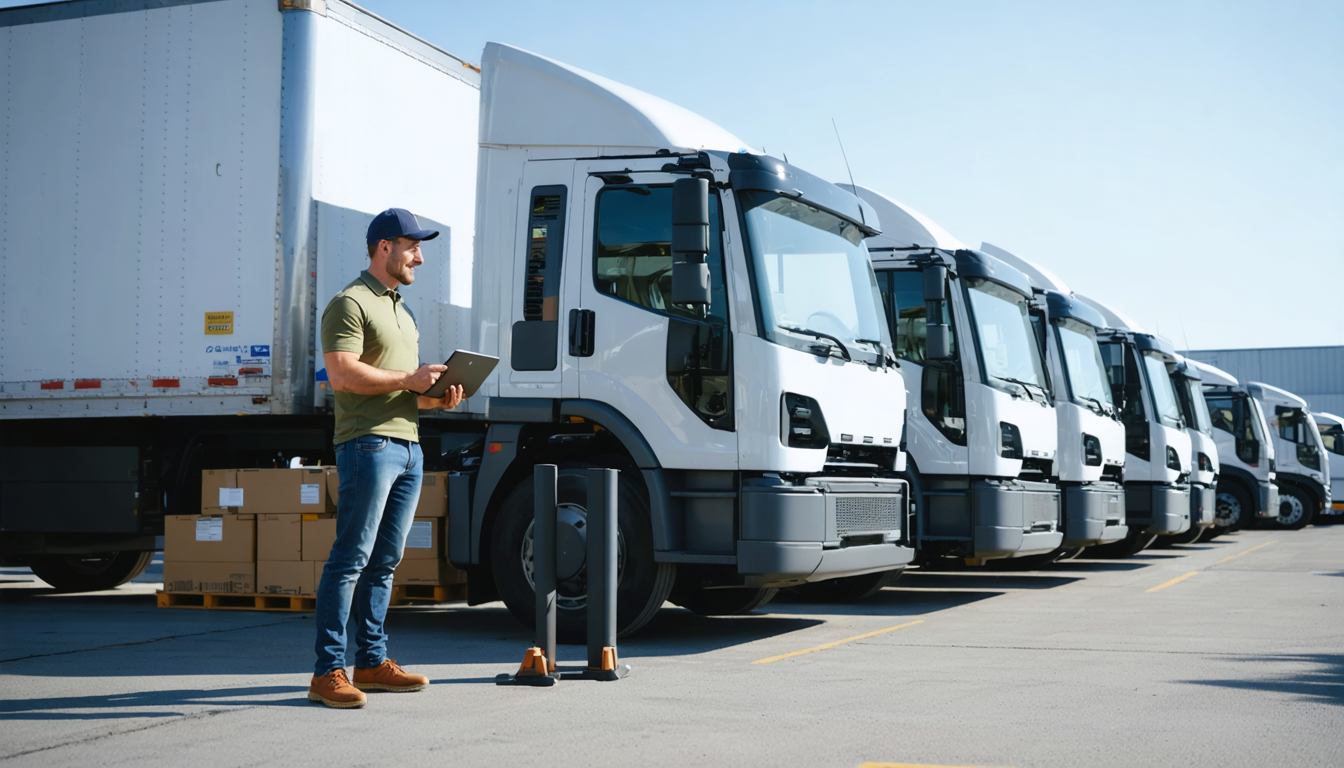
MAN Trucks is rewriting the rules of freight delivery by using electric trucks to deliver brand-new diesel vehicles—a twist loaded with irony that underscores the ongoing transformation in the trucking industry.
As MAN embraces vehicle electrification, the traditional diesel truck powerhouse has launched a climate-conscious delivery strategy that melds rail transport with electric last-mile trucking. This approach not only exemplifies innovative logistics but also signals a critical move toward sustainability in logistics. Groundbreaking steps in the electrification of commercial vehicles are reshaping how trucks themselves are moved to customers. This bold initiative spotlights MAN’s commitment to green technology while balancing legacy diesel operations with cutting-edge electric powertrains. By 2026, MAN and its logistics partner VEGA International plan to expand this electric delivery fleet, installing a new paradigm where even diesel trucks are transported by zero-emission vehicles, marking a pivotal chapter in automotive innovation and climate strategy.
Unexpected Synergy: How Electric Trucks Deliver Diesel Vehicles in a Revolutionary Logistics Model
The transport industry is witnessing a unique and ironic shift: MAN Trucks, a renowned manufacturer of diesel trucks, now uses electric vehicles to deliver fresh diesel trucks to dealerships. This initiative is more than a publicity stunt—it represents a deliberate strategic pivot toward carbon-neutral supply chains and reflects the profound transformation underway in commercial freight transport.
Until recently, MAN’s approach involved shipping new trucks mainly by rail over the longest part of their journey. Rail offers a less carbon-intensive option compared to long-haul trucking. But the “last mile” was still typically completed using diesel-powered trucks, which limited overall emissions reductions.
Entering the scene, the new concept—called Electrifying Outbound—transforms the supply chain by electrifying this final leg. MAN has teamed up with VEGA International to deploy battery-electric trucks (BEVs) to handle these last stretches, drastically cutting the carbon footprint associated with deliveries.
Two MAN eTGX battery-electric trucks have been tested over several months in this real-world application, covering urban and suburban geographies on the way to dealerships. The results speak volumes: consistent range, battery reliability, and operational efficiency have all checked the boxes. This trial has boosted confidence in electric powertrains for logistics, especially for short-haul and last-mile applications.
This shift creates synergy between MAN’s core identity—long known for diesel trucks—and its future-facing electric ambitions. In this sense, the irony is not lost on industry observers: electrics hauling diesels, driving forward both technological innovation and ecological responsibility simultaneously.
| Segment | Transportation Mode | Distance (miles) | Estimated Emissions Reduction (%) |
|---|---|---|---|
| Main Route | Rail Transport | 500-600 | 40-50% |
| Last Mile | Electric Truck | 30-50 | 100% |
- Integration of rail and electric trucking to minimize emissions.
- Real-life testing proves electric trucks meet operational demands during deliveries.
- Commitment to climate-neutral logistics aligns with global sustainability trends.
A New Definition of Last-Mile Delivery: Electrifying Logistics Beyond the Norm
Last-mile delivery has traditionally represented the most challenging and polluting part of freight transport. It involves multiple stops, stops and starts, and often congested traffic—conditions that massively reduce diesel trucks’ efficiency and increase emissions.
By replacing diesel trucks on this leg with MAN’s battery-electric trucks, the company addresses one of the logistical weak points responsible for urban pollution and noise. These electric trucks offer zero tailpipe emissions and lower noise levels, making them ideal for city and suburban environments.
Their operational range comfortably handles typical delivery distances of 30 to 50 miles without the need for recharging mid-route, a critical requirement for last-mile operations. Their robust battery packs and smart energy management systems ensure reliability throughout daily service runs.
- Reduction of carbon emissions in sensitive urban corridors.
- Improved air quality and noise reduction benefiting communities.
- Enhanced vehicle efficiency with electric powertrains tailored for stop-start conditions.
| Electric Truck Specs | Value |
|---|---|
| Range (miles) | 150-180 |
| Battery Capacity (kWh) | 500-600 |
| Payload Capacity (lbs) | 40,000 (approx.) |
| Charging Time (hours) | 1-2 fast charge |
The Irony of Diesel Trucks Delivered Using Electric Powertrains: A Symbol of Industry Transformation
There is a layered irony in MAN Trucks’ strategy. Historically a titan of diesel engines, the company is now reliant on electric powertrains to deliver its legacy diesel trucks. This is a potent emblem of the trucking industry’s broader transformation.
This paradox highlights a transitional phase where industry leaders acknowledge the environmental imperatives without abandoning the workhorse diesel technology too quickly. By showcasing it through delivery logistics, MAN publicly signals commitment to sustainability, innovation, and the inevitability of change.
Moreover, the initiative spurs customer and stakeholder confidence by demonstrating that electric trucks are not only futuristic concepts but practical machines capable of real-world deployment. It also reassures clients of MAN’s long-term vision, balancing diesel and electric vehicle portfolios.
- Significant messaging via the delivery method itself.
- Clear representation of shifting market and technological priorities.
- Bridge between diesel legacy and electric future for global supply chains.
Advancing Hybrid Vehicles and Diversified Powertrains in Freight Transport
While pure electric trucks are gaining momentum, MAN is also investing in a range of powertrain options including hybrid vehicles and hydrogen fuel cells. This diversified approach hedges against infrastructural challenges and regional market variations, providing flexibility in the journey toward decarbonisation.
The current production plant allows MAN to build both diesel and electric trucks on the same assembly line, emphasizing the practical integration of technologies during this transitional era. Hybrid systems can bridge gaps where full electrification is not yet viable, combining electric motors with efficient diesel engines to reduce emissions substantially.
Hydrogen fuel cell vehicles are introduced for segments demanding longer ranges and rapid refueling times, adding another layer to MAN’s green technology portfolio. This multi-pronged strategy positions the company as an adaptive industry leader focused on long-term environmental and economic viability.
- Flexibility in powertrain options for diverse operational needs.
- Manufacturing integration to streamline production of varied trucks.
- Focus on practical, real-world emissions reductions through hybrids and hydrogen.
| Powertrain Type | Strengths | Ideal Use Case |
|---|---|---|
| Battery-Electric | Zero emissions, low operating cost | Urban and regional delivery |
| Hybrid | Reduced emissions, extended range | Mixed urban and highway routes |
| Hydrogen Fuel Cell | Fast refueling, long distance | Heavy-duty, long-haul transport |
| Diesel | Established, high torque | Heavy payloads, existing networks |
Long-Term Economic Benefits of Electrifying Truck Delivery Logistics
The decision to shift to electric trucks for delivery purposes is not solely driven by environmental concerns but also economic calculus. While the initial upfront cost of electric trucks remains higher than diesel equivalents, operational expenditures tell a different story.
Electric trucks have far lower fuel costs, reduced maintenance requirements due to fewer moving parts, and incentives such as toll exemptions and regulatory benefits. Notably, recent policies in Europe and parts of the US have introduced full toll exemption for electric trucks, providing crucial planning certainty for freight operators.
VEGA International’s announcement to expand its electric delivery fleet by an additional 30 to 40 units by 2026 attests to the financial viability of electrified logistics. Fleet operators anticipate significant returns over the life of the vehicles, making electric trucks a smart investment particularly as battery technology improves.
- Operating cost savings from electricity over diesel fuel.
- Toll exemptions and government incentives improve ROI.
- Reduction in maintenance expenses strengthens economic appeal.
| Cost Item | Diesel Truck (per year) | Electric Truck (per year) |
|---|---|---|
| Fuel / Electricity | $40,000 | $12,000 |
| Maintenance | $15,000 | $7,000 |
| Toll Fees | $8,000 | $0 (exempt) |
| Total Annual Cost | $63,000 | $19,000 |
MAN’s Bold Path Toward a Carbon-Neutral Future and the Challenges Ahead
MAN’s journey toward a carbon-neutral future with electrified logistics is emblematic of the transportation industry’s broader ambition. The combined use of rail and electric trucks for vehicle delivery strengthens supply chain sustainability and reduces environmental impact.
However, the transition is not without challenges. Scaling battery-electric truck production to meet growing demand requires continuous innovation in battery energy density, cost reduction, and charger infrastructure expansion. Integrating hybrid and hydrogen technologies also demands coordination across energy supply networks.
Despite these hurdles, MAN remains undeterred. Its ambitious target of achieving CO2 neutrality by 2050 demonstrates clear strategic intent and a commitment to green technology. The current pilot projects and planned fleet expansions in delivery logistics underline the serious, pragmatic actions underway in the industry’s transformation.
- Investment in innovative battery technologies and charging networks.
- Cooperation with logistics partners to optimize emissions reductions.
- Steady scaling of versatile powertrain production in existing factories.
| Challenge | Potential Solution |
|---|---|
| Battery range and charging time | Fast-charging stations, solid-state batteries |
| Production scalability | Flexible manufacturing lines |
| Infrastructure for Hydrogen | Collaboration with energy providers |

My Name Is Said I am a dedicated blogger sharing the latest trending blogs from the USA, covering news, updates, and informative stories. My focus is on delivering accurate, engaging, and timely content for readers worldwide.