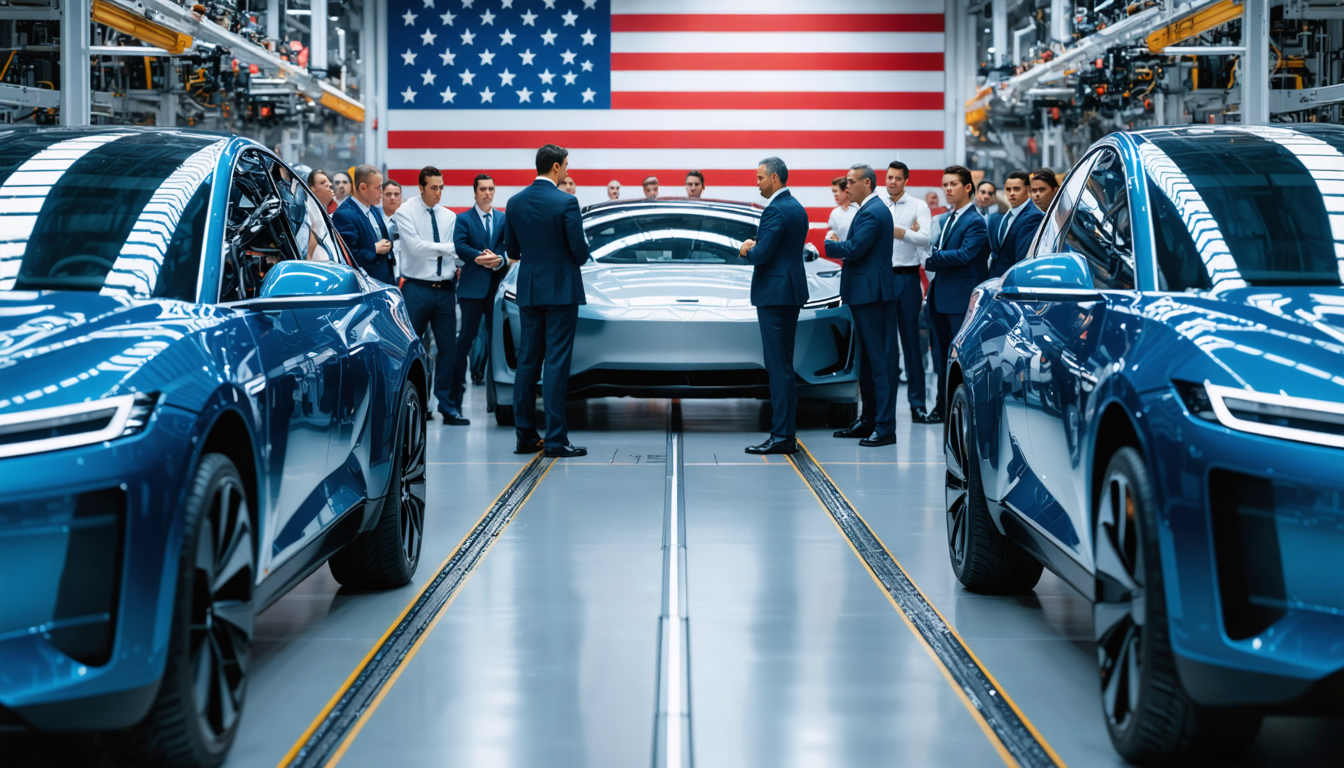
Inside VinFast’s Collapse: How Tariffs and Market Chaos Hampered a Bold U.S. EV Drive
American dreams meet harsh realities as VinFast battles tariffs, dealership shutdowns, and a steep sales drop, threatening its foothold in the ultra-competitive EV market. VinFast entered the U.S. market with grand ambition, but unexpected hurdles—like swelling tariffs and unstable EV sales—have forced a painful rethink. This tale of a Vietnamese automaker’s struggles spotlights how fierce market conditions can stall bold expansions. The company’s plans for rapid dealership growth and local production have faltered, raising doubts about its near-term U.S. future.
The U.S. Market Entry: Overwhelming Ambitions Meet Harsh Realities
VinFast’s initial promise to rapidly establish a strong presence in the United States was bold. In 2023, the company announced plans for hundreds of dealership partnerships and a fast ramp-up of vehicle deliveries, targeting the ambitious U.S. electric vehicle market with its VF 8 and VF 9 models. Yet, under current conditions, VinFast finds itself sharply off course.
As of late 2024, fewer than 1,500 VinFast cars had been registered across the U.S., reflecting a staggering 57% sales decline compared to the previous year. The automaker hoped to have 125 dealerships signed up, with projections of hundreds by year’s end, but reality paints a different picture—there are now just around 22 operational stores nationwide. Many of these early dealers are barely hanging on, with some locations closing or planning closure soon.
Dealership depletions and diminishing sales have combined to expose serious vulnerabilities. For example, a dealer in Florida reportedly had only a single 2024 VF 8 available, listed at a steep price above $52,000. Performance gaps like this starkly contrast with VinFast’s initial growth claims.
This retail struggle correlates strongly with consumer hesitancy and the effects of elevated tariffs imposed on imported vehicles. The 25% tariff enacted by the U.S. government has injected heavy costs, squeezing margin and cooling demand further. With consumers facing numerous established EV brand choices, VinFast’s pricing and distribution gaps have proved critical setbacks.
Supply Chain Strains And The Delayed North Carolina Factory: An Expensive Gamble
VinFast’s push to produce vehicles locally in the U.S. was meant to reduce reliance on imports and sidestep tariff issues. Groundbreaking in 2023 signaled commitment, but success was short-lived. Construction on the factory abruptly paused, pushing the plant’s expected opening from 2024 to an uncertain 2028 timeline.
This delay stems from a mix of financial pressures, regulatory challenges, and shifting strategic priorities amid ongoing market difficulties. Local production was supposed to be a game-changer—accelerating supply while helping to build goodwill toward the brand domestically. Instead, it introduced a costly burden with little immediate return.
VinFast gambled aggressively on a risky factory investment that now feels more like a millstone. The hiatus in plant work doubles down on uncertainty, making it harder for the company to reassure dealers and customers alike. Compounding this, there are concerns over the factory’s eventual impact on the market landscape, given the evolution of EV consumer preferences and competition.
Until the plant opens, reliance on imports adds tariff pressures that magnify financial strain. The staggered timeline has left VinFast scrambling to maintain momentum in a crowded U.S. market eagerly courting multiple EV contenders.
Dealership Struggles Highlight Key Weaknesses in Distribution
The dwindling dealership count offers a clear sign that VinFast’s network building efforts are faltering. Once promising nearly 30 authorized dealerships, official figures reveal only 22 remain active today. And a deep dive reveals that just 17 have any VF 8 or VF 9 models physically in stock, with inventory numbers frequently under 15 units.
Sales representatives report that some dealership locations are operating in name only, showcasing limited or no operational vehicle stocks. Such inventory shortages make it impossible to spark consumer interest or confidence, directly contributing to diminishing shopper foot traffic and sales figures.
The retail challenge is twofold: sellers struggle to turn profit without volume, and buyers hesitate when faced with limited choices and slower delivery times. Dealer confidence erodes accordingly, accelerating closures.
Adding to this, several dealers have pulled out or announced temporary closures. For example, a North Carolina dealership is slated for shutdown before the year wraps up, marking a symbolic blow given the state’s role as VinFast’s manufacturing target.
These factors collectively reflect a crumbling foundation. Without a bolstered dealer presence, VinFast risks sliding deeper into obscurity.
Sales Performance: A Crash Amidst U.S. Market Growth
VinFast’s stuttering U.S. sales perform poorly against the backdrop of a steadily growing American EV market. Data from the first ten months of 2024 shows VinFast registering just 1,413 vehicles—down 57% from the previous year. Contrastingly, the entire U.S. EV market expanded by approximately 11% in the same period, showcasing that the slump is brand-specific rather than industry-wide.
Such a decline signals the brand’s struggle to convert interest into sales amid rising competition. Legacy automakers and rising EV startups continue consolidating market share, leaving less room for newcomers with scant infrastructure.
VinFast faces a classic newcomer’s dilemma: balancing ambition with operational reality. Without aggressive dealership growth, consistent stock availability, and competitive pricing, gaining traction remains an uphill battle.
Customer feedback further complicates this picture. Some VF 8 owners have publicly voiced frustration over long charging times—nearly 24 hours in some cases—damaging the brand reputation among critical early adopters.
Strategic Pause: Reassessing U.S. Expansion Amid Market Volatility
VinFast leadership has opted for a strategic retreat rather than further aggressive expansion. Thuy Thu Le, chairwoman, openly stated that the company is pausing dealership growth to focus on supporting existing partners and improving their path to profitability. This move reflects acknowledgment of the current turmoil caused by unpredictable tariffs and overall EV market instability in the U.S.
This recalibration aims to ensure that existing dealerships stabilize before new ones open. The hesitancy to aggressively expand acknowledges the volatile conditions, as rushed growth could deepen losses and erode consumer trust.
VinFast’s revised strategy highlights a pragmatic understanding of the hurdles critical to success: profitability over expansion, dealer support over sheer numbers, and customer experience improvement over rapid scaling. This approach also leaves room to observe how tariffs and market dynamics evolve before doubling down.
Yet, this cautious stance also acknowledges possible long-term risks. Failure to regain momentum soon could make re-entry difficult in an increasingly saturated and competitive marketplace.
What Lies Ahead? Navigating the Foggy U.S. EV Terrain
Looking forward, VinFast’s continued ambition to conquer the U.S. EV market is shadowed by uncertainty. The Asian automaker’s early struggles demonstrate how tariffs, dealership instability, and consumer skepticism can stall growth despite ambitious plans.
The company’s next moves will likely hinge on three critical areas:
- Tariff negotiations: Ability to reduce cost penalties for imported vehicles or accelerate in-house production.
- Dealership network revitalization: Retooling dealer strategies to enhance inventory flow and customer satisfaction.
- Product and service enhancements: Addressing technical grievances like charging efficiency and refining user experience to rebuild brand trust.
Each of these factors carries considerable weight in shaping VinFast’s trajectory. Emerging trends such as expanding EV infrastructure and evolving consumer demands could either bolster or complicate the company’s bid for relevance.
| Year | VinFast U.S. Registered Vehicles | U.S. Total EV Market Growth (%) | Number of Active VinFast Dealerships | Projected Factory Opening |
|---|---|---|---|---|
| 2023 | ~3,300 | 9% | ~30 authorized | Initial planned 2024 |
| 2024 | 1,413 | 11% | 22 active, 17 stocked | Postponed to 2028 |
| 2025 Projection | Uncertain | ~12% | Stable/declining | TBD |
With brewing challenges and committed pauses, VinFast’s American journey will remain closely watched. Their ability to re-align strategy amid intense competition and uncertain tariffs is critical to whether the company becomes a distinctive player or a cautionary example in the global EV fight.

My Name Is Said I am a dedicated blogger sharing the latest trending blogs from the USA, covering news, updates, and informative stories. My focus is on delivering accurate, engaging, and timely content for readers worldwide.