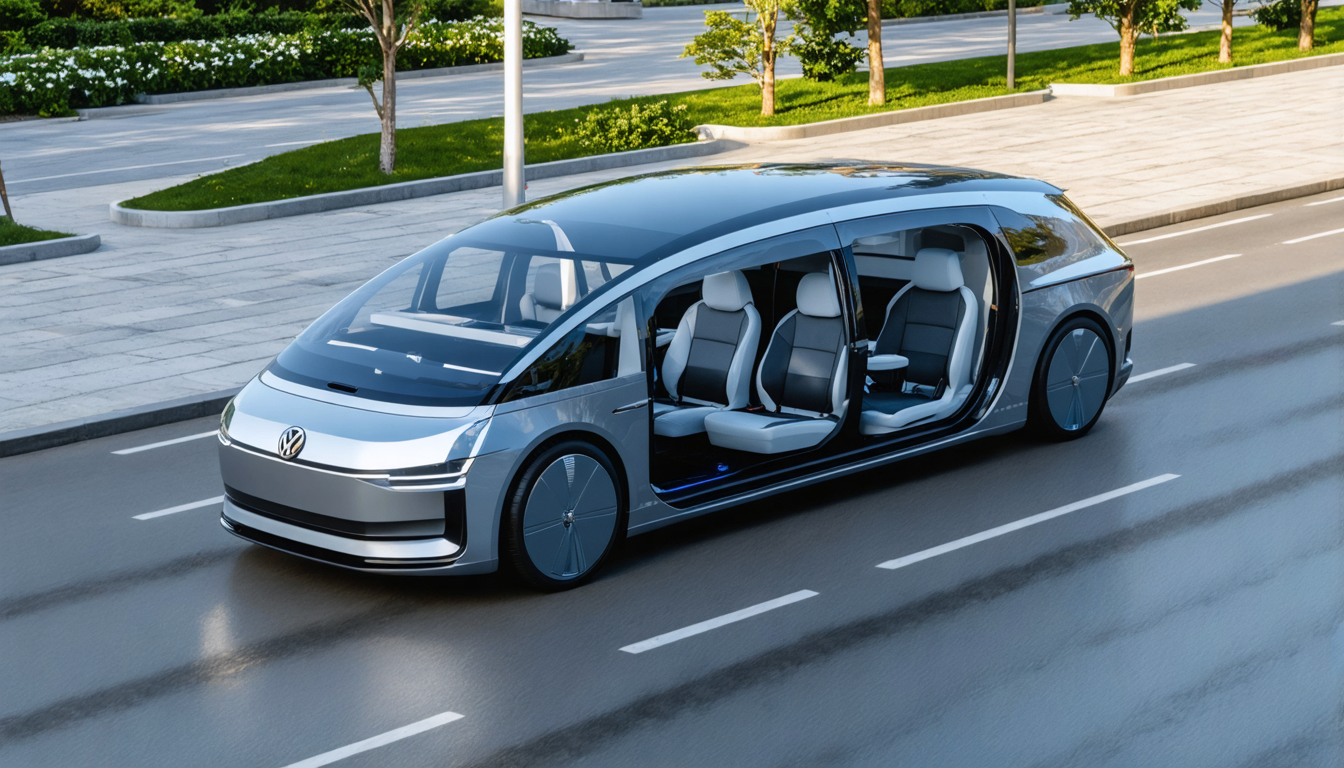
VW’s bold leap into the driverless vehicle future is reshaping what we once knew about car interiors and urban mobility.
The German automotive giant is not just testing self-driving technology—they’re reimagining the entire driving experience, ditching steering wheels and pedals to create versatile, user-focused spaces fit for 2025 and beyond. As Volkswagen rolls out its Gen.Urban prototype, the focus shifts from hardware to human experience, aiming to transform how passengers interact with their environment in automated driving scenarios. Beyond tech, VW probes into the social and emotional sides of riding in cars that don’t require traditional controls, carving pathways for future vehicle designs optimized for comfort and usability over control.
Redefining Vehicle Control: The Shift from Wheels and Pedals to Software-Driven Autonomy
Automotive technology is undergoing a profound transformation, and Volkswagen stands at the forefront of this change. Rather than retrofitting traditional cars with autonomous capabilities, VW is committing to innovative design that eliminates the steering wheel and pedals completely. This evolution means rethinking vehicle control in a way that prioritizes safety, efficiency, and passenger experience.
Historically, autonomous vehicles began as modified versions of existing models. For instance, companies like Waymo retrofit Jaguars with sensors and software, yet still retain conventional driver controls primarily for safety drivers during tests. Volkswagen’s own ID. Buzz AD, based on its electric van, follows a similar pattern with pedals and wheels intact for current testing phases.
However, VW recognizes that the true potential of autonomous tech is unlocked only when physical driver controls become obsolete. Without a steering wheel or pedals, interior layouts can be revolutionized, and the concept of a driver’s seat itself may become redundant. Volkswagen’s Gen.Urban research vehicle embodies this approach by adopting a minimalistic, compact two-seat design, prioritizing space and comfort over control interfaces.
By removing traditional controls, Volkswagen sets the stage for automated driving to become a seamless, human-friendly experience. This approach embraces novel interaction modes between humans and machines, including touch, voice, and ambient technologies. The shift exemplifies an important philosophy: technology should adapt to human needs, not the other way around.
This shift signals a future where cars become mobile living spaces instead of just vehicles to be driven.
User Experience at the Core: How VW Studies Passenger Reactions to Self-Driving Cars
Volkswagen’s ongoing testing of the Gen.Urban prototype in Wolfsburg’s real city traffic offers invaluable insights into how passengers perceive and interact with driverless vehicles free of traditional controls. This phase is critical for developing future mass-market autonomous vehicles that not only function technically but also meet emotional and social needs.
With test rides lasting approximately 20 minutes, professional drivers monitor the vehicle while passengers experience a 10-kilometer loop through urban environments featuring traffic lights, roundabouts, construction zones, residential neighborhoods, and industrial areas. This route is designed to simulate typical city driving challenges to validate system reliability and responsiveness.
- Customization via app: Passengers pre-set preferences such as temperature and ambient lighting before boarding.
- Personalized welcome: Seats automatically adjust to preferred ergonomics, and the vehicle greets passengers.
- Immersive environment: A wide front display adapts lighting, sound, and information to individual tastes.
These elements encourage relaxation and engagement during the ride, spotlighting how digital content and interaction ideas may evolve in future self-driving cars. A special focus is on inclusivity, researching how to optimally accommodate children, elderly passengers, and users with various accessibility needs.
Volkswagen’s interdisciplinary research team—comprising designers, software developers, material specialists, and more—is collecting extensive data on user behavior and vehicle interaction to refine the car’s interior user experience (UX). These learnings will feed into future vehicle models, ensuring that autonomous designs resonate with real-world passenger expectations and habits.
Prioritizing passenger comfort and intuitive interaction shapes the future of urban autonomous mobility.
Innovative Design Unlocks New Uses for Vehicle Interiors When Traditional Controls Disappear
Once the conventional constraints of steering wheels and pedals vanish, the possibilities for vehicle design expand exponentially. Volkswagen’s Gen.Urban, with its compact two-seat configuration and sliding bus-style doors, provides a blueprint to rethink space utilization and passenger dynamics inside self-driving cars.
This design philosophy resembles Rimac’s Verne, an electric robotaxi prototype, with VW’s close ties to Rimac through Porsche’s significant investment and cooperative ventures fueling rich cross-pollination of ideas and technologies. Both vehicles emphasize creating space that caters directly to passenger experience rather than driver control.
Key design benefits of removing traditional driving gear include:
- Optimized interior space: Without pedals and steering wheels, cabins can accommodate more flexible seating layouts or cargo configurations.
- Enhanced accessibility: Sliding doors and lowered floors improve entry and exit, essential for ride-hailing and robotaxi services.
- Customizable ambiance: Lighting, screens, and sound can dynamically adapt to individual moods and preferences.
These innovations contribute to a mobile environment where work, relaxation, or entertainment take precedence over manual control. Such a transformation aligns with Volkswagen’s broader vision of future mobility — vehicles becoming extensions of living and working spaces, equipped to support the diverse needs of modern urban passengers.
Design freedom unleashed by driverless technology shifts how we conceptualize the car’s role in daily life.
How Volkswagen Balances Cutting-Edge Tech and Safety With Driverless Testing in Public Roads
Even as Volkswagen ventures into uncharted territory with steering wheel-free vehicles, safety remains paramount. The Gen.Urban operates at Level 4 autonomy, signifying that it manages almost all driving situations without human input under predefined conditions. However, a trained safety driver is always present, ready to take control in emergencies using an innovative joystick control panel.
This approach reflects responsible testing protocols in 2025, blending sophisticated driverless technology with human oversight to ensure passenger security. It also enables real-life data gathering on vehicle behavior in complex urban traffic scenarios, including navigating roundabouts, reacting to construction zones, and handling variable congestion.
The continual testing process serves not only to validate systems but also to understand human trust and comfort levels when relinquishing control. VW’s commitment to safe, incremental deployments establishes a foundation for widespread acceptance of autonomous vehicles.
| Date | Activity | Location | Duration |
|---|---|---|---|
| Spring 2025 | Gen.Urban public road testing begins | Wolfsburg, Germany | 20 minutes per ride |
| Summer 2025 | Passenger UX data collection and analysis | Wolfsburg test route | Ongoing |
| Fall 2025 | Prototype interior and software refinement | VW Design Center | Several weeks |
This timeline reflects an iterative process where each phase builds on gathered insights, moving from concept validation to readying technology for commercial deployment.
Volkswagen’s careful integration of technology and human oversight drives safe progression toward autonomous urban mobility.
Exploring the Broader Impact: What Driverless Cars Mean for Future Urban Mobility
Volkswagen’s innovations echo a global trend: autonomous vehicles are poised to revolutionize city life. By freeing vehicles from traditional controls, manufacturers enable new forms of mobility services, such as robotaxis, shuttle vehicles, and personalized autonomous pods that optimize traffic flow and reduce environmental footprints.
The absence of steering wheels and pedals isn’t only about comfort or aesthetics; it signals a shift in social dynamics, workplace opportunities, and urban design philosophy. Passengers can focus on digital interaction, work, or rest, turning travel time into productive or relaxing experiences.
Moreover, these innovations help address accessibility needs. Autonomous designs can better serve people unable or unwilling to drive, including the elderly and disabled, expanding personal mobility options and fostering inclusivity.
As driverless technology matures, cities might see fewer personal cars on roads, reducing congestion and pollution. VW’s research into passenger experience and interaction will help policymakers and urban planners adapt infrastructure and regulations to invite safer, more efficient automated vehicles.
Among the expected benefits of such future mobility are:
- Reduced traffic accidents: Automated systems decrease human error.
- Increased convenience: Mobility becomes accessible around the clock without driver stress.
- Environmental gains: Efficient routing and electric platforms lower emissions.
- Social equity: Autonomous vehicles provide options for underserved populations.
The autonomous vehicle era, championed by VW’s pioneering designs, promises a safer, more inclusive, and sustainable urban transportation landscape.

My Name Is Said I am a dedicated blogger sharing the latest trending blogs from the USA, covering news, updates, and informative stories. My focus is on delivering accurate, engaging, and timely content for readers worldwide.